Last week was heavy. Watching my mom’s face as she caught the news with me, I could tell the events — the shootings, the violence in Dallas and , the sadness — were affecting her. So, this morning I asked her: “How are you feeling about all the things happening right now?”
She responded right away. She spoke of Charlie Kirk, the school shooting in Evergreen, CO., Iryna Zarutskathe – the young woman attacked on the subway and beheading of the Chandra Mouli Nagamallaiah. She cares, and I realized just how much she is aware. And how much she feels. Our loved ones cannot be expected to bottle up their fears and questions and let them stew. It’s not healthy or safe for them.
She also feels unprepared to handle things if something went awry. A person with dementia or any type of cognitive decline processes events differently. Their sense of time and space is skewed, especially if they time shift. You’d be surprised at how much our loved ones absorb just from the ebb and flow and energy what plays on the television. If your loved one is still cognizant of current events, those moments can shake them deeply and we need to be sure to help them deal with it. Their security comes from us – their caregivers and loved ones – the people that they trust the most.
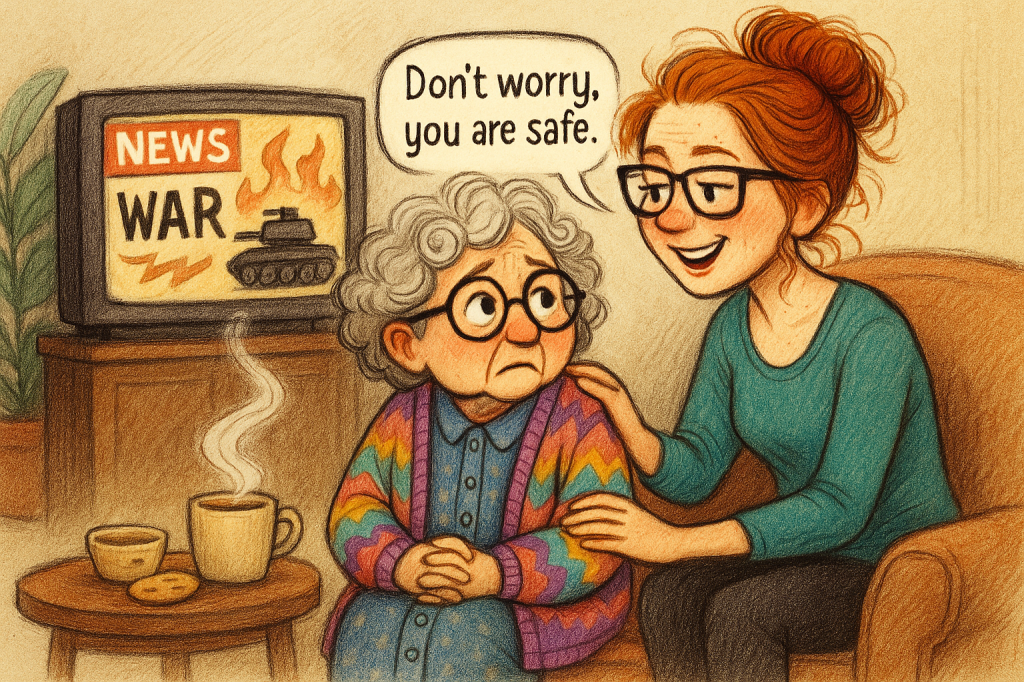
What Happens with Traumatic Events and Older Adults
Here’s what the research shows:
- Older adults who follow distressing news closely tend to have higher levels of psychological distress — including anxiety and depressive symptoms. PMC, MDPI
- For people with dementia or cognitive decline, bad news can trigger confusion, especially when they mix current events with memories or past traumas. Alzheimer’s Society
- Traumatic or alarming media exposure can reignite old trauma. Older adults are at greater risk of developing PTSD symptoms or adjustment disorders after disasters, mass violence, or similar events. PTSD VA+2PMC
- Frequent exposure to stressful current affairs can decrease sleep quality, increase worry, and make it harder for the body to unwind. Discovery Village
How We Can Help Loved Ones Feel Safer, More Secure
When you sense they’re feeling scared or disturbed, there are gentle hands-on ways to respond.
- Ask Them — like I did this morning. Open with something like, “What have you heard about what’s happening? How are you feeling about it?” Let them share on their terms.
- Limit Exposure — news is everywhere, but you don’t have to feed the fire. Turn off 24‑hour news channels, mute notifications, or choose specific times to check updates rather than letting them spill into every moment. Alzheimer’s Society
- Stick to the Facts, Then Close the Book — when talking, keep things simple and factual, avoid speculation. Once you’ve discussed, transition to something comforting (a story from the past, music, a joke) to reset the emotional atmosphere.
- Use Reminiscence Therapy or Shared Memory — bring up old photo albums, music from her past, things she knows well. It can ground them in what they know and love, not in what unsettles them. Verywell Mind
- Offer Calm Reassurance — “You’re safe here. We’re watching out. I’m with you.” Physical comfort like holding a hand, hugging, or just being nearby can help more than words.
- Create a Safe Space Ritual — maybe at a particular time each day you turn off the news, sit together with tea, do something soothing. Having a routine of calm gives them something stable to count on.
Final Thought
It’s okay to talk about what’s happening in the world. It’s honest. It matters. But we also have to guard their hearts. Their processing and logic doesn’t work the same, and we need to be aware and proactive when traumatic and overwhelming things happen. When it all becomes too much, we are the safe place. We can help them feel held — not terrified.
These conversations and our protection are part of this caregiving journey. And love — even softly spoken, even quietly done — can bring light when the world feels dark.
Caregiver Hack of the Week
“News‑Check and Rewind”
Set a “news check” time (say once or twice a day). During that time, catch up together. After the check, do a “rewind ritual”: share three pleasant memories, listen to a favorite song, or look at a photo from happier times. It helps shift the emotional weight of what’s come in.
See you on the SHCC next week!
 The Silver Haired ChooChoo
Leave a comment