I read a comment from another caregiver this past week that stopped me cold.
“I really wish I loved my mom. But the longer she lives, the more I resent her.”
Before anybody in my small town gets halfway through that sentence and starts a rumor before lunch, let me be very clear: Those are not my words about my mom. They were written by another caregiver about her own experience. Noted? Good! I believe we’ve notified the appropriate grapevine.
But those words from the caregiver stayed with me.
I don’t know this woman. I don’t know what her relationship with her mother was like before caregiving. I don’t know how many years she has been doing this, how much help she has, what her mother’s disease looks like, or what has been lost along the way. So I am not going to tell her what she should feel.
What I do know is that caregiving can produce feelings we aren’t particularly proud of.
Anger. Frustration. Resentment. Sadness. Exhaustion. Sometimes all of them before breakfast.
And I think this is another place where two things can be true at the same time.
You can love someone deeply and hate what their disease has done to your life. You can have enormous compassion for what is happening to them and still be angry about what it requires of you. You can know they aren’t choosing a behavior and still desperately wish they would stop doing it.
One truth doesn’t cancel out the other.
Research backs up some of what caregivers experience here. Alzheimer’s and other dementias can change far more than memory. Changes in the brain can affect behavior, communication and personality. Fear, confusion, pain, poor sleep, hearing or vision problems, medications and even the environment can affect behavior, too. The National Institute on Aging makes an important distinction for caregivers: sometimes it is the disease, not the person, causing the change. (National Institute on Aging)
Knowing that helps. It does not necessarily make living with it easy.
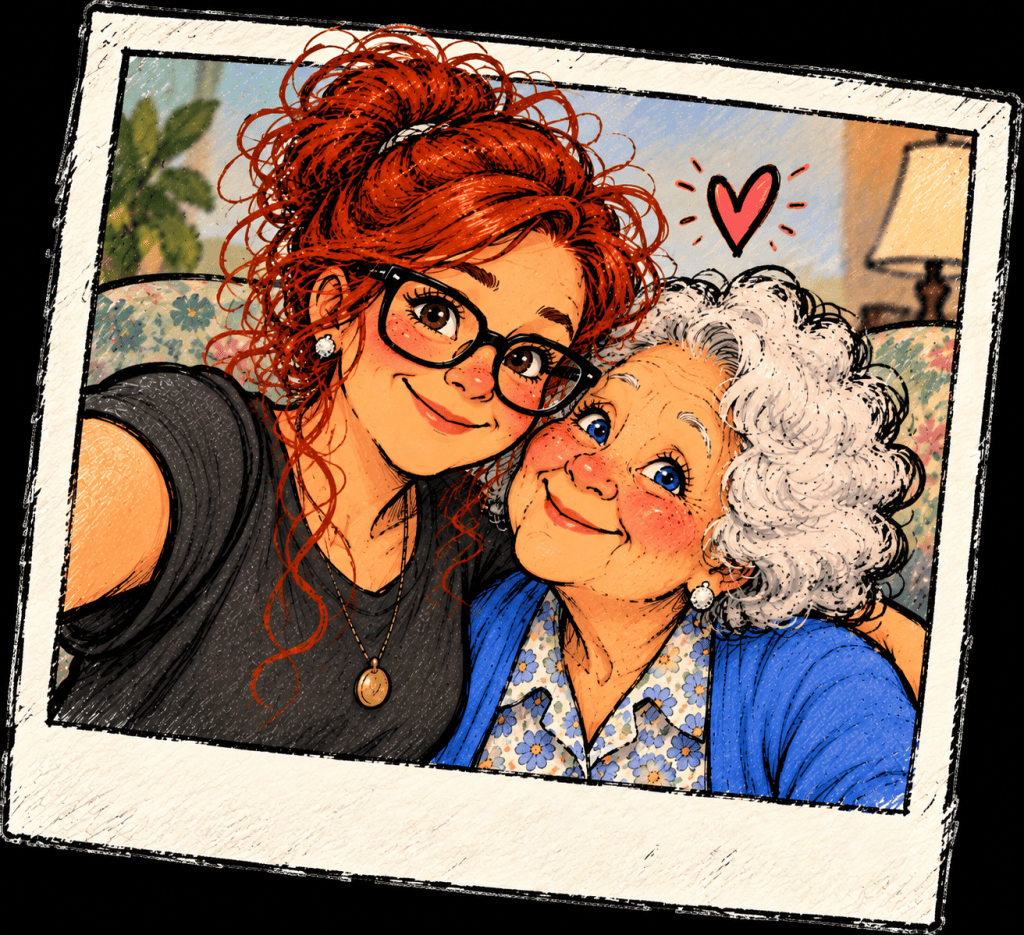
I’ve had plenty of moments during these past seven years when I’ve been angry. I’ve been frustrated, impatient, exhausted and completely over it. There have been days when I have resented what caregiving required of me. Pretending otherwise wouldn’t make me a better daughter. It would just make me a liar.
But that caregiver’s comment made me think about something I want to remember in my own relationship with Mom:
Where am I aiming my anger? Because the cruel thing about dementia is that the disease doesn’t have a face. The person you love does.
I can’t put dementia in a chair and tell it what I think of it. I can’t ask it why it took something else from Mom. I can’t tell it I’m tired. I can’t demand that it give back the memories, abilities or pieces of our relationship it has changed.
Dementia isn’t sitting across the table from me. Mom is.
And sometimes I think that makes it terribly easy for the anger we feel about the disease—and everything caregiving has cost—to land on the only person standing there.
That doesn’t mean every difficult feeling a caregiver has is secretly about dementia. Relationships are complicated long before caregiving enters them. Research has found that the quality of a relationship before dementia can affect the caregiving experience later. We don’t all begin this journey with the same history, and I don’t want to turn “blame the disease” into one more rule caregivers are supposed to follow perfectly. (PubMed Central (PMC))
Sometimes we really are angry with the person. Sometimes we’re angry with the disease. Sometimes we’re angry because we’re exhausted, scared, grieving, financially stretched, lonely or doing a job that was never meant to belong to one human being around the clock.And sometimes it’s probably one giant casserole of all of the above.
What matters to me is remembering that Mom is not dementia.
Dementia may make her repeat a question she asked five minutes ago. It may cause confusion. It may change what she can understand, remember or do.
But it doesn’t get to become her identity. This is still the woman who raised me. The woman with the wicked sense of humor. The woman who can still make me laugh when I least expect it. The woman who tells me she loves me. The one who prays for me every day.
I hate dementia. I don’t hate Mom. Maybe that’s an easy distinction for me to make today and a much harder one for another caregiver to make after a different history, a different disease progression or a different kind of day. That’s why I keep coming back to compassion—for the person living with dementia and for the person caring for them.
Caregiver Hack of the Week: Name What You’re Angry At
When resentment shows up, maybe don’t immediately judge yourself for feeling it. Get curious about it.
What am I actually angry about?
Is it the person? The behavior? The disease? The lack of sleep? The loss of freedom? The fact that nobody else showed up to help? The grief of watching someone you love change? The fact that you have answered the same question so many times that Jesus and you are once again discussing your attitude?
Naming it won’t necessarily make the anger disappear. But it might help us remember where some of it belongs.
I don’t know the woman who wrote that comment, and I won’t tell her what she should feel. Her road may be very different from mine.
But her words reminded me of something I want to hold onto.
Dementia has taken enough from Mom and me already.
I don’t want to give it her identity, too.
Mom is not the disease.
She’s my mom.
See you out on the rails. Keep showing yourself and your loved one grace. You both deserve it.
Until next week!
References:
National Institute on Aging. “Alzheimer’s Changes in Behavior and Communication.” National Institutes of Health. (National Institute on Aging)
National Institute on Aging. “Alzheimer’s Caregiving: Managing Personality and Behavior Changes.” National Institutes of Health. (National Institute on Aging)
Alzheimer’s Association. “Caregiver Stress.” (Alzheimer’s Association)
Williamson, G. M., et al. “Caregiver Attribution and Resentment in Dementia Care.” (PubMed Central (PMC))
Steadman, P. L., et al. “Premorbid Relationship Satisfaction and Caregiver Burden in Dementia Caregivers.” (PubMed Central (PMC))


Leave a comment