Mom lost one of her besties at the home this week.
It was rather sudden, and since it happened, she has been sad, confused and in a bit of a fog. I’ve been trying to figure out how to help her through it, which is an interesting assignment for someone whose natural response to nearly every problem is, Okay, what do we need to do? Apparently, grief has declined my request for a checklist.
I’m learning something else, too. Tablemates in a care home matter more than I ever understood. Mom and two other women sat together every day, three meals a day—breakfast, lunch and dinner. They shared devotions and prayer time. They talked about their problems and became confidantes. They laughed, worried and knew what was happening in one another’s lives. That table became the central point of their day.
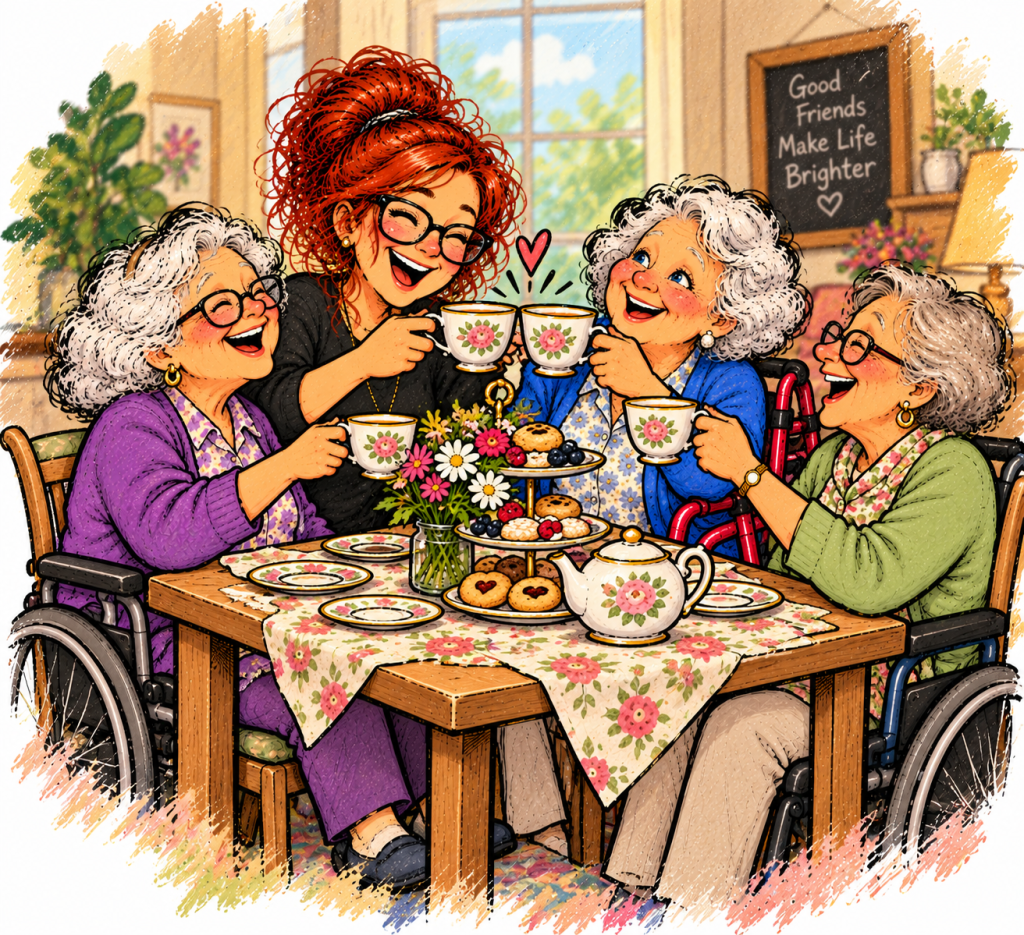
There were three. Now there are two. And the two who remain are grieving together and comforting each other.
Feelings have always led Mom’s personality. She is happy almost all of the time, and when she isn’t, there is rarely much mystery about it. The woman has a face that can communicate an entire paragraph without saying a word. Happiness, worry, irritation, sadness, surprise—it’s all right there.
Dementia has affected her memory, her reasoning and her ability to process some things, but it hasn’t taken away her feelings. Mom still feels things deeply, and if you’ve ever seen her face, you know she still shows us exactly how she feels. That’s why this week has made me think about something I don’t want us to overlook when we care for someone with dementia: cognitive decline does not mean emotional decline. They are two different things.
We can become so focused on what dementia is taking from someone’s brain—the memory, reasoning, words and ability to understand—that I think we can accidentally underestimate what the person can still feel. People living with dementia can and do grieve. Dementia may affect how someone understands and adapts to a death, but that does not mean the loss or the grief isn’t real.
The feelings are still there.
I’m seeing that with Mom in a way I didn’t expect. She keeps relating the loss of her friend to losing my dad. She isn’t confusing the two deaths. She knows Dad died years ago, and she knows it was her friend who died this week. What she is connecting are the feelings.
Losing Dad is the deepest grief Mom knows. When she tries to explain how much this new loss hurts, that’s the place she goes. She recognizes grief because she has been here before. She knows this feeling. She has felt this kind of ache before. Her heart knows exactly what grief feels like.
That changes the way I think about helping her. My job isn’t necessarily to make sure Mom can explain her grief to me correctly. I don’t need to give her a pop quiz on what happened, and I certainly don’t need to explain why losing her friend isn’t the same as losing Dad. She isn’t telling me they are the same. She’s telling me the ache feels the same in her heart.
So I can listen. If she talks about Dad, we can talk about Dad. If she tells me she misses her friend, I can tell her I know. If she’s sad, I can let her be sad. And when she doesn’t have the words, maybe I can pay attention to what she’s telling me without them.
That last part may be especially important. As dementia affects communication, people can have more difficulty finding words, organizing thoughts or putting what they are experiencing into language. Facial expressions, gestures and other nonverbal communication can become increasingly important, too. Sometimes the words may fail long before the feelings do.
Maybe helping Mom through this isn’t about making her understand grief exactly the way I do. Maybe it’s about honoring the grief she already feels.
Caregiver Hack of the Week: Look for the Feelings, Not the Words
When someone we love has dementia, it can be easy to focus on the words because the words are often where things stop making sense. They may struggle to explain what they mean or simply not have the language to tell us what is happening inside them.
Look for the feelings instead. They are there.
What is the person trying to tell you underneath the words? Are they sad? Frightened? Lonely? Frustrated? Do they need reassurance more than they need correction? We may not always get it right, but perhaps the goal isn’t to perfectly interpret every word. Sometimes it is simply to recognize the emotion and meet them there.
This week, I can’t fix this for Mom. I can’t put her friend back in that chair at breakfast or make her heart hurt less. What I can do is sit beside her while she misses her, listen when losing one person reminds her of losing another, and be grateful that the two friends who remain have each other to lean on while they grieve.
There were three friends at that table. Now there are two.
And the empty chair matters.
Resources:
Alzheimer’s Society — Supporting a person with dementia during a bereavement
Alzheimer’s Society — Grief, loss and bereavement when a person has dementia
National Institute on Aging — Communicating With Someone Who Has Alzheimer’s Disease


Leave a comment