Just when I thought I had a reasonably respectable collection of caregiving knowledge stored in my already overcrowded brain, dementia decided to introduce another little surprise.
Apparently, people with dementia can forget they’ve been in pain, forget an injury, or have trouble telling us what hurts.
Excuse me? They can forget WHAT?
I learned this after receiving a call from Mom’s care home about a toothache. She’d told the staff her tooth hurt, they’d taken action, and they’d called me. Wonderful people, and exactly the kind of care every family hopes their loved one receives.
But I’d spoken with Mom earlier that day. My daughter had visited, too. Neither of us heard a word about this toothache. Apparently, it hadn’t made the conversational agenda.
When I asked Mom why she hadn’t told us, she said she’d forgotten she was in pain. Well, isn’t that just peachy?
I’ve had toothaches, and I can assure you they generally announce themselves with the subtlety of a marching band with an extra drum line. How on earth does someone forget one?
I called my daughter to share. She was not surprised and explained that people with dementia don’t always remember or communicate pain the way we would expect them to.
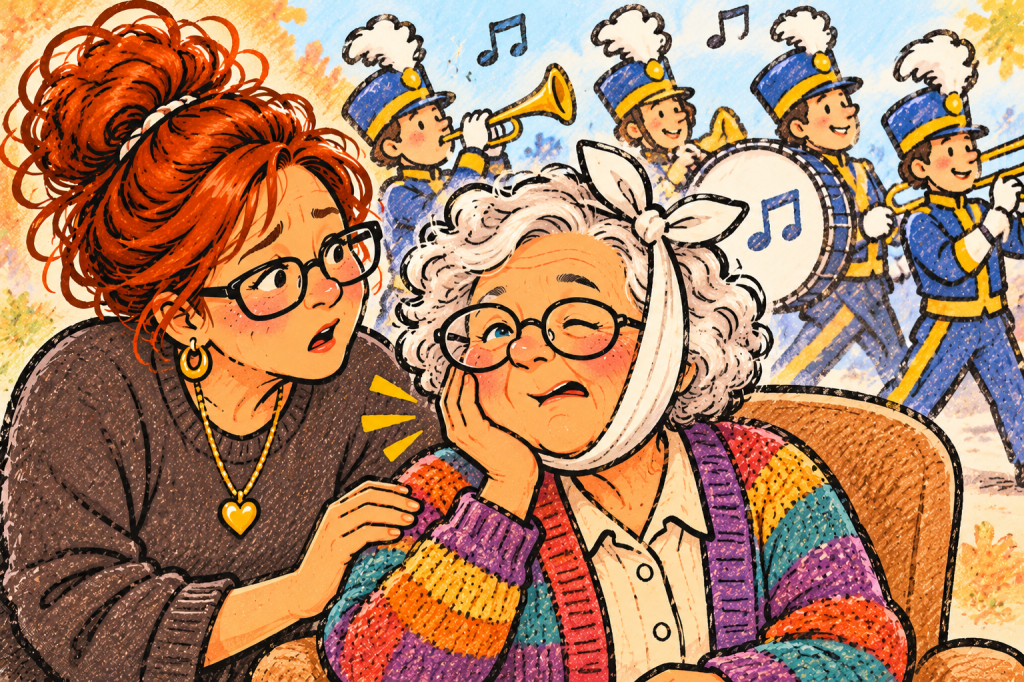
Naturally, I went researching, because apparently my unpaid position as Director of All Things Mom now includes continuing education in neurology, dentistry, and whatever else dementia decides to throw at me before breakfast.
And wouldn’t you know it? Rach was right.
Mom is still very conversational. She recognized that her tooth hurt and told the staff. Later, she explained that the pain comes and goes. Perhaps it wasn’t hurting when we spoke, and she simply didn’t remember the earlier discomfort.
But my research uncovered something I hadn’t fully understood. Feeling pain, remembering pain, and being able to explain pain are three different things. Dementia can complicate all of them.
My daughter also told me about a friend’s grandmother with dementia who had broken both ankles but kept trying to stand and walk because she didn’t remember the injuries. I’m still cringing two days later.
That story brought back a memory I wish I didn’t have.
Mom walked around for two weeks with a broken hip. Her fracture wasn’t displaced, which helps explain how she could still walk. But now I wonder whether dementia also affected how she understood or communicated what she was feeling.
I don’t know. I may never know.
And I’ll admit, that thought made me cry. The possibility that someone we love could be hurting without our understanding is nothing short of heartbreaking. Sometimes learning something new about dementia makes us question what we didn’t know yesterday, even when that knowledge might help us tomorrow.
Here’s what I learned. People with dementia still experience pain, but they may have difficulty identifying where it hurts, remembering an earlier episode, or explaining what’s wrong. As communication becomes more difficult, discomfort may show up in behavior instead of words.
According to dementia-care guidance, possible clues include grimacing, moaning, guarding a body part, restlessness, withdrawing from activities, refusing food, or suddenly resisting movement. Someone who is usually easygoing may become unusually irritable or even temporarily delusional. Even a slight UTI can change behavior.
Of course, that doesn’t mean every cranky afternoon is a hidden fracture. Fear, infection, medication effects, and plain old bad days can cause changes, too. I would suggest that when something seems out of character, pain deserves a place on the list of possibilities.
And there’s the rub, right?
As if caregivers weren’t already hyper-focused on every cough, stumble, facial expression, missed meal, and suspiciously long bathroom visit, we can now add figuring out whether someone is hurting when they can’t reliably tell us. Wonderful. Let’s squeeze that into the three remaining square inches of available space in our brains.
Before anyone starts inspecting their loved one from head to toe every fifteen minutes, though, remember that we cannot catch everything. Nor should we be expected to. Caregiving already comes with enough worry to power a small data center. We’re trying to become better informed, not professionally paranoid.
The most useful thing I took away from this experience is that a change in behavior is worth a question, not an automatic conclusion. Ask whether something hurts. Notice whether discomfort happens during a particular activity. Share what you’ve observed with the people providing medical care. A suspected injury or significant new pain needs prompt evaluation.
And if your loved one lives in a care home, remember that good communication works both ways. Mom’s staff heard something neither my daughter nor I had heard, and they acted. I’m grateful for that.
Caregiver Hack of the Week: Give Pain a Memory
When your loved one’s memory can’t reliably keep track of discomfort, give it a little backup. Make a quick note on your phone when they mention pain: where, when, and what they were doing. If it comes and goes, record that, too.
You don’t need a medical chart worthy of a hospital. A few observations can help a healthcare professional spot a pattern, especially when your loved one can’t remember the details at the next appointment.
Because sometimes dementia forgets the pain, but we can help make sure the information doesn’t get lost with it.
Pain doesn’t disappear just because the words do. And sometimes the most important thing we can do is pay attention to what isn’t being said.
For Further Reading
Alzheimer’s Association: Late-Stage Alzheimer’s and Dementia Caregiving — Discusses changes in communication and recognizing discomfort as dementia progresses. Read more
Alzheimer Society of Canada: How Does Pain Affect People With Dementia? — A focused guide to pain, memory, communication, and recognizing possible discomfort. Read the guide


Leave a Reply