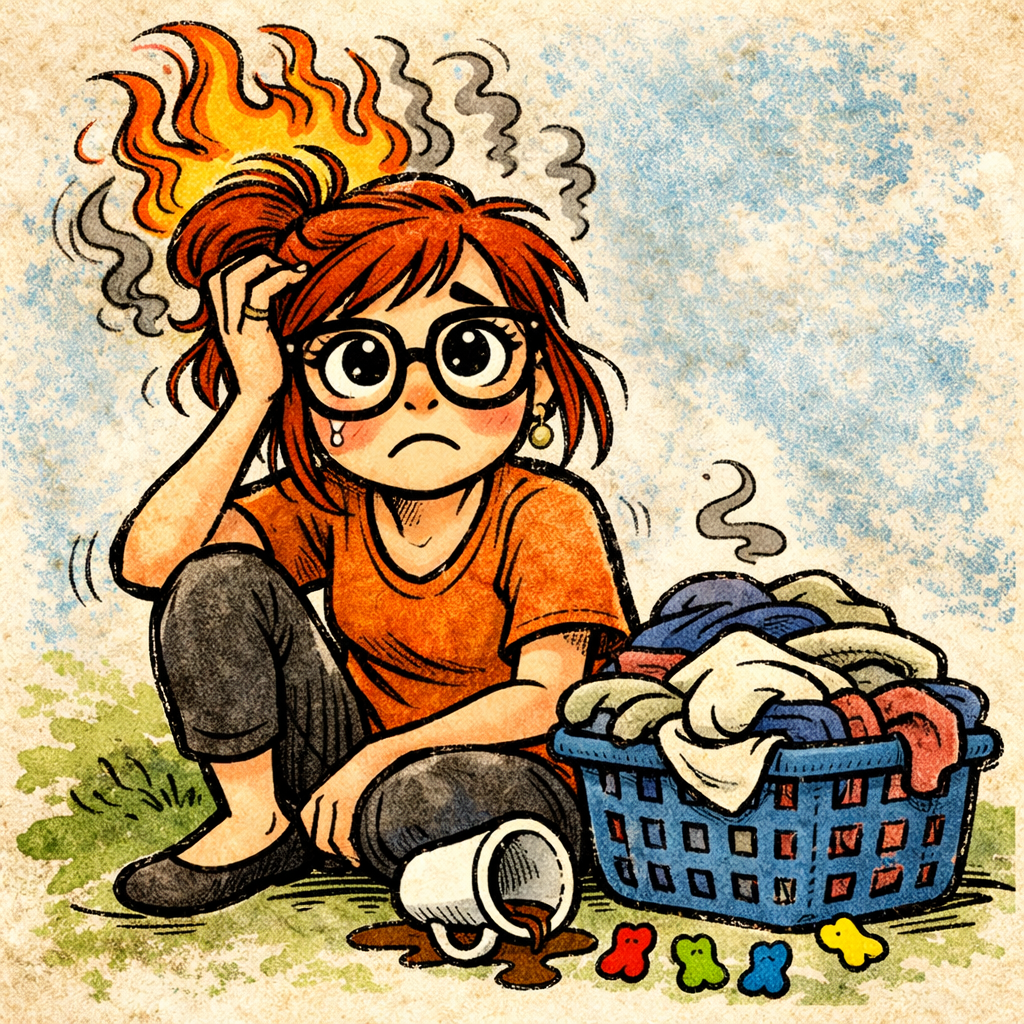
It’s December – the end of a long, hard year – for all of us. I’m all out of patience—and I’m not praying for any. Not today. Not this week. Actually, maybe ever. Definitely, not during the season of tinsel, tension, and trying not to scream in the cheese aisle at Safeway.
The truth is, this time of year is hard. Not Hallmark hard-real-life hard. Holiday movies forget to include the part where the caregiver burns the cookies and the last nerve in the same afternoon. Where traditions become landmines. Where you’re trying to hold on to some semblance of joy, and your loved one is just trying to understand what the fuss is all about.
This season, I’ve been riding the roller coaster of frustration. My tank is empty, my fuse is short, and I have no energy for “extra”- not extra errands, not extra expectations, and definitely not extra opinions from people who don’t understand.
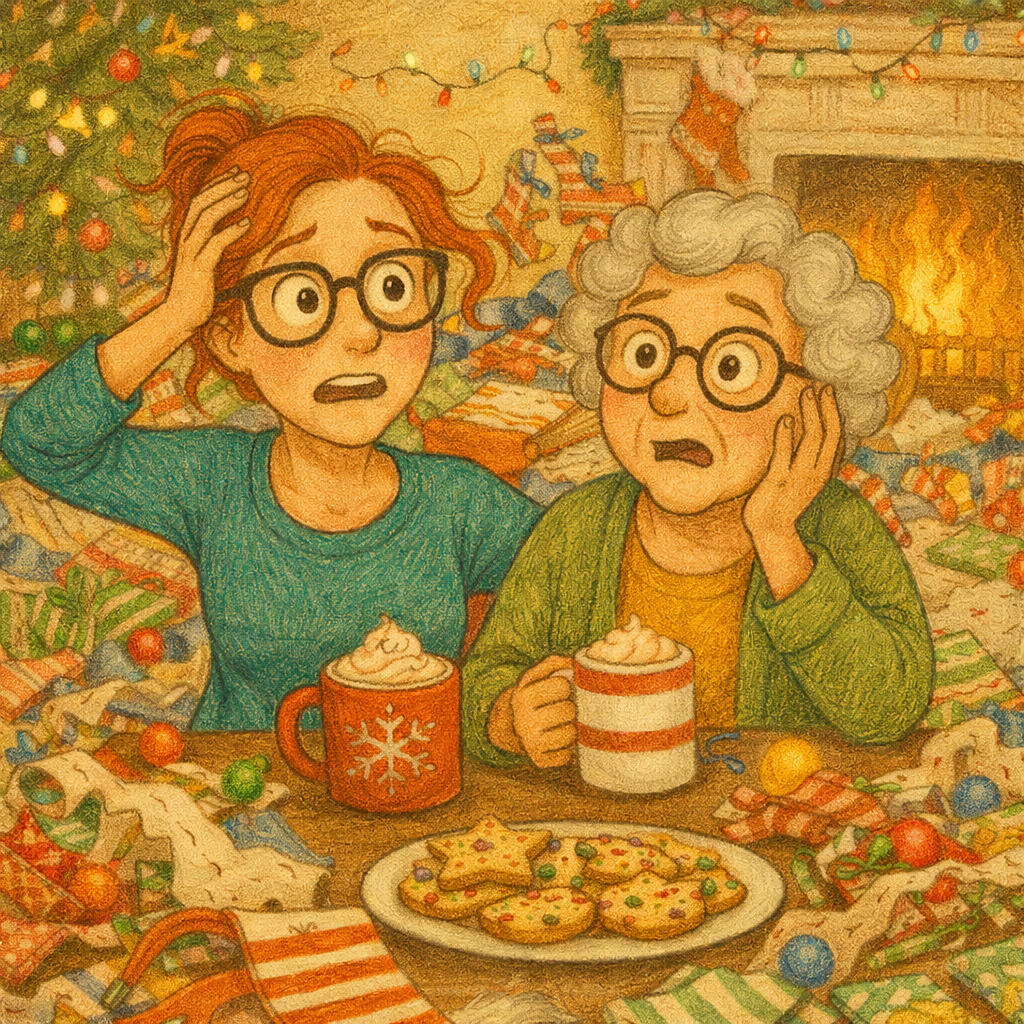
But here’s what I do have room for: cocoa. Glowing candles. Quiet moments. Lopsided cookies. Cinnamon Sunset Tea. Music that sparks something good in both my mom and me.
I’m learning—slowly—to lean into those things. To stop trying to recreate Christmas past and instead meet the season (and my mama) where we are now. This year, that means embracing smaller traditions, letting go of perfection, and choosing peace over performance.
Yes, it’s hard. Yes, I’m tired. Yes, I still miss my “old” life. But I also know that for her, this time of year is hard too. It’s her anniversary on Christmas. My routines are off and it throws her. Her reality is different this year. She doesn’t understand why I need ten minutes of alone time just to survive. It’s just bonkers. So I breathe. And I whisper-scream, “I’m trying.” And I ask God for grace instead of more patience, because grace reminds me I’m human too. And, boy am I ever human.
And in the middle of the hard, I’ve seen glimpses of wonder. A twinkle in her eye when a favorite song played. A moment of laughter that wasn’t wrapped in sadness. That’s the gift I’m clinging to. That’s the memory I’m making. That’s Christmas this year. And it’s enough. I am loving the simplicity and the gentleness of it.
So if you’re barely hanging on, if your nerves are frayed and your eggnog has turned into emotional egg-slop-join me and the one Christmas decoration I have up. Let’s ditch the pressure and soak in what is instead of mourning what was.
You are doing sacred work, even when it doesn’t feel like it. And you, my friend, deserve peace too. So make it simple, and find the peace- even when it’s not easy.
With my last sliver of patience, a frayed nerve, and a cup of peppermint cocoa, I’m hugging you all! Soak in the spirit of Christmas, the magic of the moment in front of you – and take a deep breath. I’ve got this – and so do you.
Caregiver Hack of the Week:
Create a “Holiday Joy Basket” – just for you. Toss in a cozy blanket, one good chocolate bar (not the kids’ Halloween leftovers), a favorite mug, and a playlist of songs that make you smile. When it all feels too much, go to your basket. Five minutes of sanity can do wonders – just don’t forget where you hid it. And, if you have the miracle of an hour – a hot bath with bubbles – is an amazing escape.
There are moments in caregiving when the smallest things stop making sense. Papers are shuffled from one pile to another. The mail sits unopened. Meals go half-finished. A once-tidy home becomes cluttered, almost overnight. Emotions seem bigger. Decisions get harder.
We tell ourselves: They’re just tired. They’re getting older. They’re having a bad week – or may I AM. But often, what we’re seeing isn’t “stubbornness,” “laziness,” or “they’re just not trying.”
It is the quiet loss of executive function.
Executive function is what allows a person to:
Plan
Organize
Sequence steps
Initiate tasks
Switch from one task to another
Control impulses
Manage emotions
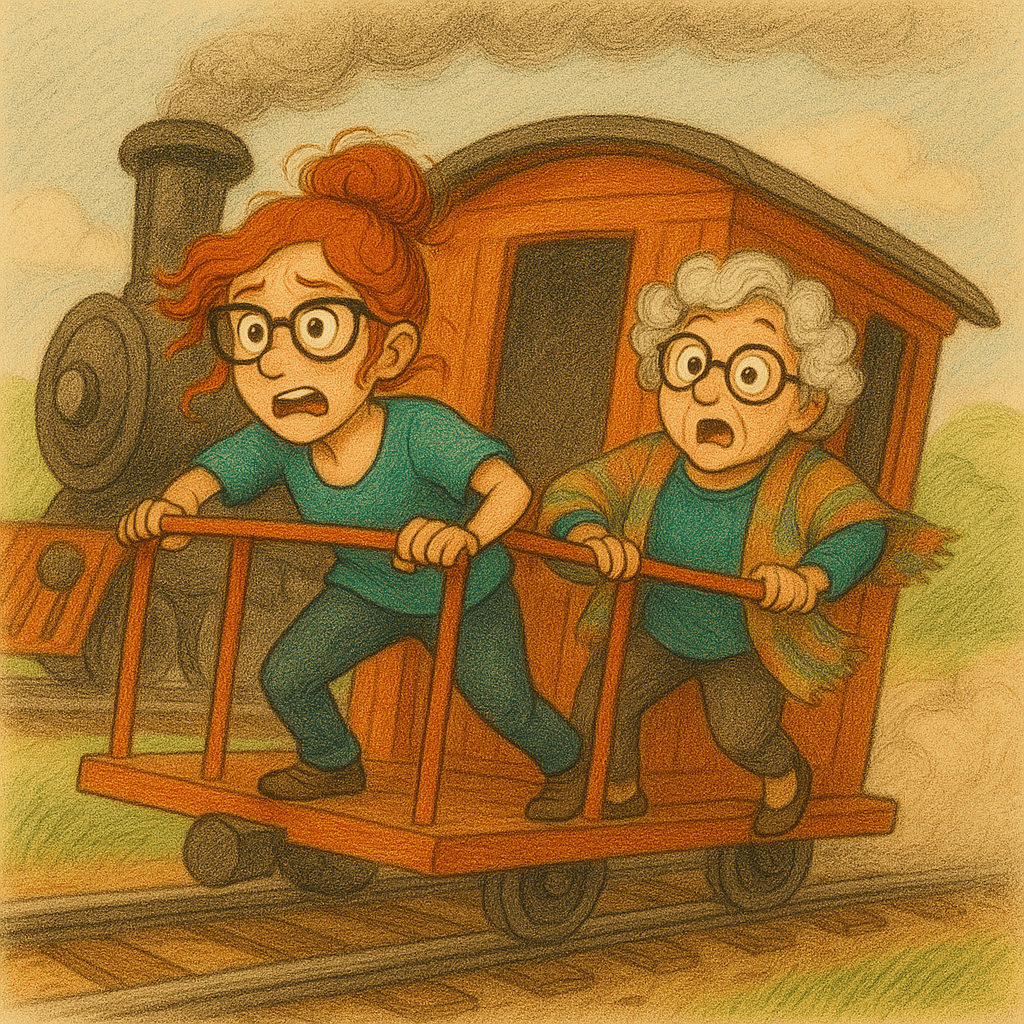
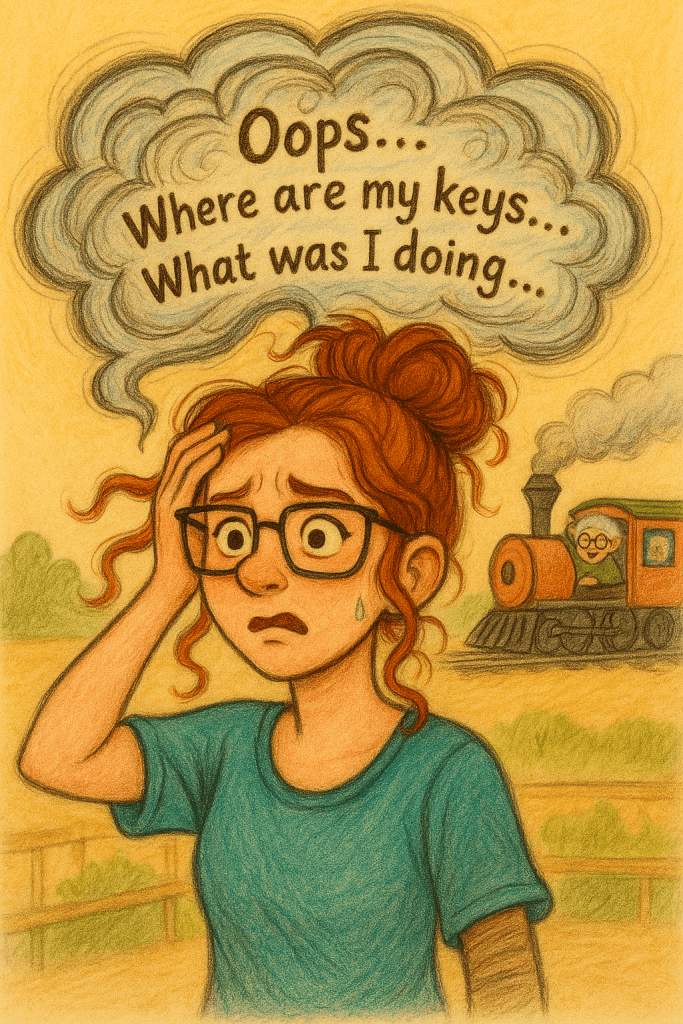
It’s the brain’s conductor, coordinating all the cars on the train. And in dementia, that conductor gets tired… confused… or wanders off altogether.
A Hard Truth I Need to Say Out Loud
Yesterday (in fact, the whole past week) was a hard day. One of where I just sat there and thought:
I hate this disease.I hate this point in my life. BUT.
I love my mother.
This disease (and that is so hard to even say) has taken pieces of her that I cannot quite reach anymore. And those are pieces of her that were essential in our relationship — the music, the wit, the spark, the intelligence, the mischievous grin when she had something clever to say – or a comeback to end all arguments.
Mom has never been ordinary. I think that’s a high compliment. I’m so proud of her.
She could paint, draw, sew, teach, and play a trombone (also accordion, organ, piano, and other instruments) with the confidence of someone who knew that it was in her soul. She raised her voice for women before it was ever a movement, and she prayed for others like it was her life’s work (and still does – everyday).
She is still clever, quick, and funny. She can still spar verbally with the sharpest minds and usually win. It is a blessing to still have her here.
Now for some hard, real talk.
There are days when it doesn’t feel like a blessing. There are days when the missing parts are louder than the parts that remain. And that truth is heavy.
When a person is brilliant and self-sufficient for a lifetime, their decline feels almost personal — like a trick is being played on both of us. It can land as manipulative even when it isn’t. I can’t always tell what is real or what is a symptom. Sometimes I choose to believe the best because I know her spirit… other times I feel like I’m being played and I get so frustrated I could scream.
This past week has been rough – for us both. And yesterday, I cracked. It was a really bad day.
The resentment came up fast and deep, like a wave that pulls you under before you even see it forming. I found myself short-tempered, exhausted, and angry. Angry at the disease, angry at the unfairness, angry at the never-ending needs and the emotional whiplash that is a daily routine.
It felt ugly to admit and even worse to feel.
Last night, when I finally crawled into bed, I prayed. Not a fancy prayer — just a tired, honest whisper:
“I don’t understand. Help me. How do I do this?”
I wasn’t expecting much. We are in the thick of this season, and sometimes it feels like nothing will change – and it’s certainly not going backwards.
But God has a way of lighting a match in the dark when we least expect it.
A Moment of Clarity
Scrolling through my phone — half numb, half searching — I saw two words:
Executive function.
I sat up straight. I had heard it before, years ago, probably in some forgotten science class. But I had never connected it to this. Not to dementia. Not to the confusing parts of caregiving — the stop-start behavior, the overwhelm, the emotional swings, the moments that feel manipulative but aren’t.
I started reading. Where it lives in the brain. What happens when it breaks down. How it affects tasks, decisions, emotions, personality.
And it was like the whole week rearranged itself in front of me.
Suddenly, I wasn’t looking at stubbornness or refusal or apathy.
I was looking at a brain that has lost its conductor.
The train cars are still there. The cargo is still precious. The engine still runs. But the switches, signals, and direction are malfunctioning.
That isn’t manipulation. That isn’t a choice. It is neurology.
Understanding this didn’t fix my exhaustion. It didn’t erase yesterday’s resentment. It didn’t suddenly make caregiving easy.
But it gave me something I desperately needed:
Clarity. Grace. Language.
A way to see what’s happening that doesn’t break my heart quite so much – and most importantly – it will help me, help her.
And this morning, that feels like sweet mercy.
What Loss of Executive Function Looks Like
When executive function starts to slip, the signs can be subtle:
Home & Personal Tasks
Dishes begin to pile up
Clothes go unwashed
Bills are missed
Simple tasks become beyond ability.
Appointments forgotten
“I’ll do it later” becomes “I never did it”
Starting Something Is Hard
They know they need their walker. They know they should take their pills. They want to start… but the bridge between knowing and doing has collapsed.
They Get Stuck
They begin watering plants, then stop halfway
They turn on the oven but never cook anything or try to cook it on a paper plate.
They stand in the hallway unsure why they’re there
Emotional Overwhelm
When everything takes extra effort, frustration, anxiety, and irritability rise.
We often mistake it for:
resistance
stubbornness
“not caring”
or “they’re doing this on purpose”
It isn’t any of those things.
Their brain is running a race with one shoe untied.
How We Help
Reduce decisions
Break tasks into steps
Gentle cueing and prompting
Create routines
Remove obstacles
Celebrate small wins
Consistency, simplicity, and dignity go a long way.
When Emotions Rise — Theirs or Ours
Loss of executive function is not just about tasks. It’s about identity.
They are losing abilities they once relied on. We are losing the person we knew.
Both hurt.
When resentment or exhaustion creeps in — and it will — remember: No one can do this without breaks. Cry in your car if you need to. Take a walk. Ask for help.
The train cannot run without maintenance.
You Are Not Alone
If your loved one:
Starts things they can’t finish
Gets overwhelmed by simple tasks
Becomes irritable or anxious
Struggles to plan, organize, or follow steps
…you might be witnessing the loss of executive function.
It’s not intentional. It’s not a character flaw.
Their brain is changing.
Our role is not to force them back into who they were — but to meet them where they are, guide gently, and remove shame.
This is tender work. Sacred work.
The railroad of caregiving is uneven, unpredictable, and sometimes heartbreaking but this knowledge might help ease things.
See you out on the rails, friends.
Caregiver Hack of the Week:
Take time to learn more. Here are some resources that might be helpful for you:
Alzheimer’s Association – excellent articles and helpline https://www.alz.org
The quick and dirty answer is no. It’s not. But let’s be honest: when you’ve been caregiving for years—and you start losing items, staring into space, forgetting what you were about to do—you begin to wonder: Am I next?
Every time mom forgets a name, loses a thought, or asks the same question again, I whisper: Please don’t let this jump to me.And while the reality is that dementia is not contagious, what is contagious is the chronic stress of caregiving. And that can leave you convinced you’re slipping.
Why Caregivers Feel Like They’re Joining the Club
When you’re running the entire operation—medications, doctor visits, comfort, meals, social outings, defending dignity—you are carrying a mental load so heavy that it warps your everyday reality.
You forget your errands.
You walk into a room and lose the reason you came.
You stare at nothing—because all the synapses are busy carrying someone else’s needs.
And eventually, the worry creeps in: Is this stress—or something worse?
The truth: most of the time it’s stress overload, not the start of dementia. You’re burned out, brain‑fogged, emotionally depleted. Your brain wants to care for someone else so intensely it forgets to care for itself.
So What About Dementia Then?
As I mentioned, no, it’s not contagious. But yes, it’s serious—and yes, caregivers worry. Here’s what the research says:
Dementia (including Alzheimer’s disease) is diagnosed through a comprehensive medical evaluation—there’s no one simple test. Alzheimer’s Association
Early‑onset dementia (before age 65) is rare, but possible. Mayo Clinic
Warning signs include: difficulty solving familiar problems, confusion with time or place, struggling with familiar tasks, changing moods/personality. Alzheimer’s Association
While newer tests are emerging—like the cleared blood test for certain markers of Alzheimer’s U.S. Food and Drug Administration—these aren’t routine screening tools yet.
So when you feel those “Oh no—I might be next” thoughts, let’s pause. Evaluate your lifestyle, check your stress levels, get your sleep, get your check‑ups—and then if symptoms persist? Talk with your doctor.
What To Do When Your Brain Feels Like It’s Turning to Static
Sleep is non‑negotiable. Your brain repairs itself when you sleep. When you skip it, your memory, focus and emotional resilience suffer.
Stress‑check your load. Are you carrying way more than one person’s needs? Of course you are. Is there someone that can step in for a couple hours so you can get your hair or nails done or have a coffee date (or go into the field and scream?)
Schedule respite—not later, now. Whether it’s a 2‑hour break, a weekend away, or a “tech‑free” afternoon. Your brain needs reset.
Monitor your own symptoms. Rarely is forgetting one date or name enough to mean dementia—but if you’re worried, use the list of warning signs above and talk to your doctor.
Don’t carry the guilt. Caregiver fatigue doesn’t mean you’re failing. It means you are caring deeply. That’s exactly why you need care too.
Caregiver Hack of the Week: “The Check Engine Light”
When your brain glitches, don’t panic—just treat it like the check engine light. You don’t assume your car is about to explode—you take a breath, pull over, and check your systems.
Ask yourself:
Have I slept?
Have I eaten something besides toast crusts?
Have I moved my body today?
Have I said anything out loud besides “Where are your pants?”
You’re not breaking. You’re blinking. Time to reset.
Final Thought
Your world might feel small. Your brain might feel tired. The fear of “am I next?” may be loud.
But the truth is this: You’re not alone.You’re not already broken. And dementia is not catching you by mere proximity. What can catch you is chronic stress, neglecting yourself, forgetting that you are someone too. So take a breath. Do the self‑check. And then carve out your reset—because the world needs you, whole and healthy. I know it’s hard, I feel it too.
Until next time. Keep chugging a long – and have faith – you will be okay – even if it’s not today.
I think I can. I think I can. See you at the next stop!
Eight. Doesn’t sound like much time, but it’s a lifetime when you’re on the bull.
That’s how long a professional rider has to hang on, stay focused, absorb the jolts, and not get thrown. They have to ride the bull and there is more to it than hanging on for dear life!
Seem familiar?
Because caregiving—especially long-term, family caregiving—feels a lot like being strapped to a 2,000-pound emotional bull. One that bucks every time you start to feel steady. One that never really stops moving.
Strap In. It’s Gonna Be a Ride.
Some mornings, you wake up and think, “Okay. Today, I’m calm. Today I’ve got this.”
Your morning coffee spills on the freshly folded laundry. The dog throws up under the dining room table. Your mom insists it’s Tuesday, even though you’ve already corrected her three times. While you’re trying to mop the floor, the Wi-Fi goes out, and someone is upset because the TV won’t work. And it’s not even 10:15 AM.
You’re tired, overstimulated, and one snarky comment away from throwing in the towel.
Not because you’re weak—but because this job throws you around.
You ride the highs:
A good day. A clear conversation.
A hug out of nowhere.
A funny joke.
But you also ride the lows:
The repeating. The wandering. The unfiltered frustration they throw at you when their brain can’t keep up.
The guilt.
The resentment for the life you used to have—and the grief for the one you’ll never get back.
It’s Not About Strength. It’s About Staying On.
In rodeo, it’s not about taming the bull. You don’t control it. You survive it.
It’s the same with caregiving.
You can’t out muscle cognitive decline or any type of dementia. It’s progressive. You can’t reason your way out of a failing body. You can’t “love” someone into healing from what time has taken.
What you can do is hold on for the ride. Re-center between the bucks. Get back up when you fall. And learn to breathe through the whiplash. It’s not easy. Any of it.
The Crowd Can’t See the Bruises
The thing about watching a rodeo is—it looks thrilling from the stands.
Just like caregiving looks noble on the outside.
“Oh, you’re such a good daughter. She’s so lucky to have you.” “I don’t know how you do it.” “She looks so good—you must be doing something right.”
And you smile. Nod. Say thank you. But they don’t see the exhaustion behind your eyes. The gnawing sense that you’ve disappeared into someone else’s life.
They only see the ride—not the bruises it leaves behind.
So What Keeps Us Getting Back On?
Love. Duty. Faith. Those are the simple answers. Because even when we’re mad, drained, or spiraling—we still care.
And that’s what makes this the hardest kind of ride. You’re getting thrown around by something you chose—and it still feels like it’s choosing you over and over again.
Final Thought
If today felt like you got tossed—hard—please know this:
You’re not a bad caregiver for feeling it. You’re not a weak person for wanting your own life back. You’re not selfish for needing to pause the ride – or never ride again.
Before being a caregiver, you are human.
And just like in bull riding, the real bravery isn’t in taming the chaos—it’s in getting back on when you can… and letting yourself rest when you can’t.
Eight seconds at a time. One breath at a time. We ride together.
Caregiver Hack of the Week: The Bullpen Timeout
Set a “bullpen” break once a day. That’s the spot where the bull rests before the ride. It’s calm. Controlled. Nobody’s flying through the air in the bullpen.
For you, it could be:
15 minutes with noise-canceling headphones and no guilt.
A moment in your car with your favorite song and no to-do list.
A mental “bullpen” where you repeat: I’m safe. I’m strong. I can sit here for a minute.
Because nothing says “self-care” like justifying your every move.
The Situation:
Caregiving comes with a lot of responsibility. A lot of laundry. A lot of decision-making. A lot of stuff that shall remain nameless today. But, you know what I didn’t see coming when I started this journey?
The guilt trips. And not the kind I give myself for feeding us peanut butter toast for dinner. I’m talking about the full-blown, full-throttle interrogation that hits the second I dare to leave the house for more than 20 minutes.
The minute I walk back in? It’s on! “Where did you go?” “Did you get groceries?” “Did you talk to anyone?” “Did you have a fun, fun day?” (I was gone for just half an hour.) And my personal favorite: “Were you really at the dentist this long?” Of course!! I LOVE THE DENTIST. We just hung out and laughed about root canals.
I’m 58. Fifty. Flipping. Eight. Yet somehow, I feel like I need a permission slip signed in triplicate just to go to anywhere. Every caregiver in agreement say aye!
Almost 7 years in, and it’s wearing me thin.
I make all the decisions. I carry all the weight. I schedule the appointments. I repeat every answer at least 3 times. I pay the bills, take care of the house, and run 2 businesses. I handle every “urgent” call or request throughout the day. Yet, the interrogations pop up whenever I do something for me.
Heaven forbid I take an hour to walk around Sam’s Club like a feral raccoon in leggings. Because then, the parent decides to come out in the guise of “curiosity.” “Are you okay? I was worried.” “What took you so long?” “Is the store REALLY that big?”
I hate being grilled under bright lights for leisure-adulting. Seriously! I promised you real, and this topic is bringing out my salty side.
Here’s the Truth:
You can love someone fiercely—deeply—and still feel suffocated by their constant scrutiny and neediness. It’s not that our loved ones are trying to be difficult (most of the time). Sometimes it’s the [cognitive decline, dementia, etc.] talking. Sometimes it’s old-school parenting (they never forget that role) kicking in. And sometimes, it’s just… them being them. Whatever the case, it makes you question your sanity when you’re trapped in an eternal loop of being both the caregiver and the kid. I absolutely despise it!!! It is SO hard.
But Let’s Laugh About It, Shall We?
We are not failing. Remember the source. We’re navigating emotional landmines and laundry baskets full of mismatched socks. The signals are completely scrambled. The wires are shorting. So don’t take it personally. (This is CHALLENGING but try).
We deserve a personal life. Even if it’s 30 minutes at the Dollar General wandering aimlessly and visiting with people.
We don’t owe an explanation for trying to have some normalcy in our lives. Period.
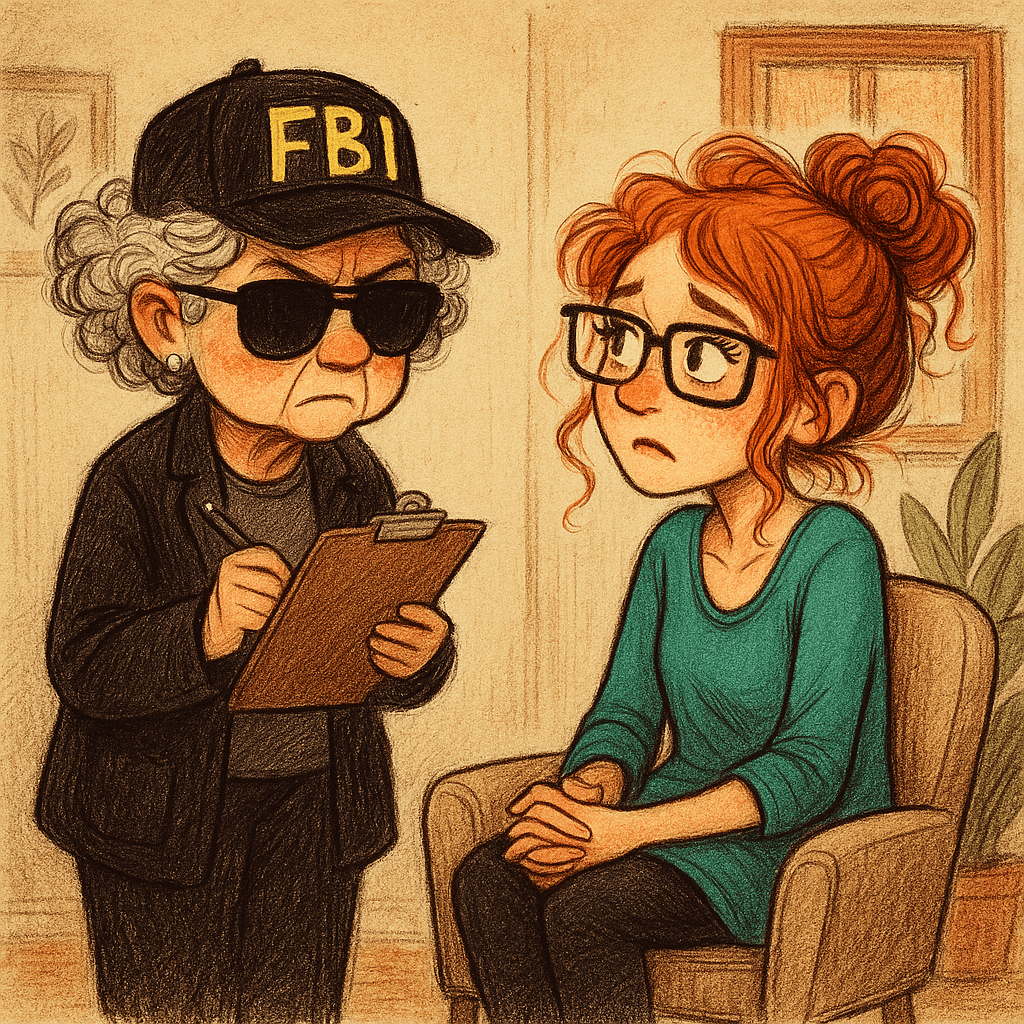
The guilt trips may keep coming, but here’s the deal – you deserve “me time.” It’s non-negotiable – even if your loved one questions your every move like a tiny, retired FBI agent with memory issues.
You’re the one holding it all together. Throw a little grace on yourself like it’s glitter and keep going. You dserve you time. Okay, we’ve got this. Right? RIGHT!!!
Caregiver Hack of the Week:
The Phantom Errand: Pick an errand that sounds noble but vague, and go. You can cry in the car with dignity, scream in a cornfield if you need or go have a quick coffee with a friend. It’s an hour of freedom – just remember to go back home. (kidding – I know you will.) It’s who we are!
I opened a drawer the other day and found my passport. Tucked away, unused for so long I didn’t realize it had expired.
Something about that discovery broke my heart a little bit. Not in a dramatic way, but in the quiet, hollow sort of way that caregivers will recognize.
That tiny blue book used to represent adventure. Possibility. The next big meeting. The next event. The next city, country, culture. It reminded me of a time when my life was full of movement—when my calendar was packed and my purpose felt outward-facing and exciting. I’m not sure that’s exactly how it was because life in events is stressful and it takes a lot of grit.
Now? Most days, I don’t even leave the house – my clothes are a uniform, not a style. Make up and hair decisions are made by whether there is a zoom call for my business or not. I want to go to the gym, work out, and walk, but I’m emotionally exhausted. I literally cannot finish one thing without something piling on right behind it. Yes, to a point that’s always life, but this feel so different.
A Smaller World
Caregiving shrinks your world.
Not because you don’t care. But because you care so much, you start to let go of everything else. Every decision is made around someone else. There it is in writing and reality. Every decision is made around someone else.
Social circles disappear. Spontaneity vanishes. Planning anything feels like wishful thinking. And before you know it, your whole world fits inside your office, your living room—and often, the doctor’s office.
Sometimes, like today, that makes me feeltrapped. Sometimes, it makes me feelforgotten. And more often than I’d like to admit, it makes me feel like I’ve disappeared. Don’t misunderstand, I’ve always loved helping people, but caregiving is way beyond that.
I used to have a big career—stressful, yes, but also exhilarating. I accomplished things. I made things happen. Now, a good day means I accomplished my to-do list at work and there has been no medical crisis.
Why I Said Yes
When my parents needed me, I said yes. Because that’s what love does.
The Bible says, “Honor your father and your mother.” It doesn’t say only when it’s convenient. Or easy. Or when you have no other dreams.
So I came home. And I’m still here. Six and a half years later.
And yes, there are beautiful moments. Yes, there is slower joy. But some days—like yesterday—it feels like the whole world just kept moving while I had to stop.
This Is Hard for Me… but for Her, it’s Everything.
Here’s something I remind myself when the bitterness creeps in: This life I’m living? This slow, small, careful life?
It’s hard for me…But it’s an answered prayer for my mom.She is safe. She is not alone. She is surrounded by love – and my grouchy sometimes too (gotta keep it real). And for her, that is everything.
So for now, this life, has to be enough.
People always ask men about my plans after mom goes
How can I possibly answer that? The possibilities are endless. Only one thing is for certain, I’m gonna do me for a little while.
A Small Step Toward Someday
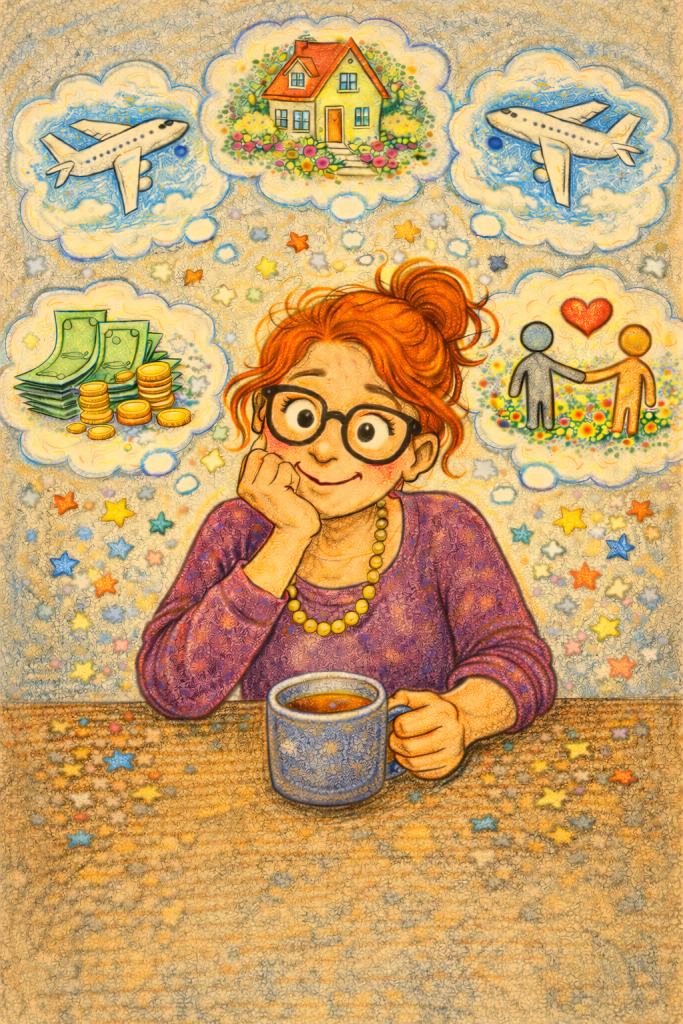
But I also need something forme, right now. A flicker of hope. A sliver of someday. Plans that light me up when I think of them. They don’t have an expiration date. Places I want to see and experience. Thinking of it is like breathing in fresh mountain air, and I felt my heart stir.
So I renewed my passport. It doesn’t mean I’m hopping on a plane tomorrow. But it does mean I believe there’s still more to come.
It means I’m still here. Still leaving room for joy, and adventure, and a life that doesn’t end when caregiving does—because it won’t.
To My Fellow Caregivers
If your world feels small, I see you. I feel your heart – and it’s tears. If you’re grieving the version of you that used to be, I get it. If you’re trying to be faithful while feeling a little lost, I’m right there with you.
But hear this: (notice that I’m included in what I’m about to say): We are not stuck. We are not forgotten. And that “person we used to be” is not gone. We have to keep them alive and planning for when the time is right and the opportunity comes.
Right now, we are just holding space—for someone else, and for ourselves. One day, “this present” will be a beautiful memory of living with integrity, doing the right thing and cherished memories that will give your heart peace.
Keep the passport. Keep the hope. Keep going.
Caregiver Hack of the Week: Pack Your “Someday” Bag
Feeling stuck doesn’t mean you can’t still dream. When life feels small, symbolic actions can keep your spirit spacious.
This week’s hack? Create a “Someday Bag.” It’s not a to-do list or a Pinterest board—it’s a tangible reminder that you still matter and your future still exists.
Inside your “Someday Bag,” include:
Your renewed passport 📘
A favorite travel-sized item (lip balm, tea, notebook, etc.)
A postcard or photo of a place you’d love to visit
A note to yourself that says: “We’re going. One day.”
Place it somewhere safe but visible. Let it remind you that this season, as hard and consuming as it is, will eventually shift.
You hear me say it all the time. Caregiving is an act of love—and like all love, it asks a lot of us. But it also gives us the opportunity to grow, adapt, and learn new ways to support the ones we cherish. And in this age of innovation, we’re not doing it alone.
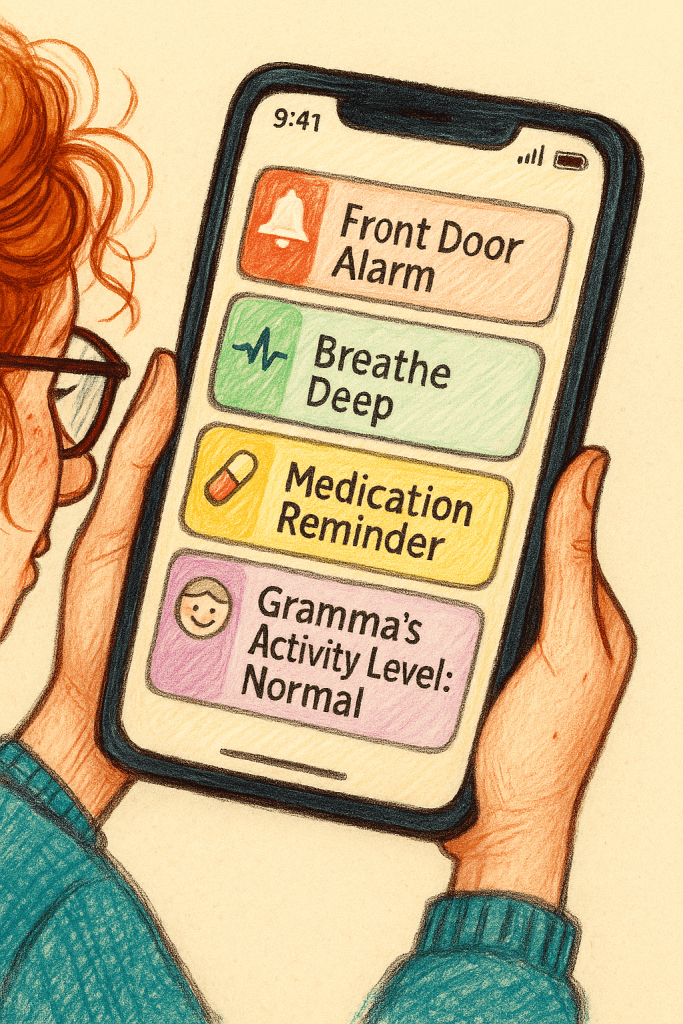
Technology doesn’t replace the human connection. Used right, it amplifies it. Whether it’s a reminder for medication, a calming voice in the night, or a way to stay connected from afar—these tools give us space to breathe, to respond with more calm, and to care with more confidence. Here are some ideas that might help you:
Tools That Support Safety and Peace of Mind
These help you stop worrying just enough to sleep at night:
GPS-Enabled Trackers (AngelSense, TheoraCare): Know where your loved one is without hovering.
Smart Home Sensors (Wyze, SmartThings): Quiet alerts for door openings or unusual movement.
Auto-Locking Medicine Dispensers (Hero, MedMinder): One less thing to track daily.
Staying Connected Without Stress
Connection is comfort—even when you’re across the room or across town:
Voice Assistants (Alexa, Google Nest): Set reminders, play calming music, ask questions, or even joke around.
Video Calling Devices (GrandPad, Echo Show): Large buttons, simple screens—no tech degree required.
Picture Phones: Tap a face, not a number. Great for memory support and independence.
Daily Rhythm, Calm, and Comfort
Simple cues can ease anxiety and reduce frustration:
Day Clocks (Robin Clock, Dementia Day Clock): Display the time, day, and part of day clearly.
Routine Apps (Trello, Todoist, or CareZone): Track tasks, appointments, and to-do’s in bite-size chunks.
Robotic Companion Pets: The purr or wag of a Joy for All cat or pup can provide unmatched comfort.
Tech won’t solve everything—but it can solve something. Whether it’s easing your mental checklist or helping your loved one feel more seen and secure, each device is a small act of grace. And sometimes, that’s all we need to keep going.
You’re doing the hardest job in the world. Let technology lend a hand—so you can offer your heart.
Caregiver Hack of the Week:
Build a “Tech Flow” Morning Routine. Create a 15-minute tech-powered morning setup that sets the tone for the day:
Ask Alexa to play a favorite song.
Check your smart device notifications.
Review the day’s meds and tasks on your caregiver app.
Then pause and breathe. That counts too.
This one habit can reduce stress and make the whole day more manageable – and isn’t “more manageable” something we can all agree on? Thought so.
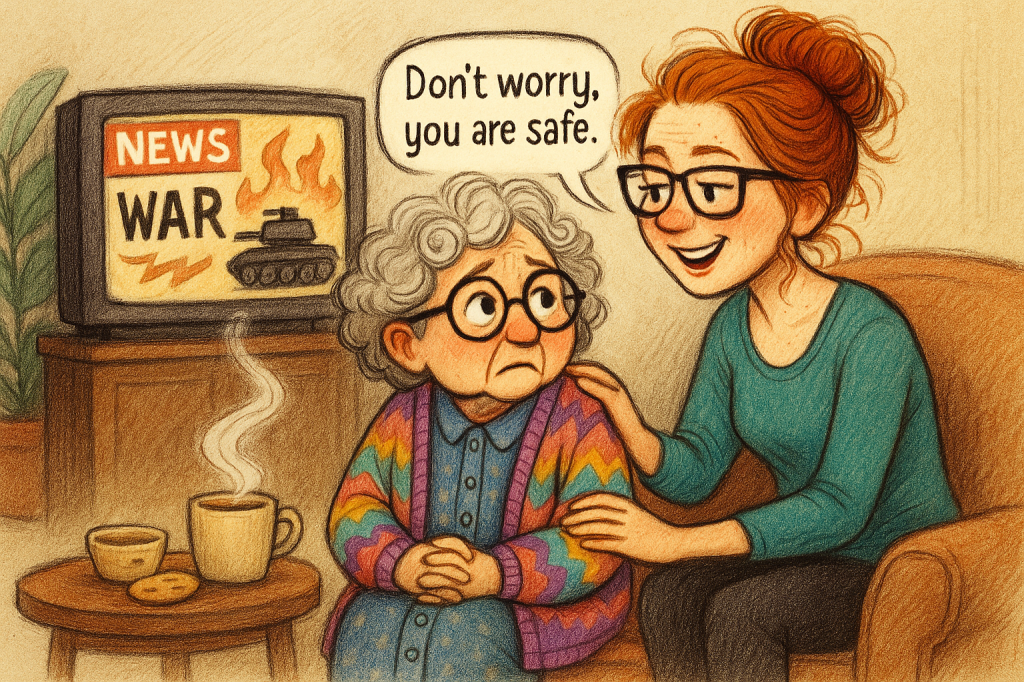
Last week was heavy. Watching my mom’s face as she caught the news with me, I could tell the events — the shootings, the violence in Dallas and , the sadness — were affecting her. So, this morning I asked her: “How are you feeling about all the things happening right now?”
She responded right away. She spoke of Charlie Kirk, the school shooting in Evergreen, CO., Iryna Zarutskathe – the young woman attacked on the subway and beheading of the Chandra Mouli Nagamallaiah. She cares, and I realized just how much she is aware. And how much she feels. Our loved ones cannot be expected to bottle up their fears and questions and let them stew. It’s not healthy or safe for them.
She also feels unprepared to handle things if something went awry. A person with dementia or any type of cognitive decline processes events differently. Their sense of time and space is skewed, especially if they time shift. You’d be surprised at how much our loved ones absorb just from the ebb and flow and energy what plays on the television. If your loved one is still cognizant of current events, those moments can shake them deeply and we need to be sure to help them deal with it. Their security comes from us – their caregivers and loved ones – the people that they trust the most.
What Happens with Traumatic Events and Older Adults
Here’s what the research shows:
Older adults who follow distressing news closely tend to have higher levels of psychological distress — including anxiety and depressive symptoms. PMC, MDPI
For people with dementia or cognitive decline, bad news can trigger confusion, especially when they mix current events with memories or past traumas. Alzheimer’s Society
Traumatic or alarming media exposure can reignite old trauma. Older adults are at greater risk of developing PTSD symptoms or adjustment disorders after disasters, mass violence, or similar events. PTSD VA+2PMC
Frequent exposure to stressful current affairs can decrease sleep quality, increase worry, and make it harder for the body to unwind. Discovery Village
How We Can Help Loved Ones Feel Safer, More Secure
When you sense they’re feeling scared or disturbed, there are gentle hands-on ways to respond.
Ask Them — like I did this morning. Open with something like, “What have you heard about what’s happening? How are you feeling about it?” Let them share on their terms.
Limit Exposure — news is everywhere, but you don’t have to feed the fire. Turn off 24‑hour news channels, mute notifications, or choose specific times to check updates rather than letting them spill into every moment. Alzheimer’s Society
Stick to the Facts, Then Close the Book — when talking, keep things simple and factual, avoid speculation. Once you’ve discussed, transition to something comforting (a story from the past, music, a joke) to reset the emotional atmosphere.
Use Reminiscence Therapy or Shared Memory — bring up old photo albums, music from her past, things she knows well. It can ground them in what they know and love, not in what unsettles them. Verywell Mind
Offer Calm Reassurance — “You’re safe here. We’re watching out. I’m with you.” Physical comfort like holding a hand, hugging, or just being nearby can help more than words.
Create a Safe Space Ritual — maybe at a particular time each day you turn off the news, sit together with tea, do something soothing. Having a routine of calm gives them something stable to count on.
Final Thought
It’s okay to talk about what’s happening in the world. It’s honest. It matters. But we also have to guard their hearts. Their processing and logic doesn’t work the same, and we need to be aware and proactive when traumatic and overwhelming things happen. When it all becomes too much, we are the safe place. We can help them feel held — not terrified.
These conversations and our protection are part of this caregiving journey. And love — even softly spoken, even quietly done — can bring light when the world feels dark.
Caregiver Hack of the Week
“News‑Check and Rewind”
Set a “news check” time (say once or twice a day). During that time, catch up together. After the check, do a “rewind ritual”: share three pleasant memories, listen to a favorite song, or look at a photo from happier times. It helps shift the emotional weight of what’s come in.
My mother has been in the hospital twice in thirty days. And yesterday, everything in me just… unraveled. I couldn’t sit still. Couldn’t think straight. Couldn’t even sleep last night.
After six and a half years of caregiving, you’d think I’d have some sort of rhythm or “resilience.” But that’s the myth, isn’t it? That this gets easier. That we eventually master the balancing act.
The truth? Sometimes there’s no balance, no breathing room, no space for me in my own life.
And yesterday, I prayed. I cried. I picked myself up more than once. And I kept going.
Because that’s what caregivers do, and some days just look like utter chaos.
This Is Not a Job. Like it or Not, It’s a Life.
Caregiving isn’t something you clock in and out of. It’s a 24/7 storm made of hospital runs, med schedules, brain fog, worry, finances, and a body that’s often breaking under the weight of holding it all up. There are days when it feels like no one sees it. Like you’re spinning inside a hurricane while everyone else is walking calmly through sunshine.
But I see you. And I am you.
This Is a Marathon — Mentally, Physically, and Spiritually
People talk about caregiving like it’s some noble task. And it is noble. But it’s also back-breaking, soul-splitting, and lonely as hell some days. This disease — whatever form it takes — isn’t a sprint. It’s a grueling marathon, and most days, you’re running it on no sleep, no plan, and no backup team. Every once in a while it breaks me.
What Can People Do to Help? (Hint: Don’t Over-complicate It)
If you love a caregiver, please hear this: We are not looking for more things to schedule. We’re already drowning in appointments and calendars and decisions.
What we need is simple.
Drop off a meal. (thank you, to my angel who did this for us yesterday)
Mow the lawn or help do a simple clean out to help for winter.
Text “I’m going to the store. Need anything?”
Bring a coffee and don’t expect small talk – we get enough of that with our loved ones.
Send a funny video just to make us laugh.
Don’t wait for us to ask. We won’t. We don’t have the bandwidth to think about how you can help — we’re too busy keeping someone else alive. Literally – and it is intense.
Caregiver Hack of the Week
Time-Box Your Tasks When chaos strikes (and it always does), don’t write a to-do list. Instead, break your day into two-hour blocks. I can’t as I run a business also, and it has to be that way. If you can, give each block ONE focus only — like:
9–11am: Deal with insurance and meds
11–1pm: Rest or shower (yes, put this in!)
1–3pm: Work, errands, or nap
3–5pm: Time with your loved one.
This helps you stay grounded when everything feels like it’s on fire.
You Are Not Alone – Even When It Feels Like It.
If you’re reading this with tears welling up or exhaustion making your hands shake — I see you. I am you. And you are not alone. You are in the fight, and you are doing great. You really are. Look at all you do. I know your tired, love, but keep going.
Caregiving is not something we were designed to do solo. We need honesty, vulnerability, and community to make it through.
There’s no shame in feeling broken. There’s no guilt in needing help. We all need it. And there is no one way to do this right.
Do the best you can, and let that be enough – because it has to be and if you lead with love – it will be.
Settle in. This one is a little long because I’m feeling a little preachy!
Disclaimer for those that think every post is about my mom. I am not putting Joycie Ellen in a home. That said, I am standing up and advocating for those that have to make an impossible choice. This week Bruce Willis’s wife and family are on my heart, and I’ve read the comments, the divisive vitriol and the opinions.
Let me start here: If you have never been a caregiver – sit down. You’re opinion literally doesn’t count – because you do NOT know the struggle, and don’t really understand the different types of dementia and the behaviors they can cause. If you do and you’ve not been a caregiver, you’re a unicorn.
There’s a train I never want to ride, and it’s called the Guilt Express. Sometimes it’s unavoidable in the caregiving world with the decisions that have to be made. It comes with a one-way ticket to “I should have done more” and “What if I’d just tried harder?”If you’re a caregiver or spouse or child facing the gut-wrenching decision to place a loved one in a nursing home or memory care facility, you’ve probably felt like the conductor of that train.
Let me share this:
My dad was 92 when we had to make that call. He kept falling. He wasn’t safe, and my mom—who was 87 at the time—couldn’t physically get him up anymore. She loved him with every fiber of her being, and that decision broke her heart – and it still does.
But his doctor said what we knew deep down: It was time. Time to prioritize his safety, his comfort, and her well-being, too. And even though it was the right call, it still haunts her. Because the myth persists that “putting someone in a home” means you’re abandoning them. Let’s be clear: sometimes it’s the greatest act of love you can give.
The Truth No One Says Out Loud
No one talks about how exhausting caregiving can be. No one tells you how dangerous it becomes when you’re sleep-deprived, physically depleted, and emotionally worn out. No one tells you that keeping someone at home at all costs can sometimes cost both of you more than it should. No one talks about how dangerous it can become if a loved one becomes violent because of a disease.
There comes a point where love doesn’t look like “doing it all yourself.” It looks like making sure your loved one is safe, supported, and surrounded by people who can meet their needs—even if that’s not under your own roof.
It’s okay to grieve that. It’s okay to cry. And it’s more than okay to feel relief once they’re in a place where they’re being cared for around the clock. Relief doesn’t equal regret. It means you’re human. Yes, that makes me cry, too.
Making a New Home Feel Like Home
Just because they’re in a facility doesn’t mean you stop showing up. You are still their person. You are still their anchor. You are still the one who knows how to turn a plain room into a familiar, sacred space.
1. Bring pieces of their past with them.
Framed photos, a favorite pillow, their go-to coffee mug, or a small quilt can do wonders. These tangible items help preserve a sense of identity.
2. Create a “comfort kit.”
Include things like a familiar lotion, soft socks, their favorite snacks, a prayer book, crossword puzzles, or music from their younger days. Make it personal.
3. Visit with intention.
Even short visits matter. Bring stories. Play a game. Sing a song. Simply sit and hold their hand. Presence, not length, is what counts.
4. Get involved in care planning.
Be their advocate. Ask questions. Share insights that staff might not know. Your involvement helps bridge the gap between clinical care and heartfelt care.
5. Celebrate milestones, even small ones.
Bring cupcakes for their birthday. Decorate their door for holidays. Hang a card that says “You are loved.” Let them feel special and seen—always.
Final Thought
Placing someone you love in a nursing home is not a betrayal. It’s not weakness. It’s not failure. Sometimes, it’s the kindest, strongest, most selfless decision you can make.
And before you judge someone for making the heart-wrenching decision to place their loved one in a facility—don’t. You don’t know what goes on behind closed doors. Sometimes it’s not just about burnout or exhaustion (though those are real, too). Sometimes the person we love most in the world becomes aggressive, confused, or even violent—and the home is no longer safe for them or anyone else. That doesn’t mean we love them any less. It means we love them enough to get them the care they need. These decisions don’t come easy. They come with sleepless nights, tears in the shower, and more guilt than anyone should ever have to carry. But sometimes, keeping someone at home is no longer compassionate—it’s dangerous.
If you’re facing this choice, please know you are not a failure. You are human. And doing what’s best doesn’t always look like what you hoped for. Give yourself the grace you would extend to anyone else walking this impossibly hard road. Give your loved one the care they deserve, even when it breaks your heart a little to do it. There is a whole world of us out here loving and supporting you – starting with me.