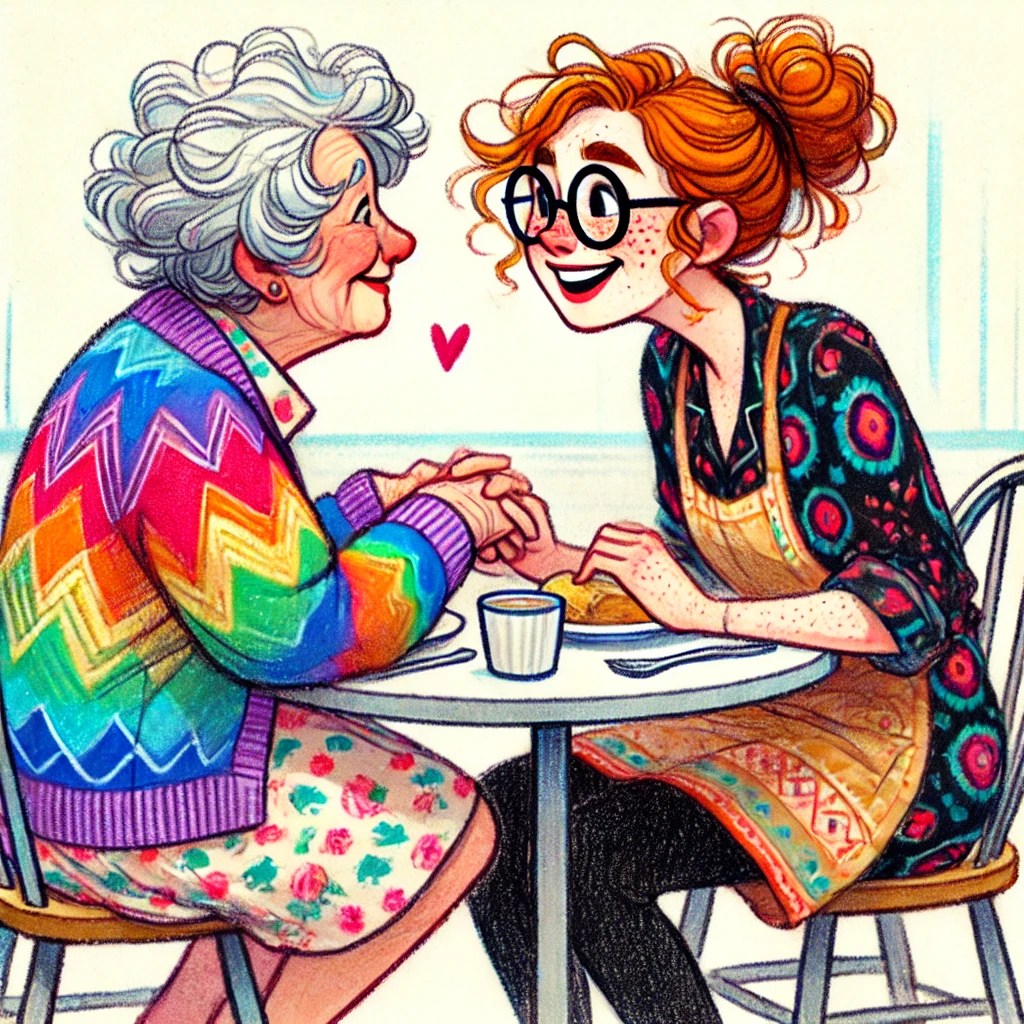
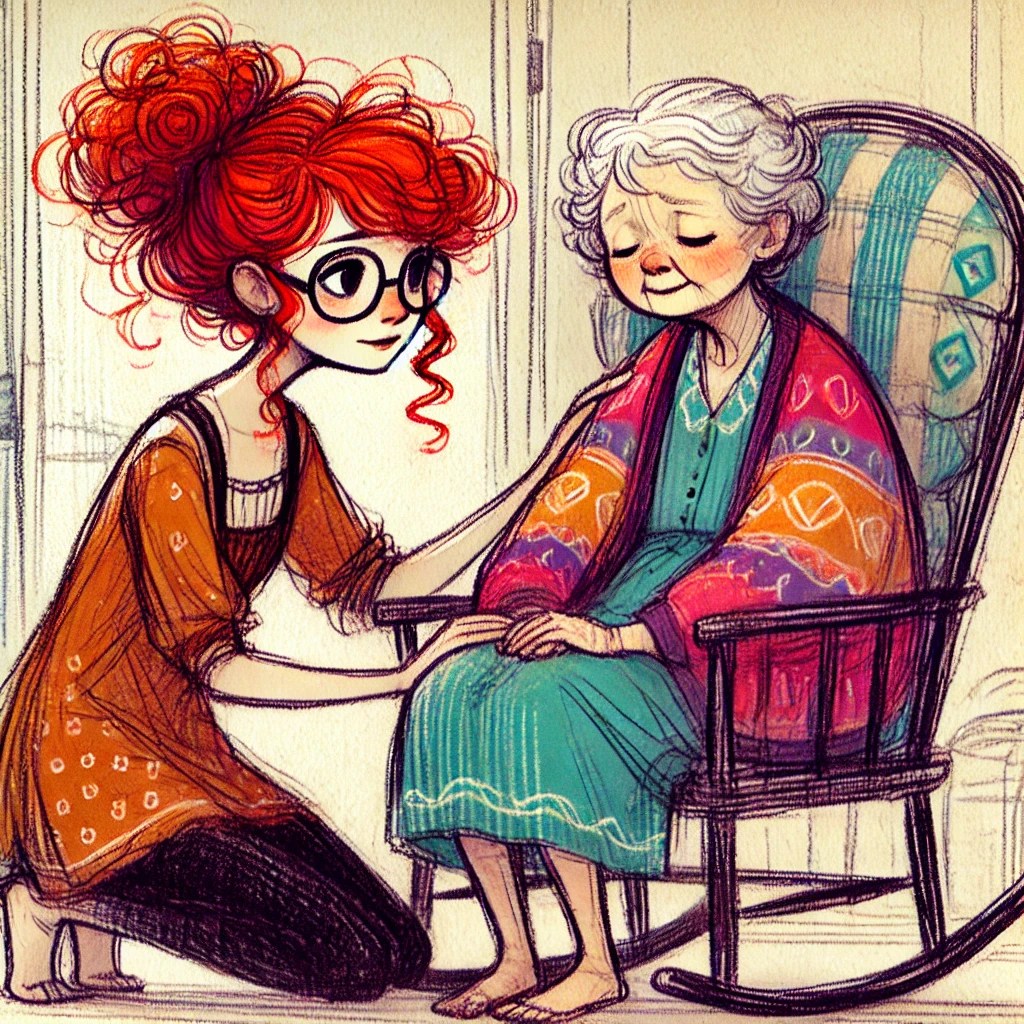
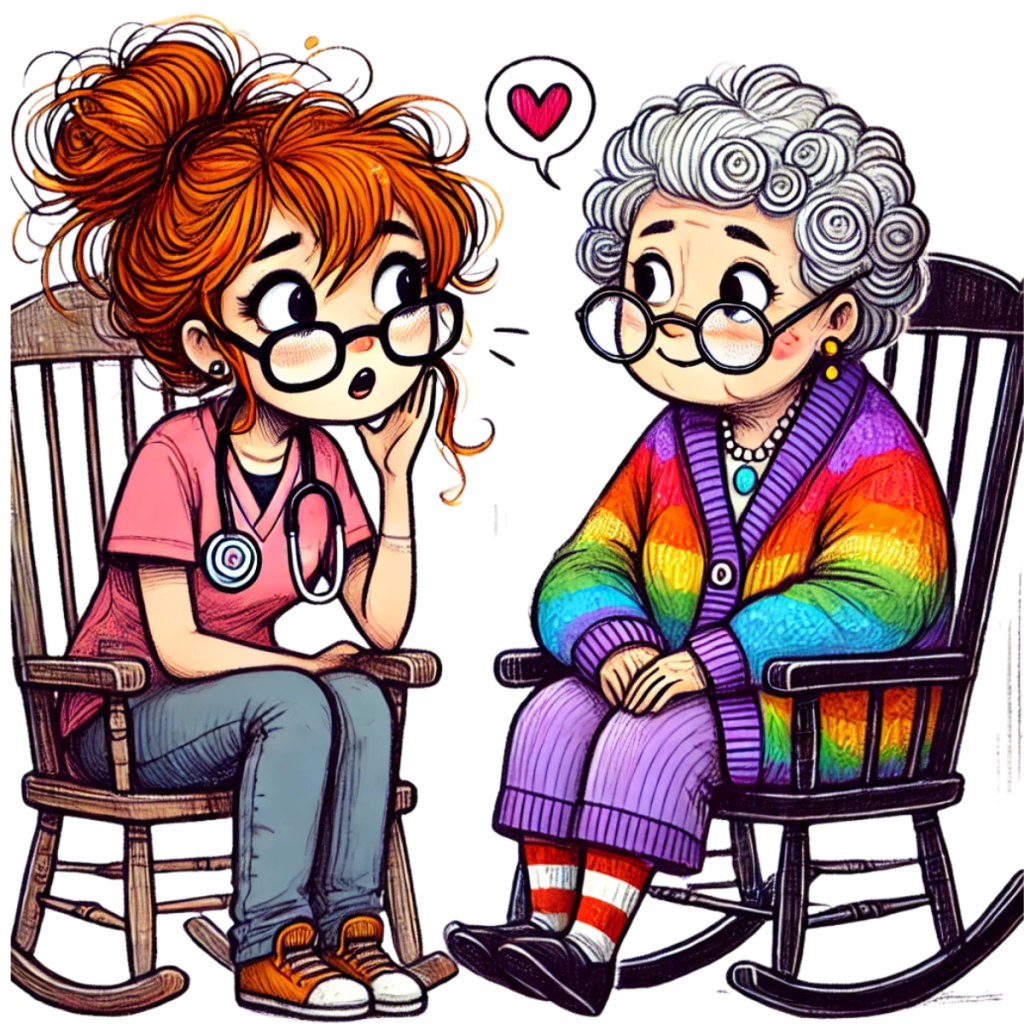
• “Hope, Comfort, and Chocolate Milkshakes: Understanding Hospice and Palliative Care” Part 1

    April 30, 2025
    Uncategorized

    Guest Blog by Jenta Kunkel

    At The Silver Haired Choo Choo, we believe knowledge is one of the greatest gifts you can give to yourself—and to those you care for.

    I’ve had so many questions and emotions swirling from caregivers about hospice and palliative care that I wanted to provide some information that is tried and true.


    Today, I am handing my pen over to someone who is so special and dear to me. Jenta Kunkel, MSN, RN, FNP-BC, PHN (or as she prefers Nurse Practitioner sans all the alphabet soup) whose most recent focus has been Hospice as a Family Nurse Practitioner after experiencing how confusing and scary Hospice and Palliative care can be without an advocate.  She is going to tackle this tough and touchy subject and do it with knowledge and a grace and grit that I do not possess.


    Jenta has dedicated several years throughout her career to the specialty of hospice care, pouring her huge heart and compassionate spirit into every patient and family she’s touched. She share with me that it is one of her favorite specialties as a Nurse Practitioner. I asked her to give us a clear, honest explanation of the difference between Palliative Care and Hospice Care—and why Hospice isn’t just for the dying. 

    Grab your coffee (or a glass of wine—we won’t judge) and settle in. Jenta’s wisdom is worth every word and the time it takes to read it.  Thank you, Jenta for doing this for us. I’m so grateful and appreciative for your open and willing heart!

    Let’s Dig In (Spoon Optional)

    When discussing Palliative Care or Hospice Care, it can feel like you’re digging a rabbit hole with a teaspoon.Online searches make your head spin, your eyes cross, and no amount of coffee can reboot your brain. It’s overwhelming. I get it.


    I’m here to give you the bullet-point version — to point you toward informed decisions, without falling into a coma.

    But first, hear this: this doesn’t have to be a time of sadness.  In fact, some of my most humorous stories have come out of hospice.

    • A patient who joyfully requested daily chocolate milkshakes as part of her care plan. (You better believe we brought them—even when she didn’t drink them, they made her smile!)
    • A 101-year-old woman who politely suggested that if she had to stare out the window all day, she’d like “a better-looking pool guy… maybe younger… 50 or 60?”
    • A gentleman who winked and said, “I should have gone on hospice years ago—I haven’t taken out the garbage once, I watch football without interruption, and if I want people to leave me alone, I just say I need rest. I like this!”

    It’s okay to laugh.
    It’s okay to cry. 
    It’s okay to be tired, joyful, sad, and hopeful—all at once.
    It’s all okay.  It’s real.  It’s life.

    Ready?  Let’s dive in.

    Palliative Care vs. Hospice Care: How Are They the Same?

    Both focus on quality of life, not just length of life.
    Both are patient and family-centered.
    Both offer medical support like social workers, chaplains, physicians, nurses, volunteers, and help with medications and equipment.
    Both provide emotional, spiritual, and social support.
    Both encourage advance care planning and are covered by most insurance plans, including Medicare and Medicaid (with some fine print, of course—because it’s healthcare).
    Both allow you to revoke services at any time.

    Both services can be provided in:

    • Hospitals
    • Hospice Programs (like Enhabit, Vitas, Elizabeth Hospice, the VA)
    • Long-Term Care Facilities
    • Assisted Living Facilities
    • Personal Homes

    What Palliative Care and Hospice ARE NOT:

    • They are NOT “Home Health” (which focuses on rehabilitation and recovery).
    • They are NOT a way to “hasten death.”
      In fact, some hospice patients live longer than expected—and a few even improve enough to be discharged from hospice!
      It’s about comfort and dignity, not giving up.

    Who Can Benefit?

    • People of all ages with serious illnesses like cancer, heart failure, or lung disease.
    • Families and caregivers who need emotional and practical support.

    So now that we understand what hospice and palliative care are  – our next stop is going to be a deeper dive.  All aboard!

    No comments on “Hope, Comfort, and Chocolate Milkshakes: Understanding Hospice and Palliative Care” Part 1
  • Bonus Post: When the Blues Roll In: Navigating the Tough Days when You Don’t Feel Your Best

    April 25, 2025
    Uncategorized

    Some days, the blues just hit and no matter how much effort you put in, it seems like you’re dropping balls left and right. The house is in disarray, your loved one is having a tough day, and it feels like it was 1999 the last time you were carefree. These days can make you question your abilities and worth.

    You’re Not Alone in This Feeling

    It’s essential to recognize that these feelings are a common part of the caregiving journey. Many of us experience moments of doubt and sadness, questioning if they’re doing enough or doing things right. With a sense of loss of identity that comes with caregiving, it can compound the feeling. Remember, feeling overwhelmed doesn’t mean you’re failing; it means you’re human.

    Embrace the Imperfect Moments

    Perfection is an illusion, especially in caregiving. It’s okay if the laundry piles up or meals aren’t gourmet. Sometimes hotdogs and macaroni are what makes my mom happy. What matters most is the love and care you provide. Celebrate the small victories: a shared laugh, a moment of connection, or simply making it through the day. That’s me some days. Just trying to get through the day. It’s not pretty, but it’s real.

    Find Your Support System

    Connecting with others who understand your journey can be incredibly therapeutic. Our caregivers group that meets on Wednesdays is a lifeline for me. Sharing, laughing, understanding, consoling and just being there for one another is priceless.

    Find a space for support. Whether it’s a friend, a support group, or an online community, sharing your experiences can lighten the emotional load. Remember, seeking support is a sign of strength, not weakness. And, when you share with others who REALLY understand – it’s a sunshine hour.

    Prioritize Self-Care

    Every day, but especially on the tough days taking care of yourself isn’t a luxury; it’s a necessity. Even short breaks—a walk around the block, a few minutes of deep breathing, or enjoying a favorite song—can rejuvenate your spirit. When you nourish yourself, you’re reinforcing that identity or feeling of purpose that you’re missing.

    Give Yourself Grace

    On the days when everything feels heavy, remind yourself of the compassion and dedication you bring to your role. It’s okay to have off-kilter days. Remember, they are temporary, and that its a signal that you need to focus on you for a moment. It may be in five minute increments, but they add up. On days that are hard, do the minimum – there’s always time for the tasks later. Just rest for a moment guilt-free.


    Caregiver Hack:

    No caregiver hacks on this stop…just give yourself a break and breathe. You’re doing amazing – even in the moments when our hearts don’t feel like it. Real talk!!!


    No comments on Bonus Post: When the Blues Roll In: Navigating the Tough Days when You Don’t Feel Your Best
  • Saying Goodbye One Piece at a Time

    April 22, 2025
    Uncategorized

    They don’t tell you about this part.

    Not in the pamphlets.
    Not in the support groups. (In my caregiver group, we talk about this – cause it’s so important!)
    Not in the “how to be a caregiver” checklists.

    They don’t tell you that you’ll start grieving before the goodbye.

    Not because they’re gone… but because, in so many small ways, they’re already slipping away or gone.

    The Long, Slow Loss

    Caregiving often feels like living in a long hallway—doors closing behind you one by one. You remember the way they used to tell stories, the way they made coffee just so, how they never forgot a birthday.

    And now?

    They can’t remember your name some days. They ask you the same question four times in five minutes. They sit quietly, unsure of where they are or why they’re sad.

    You feel it: that slow unraveling of the person you love. And it shatters your heart in tiny, invisible pieces.

    What Is Anticipatory Grief?

    Anticipatory grief is the mourning that happens before a death. It’s grieving the changes, the losses, the fading.

    You grieve the person they used to be.
    You grieve the parts of your life that have changed forever.
    You grieve for them, even if they don’t realize what’s slipping away.

    And you do it all while smiling, while managing meds, while folding laundry and answering repetitive questions and saying, “I love you,” even when they don’t say it back.

    You Are Not Crazy for Feeling This

    If you’ve felt tears sneak up while brushing their hair…
    If you’ve felt anger at the disease, the universe, the unfairness of it all…
    If you’ve felt lonely in a room with the very person you’ve loved your whole life…

    You are not alone.
    You are not failing.
    You are human.

    This kind of grief is real. It’s complicated. And it deserves just as much grace as the grief that comes after someone is gone.

    What Helps

    There’s no one-size-fits-all answer, but here are a few gentle things that might bring you peace in the middle of the ache:

    • Let yourself cry. Or rage. Or write it all down. Suppressing it doesn’t make it easier—it just builds a wall around your heart.
    • Talk to someone who gets it. Another caregiver. A friend. A counselor. Anyone who won’t tell you to “stay strong” when all you need is to fall apart for a minute.
    • Celebrate what remains. Find joy in the good moments. Laugh at the silly things. Hold their hand when they reach for yours. These moments matter and you’ll remember them when you need them the most.
    • Give yourself grace. You are doing sacred, exhausting work. You won’t always feel patient or cheerful or composed. That’s okay. God sees it all.

    Under His Wings

    Psalm 34:18 says, “The Lord is close to the brokenhearted and saves those who are crushed in spirit.”

    And Psalm 91:4 reminds us:

    “He will cover you with his feathers, and under His wings you will find refuge.”

    So when you feel yourself unraveling a little at a time, remember—you are covered. Held. Known. Even in your quiet heartbreak.


    Caregiver Hack of the Week

    Start a “Memory Moments” Journal.
    When something sweet, funny, or beautiful happens—even if it’s small—write it down. A word they remembered. A hug they offered. A smile that felt like the old them. It becomes a healing space, a reminder that even in the loss, there is still love. One day, those memories will be the pieces you hold onto when the goodbye is final.

    See you at the next stop, friends. Keep it real, and keep going! Choo choo!

    No comments on Saying Goodbye One Piece at a Time
  • BONUS: From Sweetheart Scams to Sweepstakes Shams: Protecting Our Loved Ones

    April 18, 2025
    Uncategorized

    Today, a bonus entry and I’m afraid it’s not a fun or humorous one.

    Yesterday, someone tried to scam my mom via the mail. She believed she had won the Publisher’s Clearing House. Her eyes lit up, her heart swelled, and then kablammo – I leveled the mood with bad news! The realization that it was a lie broke her heart. The look on her face broke mine.

    The scam was a good one too…even the routing numbers on the fake TD Bank Check were correct…but there were so many red flags to see after a cursory glance. They practically jumped off the page. Criminals count on people being so excited that they don’t pay attention to the inconsistencies. In fact they literally bank on it. Pun intended.

    Scamming is not new, and many of us have felt the sting, humiliation and anger – but when it comes to the elderly it gets my giddy-up into a hot rage. It’s not the first time it’s happened to mom. Criminals are relentless. They call, mail, email and they will even sit at your dining room table and lie to your face with out a second thought for the damage they are causing. #truestory. These people need a lot of prayer and ride to the train station. (Sorry, not sorry)!

    To the scammers, and grifters out there: You soulless, bottom-feeding, oxygen-thieving, pieces of…..errr pickpockets. I’m quite certain your favorite color is cowardly yellow and that you have bad breath all the time. I can only hope that thousands of fleas love your armpits on hot and sweaty days – and that everyone bites you at least twice. No calamine for you!

    Why Do Scammers Target the Elderly?

    Because they’re cowards. They exploit the most beautiful part of our loved ones heart:

    • Trusting Nature: Our elders grew up in a time when a handshake meant something.
    • Loneliness: A friendly voice on the phone can be a lifeline.
    • Cognitive Decline: Memory issues can make discerning scams challenging. They are vulnerable and compassionate to others.
    • Financial Stability: They believe seniors have savings ripe for the picking. And, even if they do – it doesn’t belong to any one but them!

    Common Scams to Watch Out For

    • Sweepstakes Scams: You’ve won! Just pay this fee…
    • Grandparent Scams: Grandma, I’m in jail. Send money!
    • Tech Support Scams: Your computer has a virus. Let me fix it remotely. There are documentaries on this one.
    • Romance Scams: I love you. Now, can you wire me some money? Again, lonely.
    • Toll Road Scams: Let us not forget this new one.
    • Bank Scams: This often comes through texts on their phone.
    • IRS Scams...the list goes on.

    Protecting Our Loved Ones:

    So how can we help?

    1. Educate: Regularly discuss common scams and red flags. Once is not enough
    2. Screen Calls: Use caller ID and block unknown numbers.
    3. Set Up Safeguards: Implement trusted contacts on financial accounts.
    4. Monitor Finances: Regularly review bank statements for unusual activity. Have open conversations regularly. Make sure your bank knows to call you for any odd charges or large amounts. Put amount limits on withdrawals without approval.
    5. Report Scams: If targeted, report to the National Elder Fraud Hotline at 833–FRAUD–11. Yep, I’ll be contacting them with this little bundle of joy mom received.

    Do What You Can

    We can’t stop everything, 100% of the time, but by being vigilant, we can certainly make it less easy for people to harm our loved ones. Stay vigilant, stay connected, and let’s keep our elders safe from the digital dung of the world.


    Caregiver Hack Bonus:

    Get Informed Delivery service on their mail and have it sent to yourself so you can monitor what they receive in the mail. It’s free and it is so helpful. I often ask mom if I can open a piece of mail that is for her together. She is grateful for the help. We don’t realize just how vulnerable they truly are.


    I’m off my rant, and I’ll see you next week at the next station!

    No comments on BONUS: From Sweetheart Scams to Sweepstakes Shams: Protecting Our Loved Ones
  • “Duck and Cover: Surviving the Wild World of Caregiver Combat”

    April 15, 2025
    Uncategorized

    As you know by now, caregiving comes with many challenges. The list is long, but nothing compares to the unpredictable, mind-bending behaviors that catch you by surprise. These stress-inducing difficulties can pop up out of nowhere like an unhinged game of Whack-a-Mole. And, that’s where the ninja comes in.

    One minute, everything is fine. The next? Your loved one is convinced you stole their purse, their teeth, and even their identity. Welcome to the front lines.

    Why Is This Happening? (A Mental Health Deep Dive)

    Before we dive into how to handle these behaviors, let’s talk about why they happen. And no, it’s not because your loved one has suddenly decided to drive you into early retirement.

    Cognitive decline, dementia, medications, chronic pain, and emotional distress all rewire the brain. It’s like their internal processing system got an unwanted software update, and now they’re running on Windows 98 while the rest of us are trying to function in 2025. Logic? Gone. Short-term memory? What’s that? Reality? Optional.

    Their brain is in survival mode, which means everything can feel threatening—bathing, taking medicine, even you trying to help them. They react in ways that don’t make sense to us. In their mind, they’re just trying to regain control over a world that no longer makes sense.

    And guess who gets to be the emotional punching bag for all that confusion? Ding ding ding! It’s YOU.

    The Top Difficult Behaviors (And How to Keep Your Sanity)

    1. The Great Escape Artist

    Behavior: They are determined to escape. This is from the house, the car, or just your well-meaning attempt to put on their socks.

    What You Can Do:

    • Lock doors, but don’t make it obvious. A simple “child-proof” door knob cover can work wonders.
    • Give them safe places to roam, like a backyard or a secure area.
    • If they’re convinced they need to “go home” (when they’re already home), distract and redirect instead of arguing. Try, “Let’s go in a little bit, but first, help me fold these towels.”

    2. The Conspiracy Theorist

    Behavior: They’re convinced you’re stealing from them, poisoning their food, or working for the CIA. And, maybe we are, but…it’s for their protection.

    What You Can Do:

    • Do not take it personally. Their reality is not the same as yours. Arguing won’t fix it, but validation and reassurance will help calm them.
    • Keep duplicates of frequently “stolen” items (wallet, keys, glasses) so you can produce them “magically” when needed.
    • Humor helps. If they accuse you of being a secret spy, lean in: “You got me! I was sent here to keep you safe because you’re the queen.”

    3. The Professional Night Owl

    Behavior: Sleep? Who needs sleep? Certainly not them—or you, apparently.

    What You Can Do:

    • Create a nighttime routine that is predictable and calming (dim lights, soothing music, warm tea). Talk to your doctor if they have sundowning behaviors – there are medications that can help.
    • Consider using a bed exit alarm system, which features a pressure-sensitive pad that alerts you when your loved one attempts to get up. It can help prevent falls and wandering, providing both safety for them and peace of mind for you. There should always be one in your ninja tool kit.
    • Motion sensors or door alarms can alert you if they start wandering at night.

    4. The Bathing Boycotter

    Behavior: They suddenly hate bathing, and getting them in the shower is like trying to bathe a cat. The reality is that there is fear involved somehow. Whether it is falling, being modest in front of you, or that it is painful on their skin. The rule of thumb is always – safety first.

    What You Can Do:

    • Skip the daily fight. They don’t need a full shower every day—warm washcloths and no-rinse bathing wipes are lifesavers.
    • Warm up the bathroom first. Cold air can be jarring, and discomfort = resistance.
    • Frame it as a spa experience. “Let’s have a relaxing warm shower” sounds way better than “You stink, get in there.” Prepare the room with soft lighting, warmth and even music.

    5. The Verbal Sniper

    Behavior: They insult, yell, and say things that cut deep—things they would never have said before.

    What You Can Do:

    • Detach emotionally. It’s the disease talking, not them. Imagine their brain is being hijacked and the words coming out aren’t really theirs.
    • Change the subject. If they’re on a tear, try shifting focus: “I need help picking out an outfit” or “Let’s have some ice cream.”
    • If they’re angry, let them vent. Sometimes, they just need to get it out. We cannot possibly imagine how it feels to be in their brain. Take a deep breath and ride the wave.

    Final Words: You’re Not Failing, You’re Just Human

    Difficult behaviors can make you feel like you’re failing. You’re not. You are navigating an impossible situation with no rulebook, no training, and no overtime pay. To make the situation more complex, every single person is different.

    Some days, you’ll handle things like a caregiving ninja. Other days, you’ll lose your patience, lock yourself in the bathroom, and eat cookies while sobbing. Both are valid responses.

    The key is picking your battles, finding humor where you can, and remembering that you’re doing your best. Because in the end, love is not measured by how perfect you are—it’s measured by how hard you keep showing up.


    Caregiver Hack of the Week:

    “The Magic Distraction Box” – Keep a small bin of things that can quickly redirect their attention when a meltdown is brewing: an old photo album, a deck of cards, a fidget toy, or a snack. When tension rises, whip it out like a magician and boom—sudden focus shift. Works about 60% of the time, which in caregiving math is basically a miracle.

    Keep going you caregiving ninja…you are amazing!

    No comments on “Duck and Cover: Surviving the Wild World of Caregiver Combat”
  • When Every Choice Feels Wrong

    April 8, 2025
    Uncategorized

    The Impossible Decisions of End-of-Life Care

    Caregiving is full of tough moments—the repetition, the endless doctor appointments, the confusion that no one warns you about. But nothing quite prepares you for this part: the end-of-life decisions.

    It’s the elephant in the room that caregivers tiptoe around until suddenly, it’s standing right in front of them, impossible to ignore. And let me tell you, making decisions about someone else’s final days? It’s a pressure that no one should have to carry alone.

    The Conversations No One Wants to Have

    Ideally, we’d all have these discussions ahead of time—when our loved one is lucid, when we’re not in crisis mode, when there’s space for thoughtful planning. I’m thankful that my parents prepared this gift for me, as even with it, the decisions are hard.

    For many, reality doesn’t always work that way. Maybe their loved ones never wanted to talk about it. Maybe we all assumed we had more time. Maybe we’re just now realizing that we were never ready to face it.

    Suddenly, doctors are asking about DNR orders and putting them on the refrigerator , hospice care, feeding tubes, ventilators. Suddenly, we have to decide: Are we prolonging life, or are we prolonging suffering?

    And that? That’s a question that keeps you awake at night. At least it does me. I love my mom so much, and I want the absolute best for her. Even on the days she make me cray cray!

    Listen, I’m not preaching to you. That envelope with those instructions is laying on my desk to put up on the fridge. Please believe me when I say that resuscitation efforts on the elderly cause suffering. It’s not pretty – it makes things worse – and they will be in so much pain. Writing these words make me cry – but they are true. When your loved one is in this situation, it’s time to let them go and avoid the agony. For their sake.

    The Guilt and the “What-Ifs”

    Listen, no matter what decision you make, guilt is going to sneak in like an uninvited guest. It is just insidious.

    • What if I push too hard to keep them alive and they suffer longer than they should?
    • What if I choose hospice and they had more time left than I thought? (Pssst. You can always bring them off hospice).
    • What if they would’ve wanted something different? Is the decision made with love with compassion and dignity? It’s what they would want if they couldn’t make the decision their self.

    It’s a cruel twist that in the moments we most need clarity, our emotions cloud everything. Guilt whispers that we’re failing them, no matter what choices we make. Don’t listen to it! The best advice is to make all your decisions with love and their dignity uppermost in mind. Everyone deserves that.

    Hospice Isn’t Giving Up—It’s Changing the Goal

    One of the hardest shifts in caregiving is going from keeping them alive to keeping them comfortable. It feels unnatural, almost like giving up. But it’s not. Hospice isn’t about death—it’s about making sure the time that’s left is filled with dignity, love, and as little pain as possible. You don’t have to make the choice alone. Professionals can and will help you make a good choice.

    It’s about holding their hand instead of rushing to appointments. It’s about letting them eat the cake even if their diet says otherwise. It’s about letting go of the fight and just being present, and loving them.

    So, What Now?

    If you’re in this stage, facing these decisions, here’s what I want you to hear:

    1. You are not alone. It feels lonely, but you are not the only one walking this impossible road.
    2. You are doing the best you can with the information you have. No one has a handbook for this – and there are no rules.
    3. Ask for help. Hospice, grief counselors, friends, online support groups—use them all. USE. THEM. ALL!
    4. Give yourself grace. There is no perfect decision, only the best one you can make in the moment with the information you have.

    End-of-life decisions will never be easy. But they can be made with love. And in the end, that’s what matters most.


    Caregiver Hack of the Week:

    💡 “The Goodbye Letter” – If you can, encourage your loved one to write (or dictate) a letter to be read after they’re gone. Whether it’s words of wisdom, an inside joke, or just an “I love you,” it becomes a priceless gift in the hardest moments.

    I know it’s a tough topic, but it’s one that we cannot ignore. Sending you all my love – see you at the next stop!

    No comments on When Every Choice Feels Wrong
  • Bringing Easter Home: Celebrating Holidays with Heart

    April 5, 2025
    Uncategorized

    Holidays have a way of stirring up both joy and grief, especially when you’re caring for someone whose world has grown smaller.

    Easter is around the corner—a time of hope, renewal, and resurrection. But what if your loved one can’t make it to church, can’t join the family for brunch, or is too exhausted (physically or emotionally) to leave the house at all?

    That doesn’t mean you can’t celebrate. It just means we do it differently. And sometimes? That “different” becomes something beautifully unforgettable.

    Create the Atmosphere

    Start by bringing a little spring inside.

    • Fresh flowers: A small vase of tulips or daffodils by the bed can brighten the whole room. Easter lilies are also beautiful, just be aware of toxicity for fur babies.
    • Soft Easter decor: Drape a pastel throw over their lap, place a bunny figurine nearby, or hang a simple paper garland above the window. It doesn’t have to be a lot to make it feel special.
    • Scent matters: A lavender sachet or a light, spring-scented candle can gently lift the spirit.

    Celebrate Spiritually

    Even if they can’t make it to church, Easter is still a deeply spiritual day for many.

    • Play a service online from their favorite church or find a simple worship playlist on YouTube.
    • Read Scripture together. Choose a few meaningful verses about resurrection and hope (like Matthew 28 or Isaiah 53), or read the Easter story aloud in a quiet moment.
    • Pray together. Keep it short and heartfelt. Even a few words of gratitude can shift the whole day.

    Share a Meal

    If dinner out isn’t an option, bring a taste of Easter to them:

    • Mini celebration plate: Make a small sampler of holiday favorites—ham, deviled eggs, or even a single hot cross bun.
    • Serve it beautifully. Use a placemat, cloth napkin, and a tiny vase of flowers. Even if they’re in bed, it can still feel special.
    • Don’t forget dessert. A small chocolate egg, a lemon tart, or their favorite sweet treat is always a hit.

    Add a Touch of Family

    • Facetime or Zoom with family: Even five minutes of seeing familiar faces can make a big difference.
    • Record video messages: If real-time chatting is overwhelming, ask family members to send short video greetings you can play during the day.
    • Photos and memories: Bring out old Easter pictures and share stories. Let the past come to life in a joyful, gentle way.

    Craft a Mini Easter Basket

    Even grownups love Easter baskets—especially when they’re tailored just for them.

    Fill it with:

    • Lip balm or lotion
    • A favorite snack or soft candy
    • A prayer card or tiny devotional
    • A spring scarf or soft socks
    • A little chocolate bunny (always!)

    Focus on Connection, Not Perfection

    You don’t have to recreate the big family holiday. What matters is making your loved one feel seen, celebrated, and cherished—right where they are.

    A few intentional touches can turn a quiet day into something sacred. Easter, after all, is about hope rising in unexpected places.

    Caregiver Hack of the Week

    Redefine the celebration, not the spirit. When your loved one can’t go to the party—bring the party to them. Think small, meaningful, and sensory: soft textures, gentle music, favorite foods, and familiar voices. You’re not just making the holiday accessible—you’re making it unforgettable – and something to add to your Memory Box.

    Happy Easter! See you at the next stop!

    No comments on Bringing Easter Home: Celebrating Holidays with Heart
  • The Memory Box: Holding On to the Moments That Matter

    March 31, 2025
    Uncategorized

    Happy Monday! Here’s a thought to start out the week on a positive note! Let’s make time for the memories, not just the management of caregiving.

    It’s easy to get stuck in survival mode, ticking boxes and solving problems. But every now and then, step out of the role and step into the moment. Do something small and meaningful together—like building a memory box. It’s a gentle reminder that love isn’t just about caring for their needs, but honoring their story.

    There is so much to be found in this moment. The laughter over old stories. The way their eyes light up when a song from the past plays. The quiet joy of just being together.

    That’s why I want to tell you about something small, simple, and beautiful: a memory box.

    Not a Pinterest-perfect craft. Not another item to add to your to-do list. But a meaningful, shared project—a way to gather the good stuff, while you still can.

    A Box Full of Heart

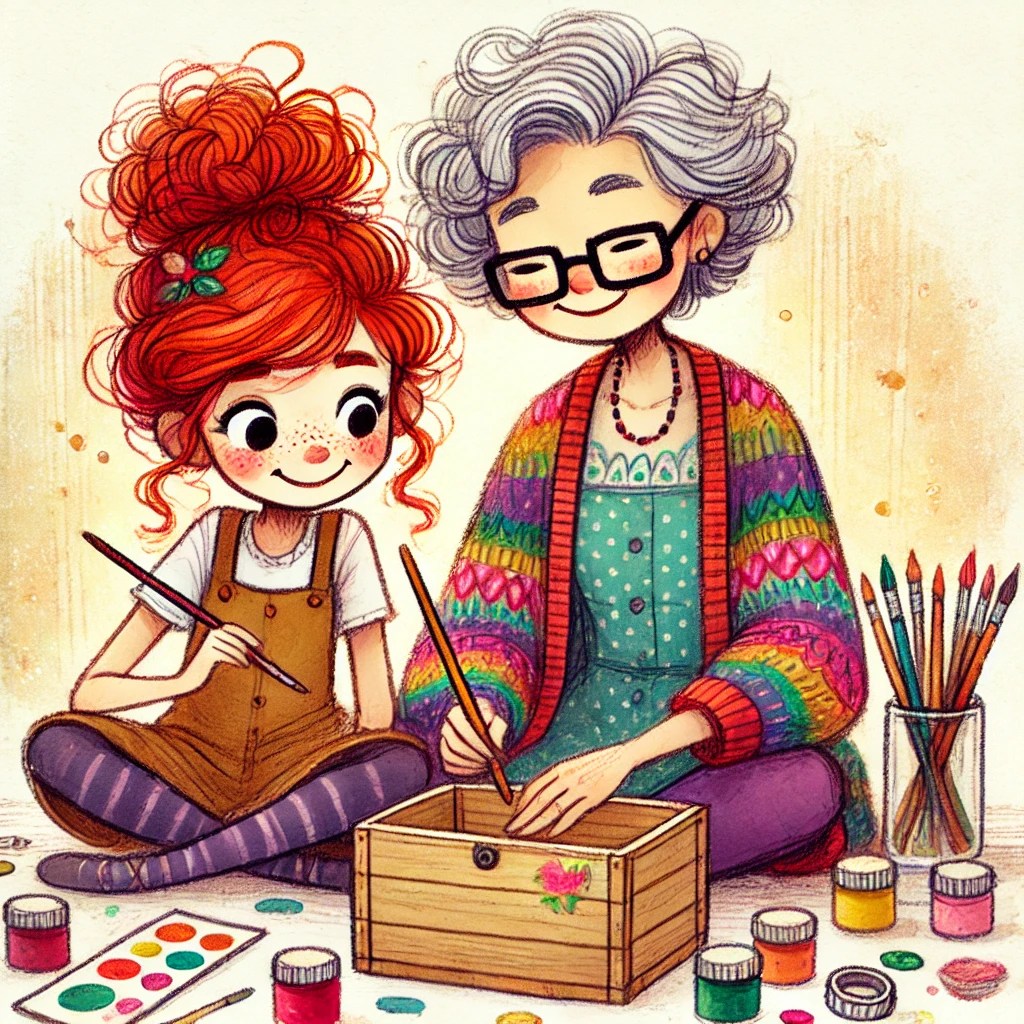
    Find a small box—wood, tin, cardboard, whatever feels right. Then, if your loved one is able, sit down together and decorate it. Use old fabric scraps, dried flowers, buttons from a forgotten sewing kit, broken jewelry, ribbons, stickers, postcards—anything that holds meaning or just brings a smile.

    Let it be messy. Let it be colorful. Let it be the two of you.

    You don’t need a theme or a plan. This isn’t about perfection. It’s about creating something with your hands while your hearts remember.

    What Goes Inside

    Fill it with memories. Tiny treasures. Things that might not mean anything to anyone else—but hold everything to the two of you.

    • A photo from a favorite trip
    • A note or card you once wrote each other
    • Their favorite recipe, handwritten
    • A handkerchief, a ticket stub, a dried flower
    • A silly magnet from the fridge
    • That little charm they always kept in their purse

    And don’t forget to write things down. A funny quote they said – in my house they are called Joycie-isms. A story they told you for the fifteenth time—but still made you laugh. A reminder of what made them who they are.

    Each item you place inside becomes a thread in the fabric of your story—one that doesn’t unravel when they’re gone.

    A Legacy Worth Passing Down

    This box isn’t just for you. It’s something you can pass along. To your children. To your grandchildren. A tangible reminder that love doesn’t end when a person is no longer here. It lives on in the way we remember them. In the way we tell their stories.

    One day, someone will open that box. They will run their fingers over a worn photo or faded scrap of fabric. They will feel the heartbeat of a story worth telling again.


    Caregiver Hack of the Week

    Make space for joy—it’s stress relief in disguise.
    Creating something meaningful like a memory box isn’t just a sentimental project—it’s a moment of peace. Slowing down, crafting with your loved one, and reminiscing together can actually reduce stress for both of you. It shifts your focus from tasks to connection. And sometimes, that shift is exactly what your heart needs.

    No comments on The Memory Box: Holding On to the Moments That Matter
  • Embrace Silence: A Reset for Your Soul

    March 27, 2025
    Uncategorized

    This morning, something beautiful happened. My mom went to Bible study with a friend. It’s a part of her routine that I’d somehow forgotten about in the recent rush of doctors and hospital stays.

    And suddenly, I was alone.

    I found myself at the breakfast table, coffee in hand, listening. Not to noise, not to a list of to-do’s running through my brain, but to birdsong. Just birdsong.

    The hum of the fridge. The clink of my spoon against the mug. The quiet creak of the house stretching into the morning.

    And then… my soul went silent.

    I felt everything settle. My shoulders dropped. My jaw unclenched. And in that stillness, I simply was.

    Not planning, not helping, not preparing. Just sitting. Breathing. Thinking. Running through my day.

    And most importantly, I found myself praying and praising.

    In that small window of quiet, I let myself be held. I whispered thanks. I asked for strength. I smiled at the sunlight. I told my weary body, “It’s okay to rest for a moment.”

    It wasn’t long. But it was enough. And I embraced it fully.


    Lean Into the Peace

    These quiet pockets of time are sacred. They’re not empty—they’re full of peace, of breath, of the gentle nudging of God’s presence.

    Psalm 91:4 says,

    “He will cover you with his pinions, and under his wings you will find refuge; his faithfulness will be your shield and rampart.”

    That’s what these moments feel like: being covered, shielded, and gently wrapped in grace.

    As caregivers, we’re not often granted hours of solitude. But God doesn’t need hours to show up. Sometimes, all He needs is five quiet minutes to press peace into your heart.

    So when the moment comes—don’t rush to fill the silence. Sit in it. Breathe in it. Let your soul exhale.

    Because in those quiet moments, we find our refuge. And we remember that we’re not doing this alone. Lean into Him.


    Caregiver Hack of the Week

    Let quiet be your reset button.
    You don’t need an hour-long spa day to reset—sometimes, five peaceful minutes at the breakfast table can do wonders. When the house goes still, resist the urge to rush into the next task. Instead, breathe deeply. Close your eyes. Pray. Let God meet you in the stillness, and soak in the calm before the next wave rolls in. You’re welcome.

    See you at the next stop!

    No comments on Embrace Silence: A Reset for Your Soul
  • Help Wanted: When a Caregiver Actually Asks for Help (Yes, It’s a Big Deal)

    March 25, 2025
    Uncategorized

    You know that friend or family member who’s been deep in the trenches of caregiving? The one who always says, “I’m fine,” even when they look like they’ve been hit by a truck made of exhaustion and despair? Yeah, that one. Or maybe the just stare at you and then burst into tears. It’s usually one or the other.

    So, if by some miracle a caregiver musters up the courage to actually ask for help, you better believe it’s serious. Because caregivers don’t ask lightly. We’d rather juggle flaming chainsaws while sleep-deprived than admit we can’t do it all. (When we are freely admitting we can’t do it, we are past burnout).

    But here’s the kicker: when we finally do ask, the response we get can make or break us.

    What NOT to Say When a Caregiver Asks for Help

    Let’s start with the things that will earn you an exasperated sigh, an eye twitch, or possibly a mental list of people we’re cutting from the Christmas card rotation:

    1. “Just let me know if you need anything.”
      • We just did. We’re asking. Right now. Do not pass go, do not collect $200, just offer something specific.
    2. “I’d love to help, but I’m just so busy.”
      • Oh wow. Busy, you say? What a coincidence! We also have zero free time! Except we’re choosing between sleep and making sure our loved one doesn’t leave for places unknown.
    3. “I don’t know how you do it. You’re amazing.”
      • This might sound nice, but it’s not helpful. We don’t want to be put on a pedestal—we want a nap – not a bumper sticker affirmation.
    4. “Have you tried self-care?”
      • Oh, totally! Right after my loved one tucks me into bed, cooks me a homemade meal, and reminds me to take my meds. Oh wait… that’s not how this works.
    5. (Silence.)
      • Look, we get it. Sometimes people don’t know what to say, so they say nothing. But nothing is worse than saying something dumb. (Okay, maybe not worse, but it’s close.)

    What You CAN Do (Without Being a Jerk About It)

    Alright, so now that we’ve covered the no-no’s, let’s talk about what actually helps. Spoiler alert: it’s not rocket science.

    1. Don’t Ask—Just Do.

    Instead of, “Do you need anything?” try, “I’m bringing over dinner. Any dietary restrictions?” See the difference? One puts the burden on us to figure it out; the other makes our lives easier.

    2. Surprise Meals (AKA The Holy Grail of Help)

    Caregivers barely have time to microwave a meal, let alone cook one. Show up with food, and you will be forever loved. Just no weird casseroles—we’re already struggling, we don’t need mystery ingredients.

    3. Small Acts of Kindness Matter

    • Take out the trash.
    • Mow the lawn.
    • Drop off coffee.
    • Send a funny meme or an “I see you” text.
    • Send a card for the caregiver?
    • Ask how THEY are doing…a lot of times, we feel invisible.

    Seriously, ANYTHING that lightens the load is appreciated.

    4. Give the Gift of Time

    Offer to sit with their loved one for a couple of hours so they can go breathe fresh air, get a haircut, or just exist outside of caregiving. Two hours of freedom is worth more than gold – especially when we don’t have to feel guilty about it.

    5. Flowers are nice. (Because Who Doesn’t Love Flowers?)

    They won’t solve our problems, but they sure make the kitchen table look less like a war zone. Not bouquets of roses…but just cheerful happy little things that let people know you see them.

    6. Keep Showing Up

    Caregiving isn’t a one-time crisis—it’s a marathon. Check in every once in while, not just when things hit the fan.

    Caregiver Hack of the Week

    Let someone help you interpret the silence.
    You don’t have to be the only one trying to decode every gesture, glance, or half-spoken word. Bring in a fresh set of eyes—a family member, friend, or even a visiting nurse. Sometimes they’ll notice patterns you’ve missed, especially when you’re running on fumes. Asking for help isn’t weakness—it’s wisdom, and it creates space for better care… for both of you.

    Final Thought: It’s Not About Grand Gestures

    Caregivers don’t need superhero rescues; we need small, consistent acts of kindness. So if you’re wondering what to do, just do something—because even the tiniest effort means the world. I promise you it’s noticed and never forgotten.

    Now, if you’ll excuse me, I have to go reassure someone (again) that the TV remote is not, in fact, plotting against them. It’s just another day on the tracks of the Silver Haired Choo Choo.

    No comments on Help Wanted: When a Caregiver Actually Asks for Help (Yes, It’s a Big Deal)
Previous Page
1 2 3 4 5 6
Next Page

Blog at WordPress.com.

The Silver Haired ChooChoo

A Caregiver’s Ride Through Chaos, Love, and WTF Moments

    • About Our Train
    • Posts (The Stops On The Journey)
 

Loading Comments...
 

    • Subscribe Subscribed
      • The Silver Haired ChooChoo
      • Already have a WordPress.com account? Log in now.
      • The Silver Haired ChooChoo
      • Subscribe Subscribed
      • Sign up
      • Log in
      • Report this content
      • View site in Reader
      • Manage subscriptions
      • Collapse this bar