You hear me say it all the time. Caregiving is an act of love—and like all love, it asks a lot of us. But it also gives us the opportunity to grow, adapt, and learn new ways to support the ones we cherish. And in this age of innovation, we’re not doing it alone.
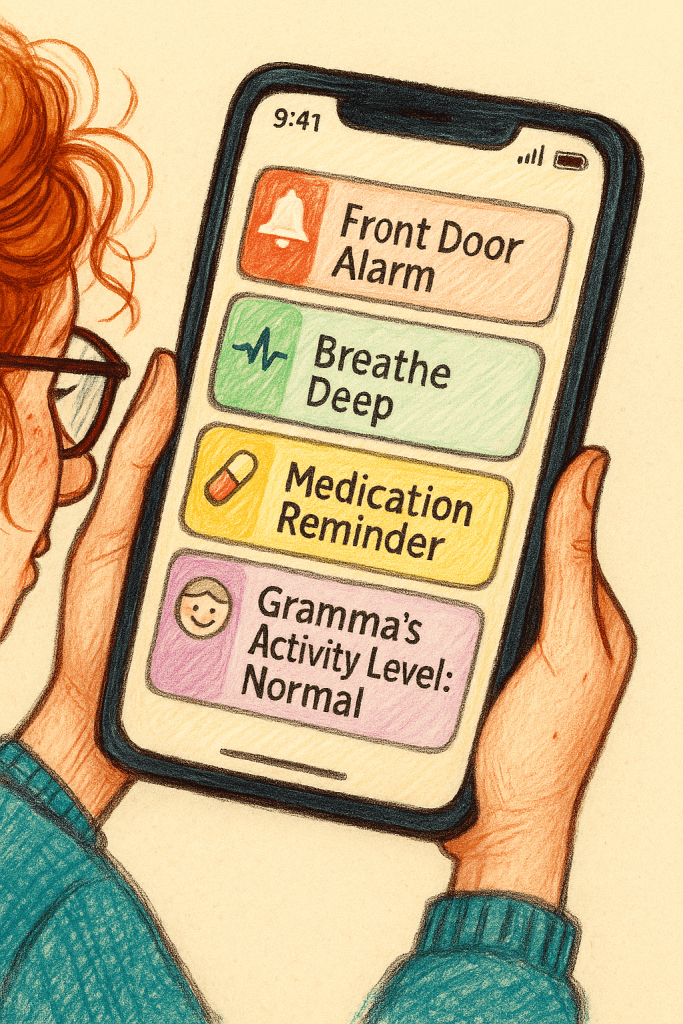
Technology doesn’t replace the human connection. Used right, it amplifies it. Whether it’s a reminder for medication, a calming voice in the night, or a way to stay connected from afar—these tools give us space to breathe, to respond with more calm, and to care with more confidence. Here are some ideas that might help you:
Tools That Support Safety and Peace of Mind
These help you stop worrying just enough to sleep at night:
GPS-Enabled Trackers (AngelSense, TheoraCare): Know where your loved one is without hovering.
Smart Home Sensors (Wyze, SmartThings): Quiet alerts for door openings or unusual movement.
Auto-Locking Medicine Dispensers (Hero, MedMinder): One less thing to track daily.
Staying Connected Without Stress
Connection is comfort—even when you’re across the room or across town:
Voice Assistants (Alexa, Google Nest): Set reminders, play calming music, ask questions, or even joke around.
Video Calling Devices (GrandPad, Echo Show): Large buttons, simple screens—no tech degree required.
Picture Phones: Tap a face, not a number. Great for memory support and independence.
Daily Rhythm, Calm, and Comfort
Simple cues can ease anxiety and reduce frustration:
Day Clocks (Robin Clock, Dementia Day Clock): Display the time, day, and part of day clearly.
Routine Apps (Trello, Todoist, or CareZone): Track tasks, appointments, and to-do’s in bite-size chunks.
Robotic Companion Pets: The purr or wag of a Joy for All cat or pup can provide unmatched comfort.
Tech won’t solve everything—but it can solve something. Whether it’s easing your mental checklist or helping your loved one feel more seen and secure, each device is a small act of grace. And sometimes, that’s all we need to keep going.
You’re doing the hardest job in the world. Let technology lend a hand—so you can offer your heart.
Caregiver Hack of the Week:
Build a “Tech Flow” Morning Routine. Create a 15-minute tech-powered morning setup that sets the tone for the day:
Ask Alexa to play a favorite song.
Check your smart device notifications.
Review the day’s meds and tasks on your caregiver app.
Then pause and breathe. That counts too.
This one habit can reduce stress and make the whole day more manageable – and isn’t “more manageable” something we can all agree on? Thought so.
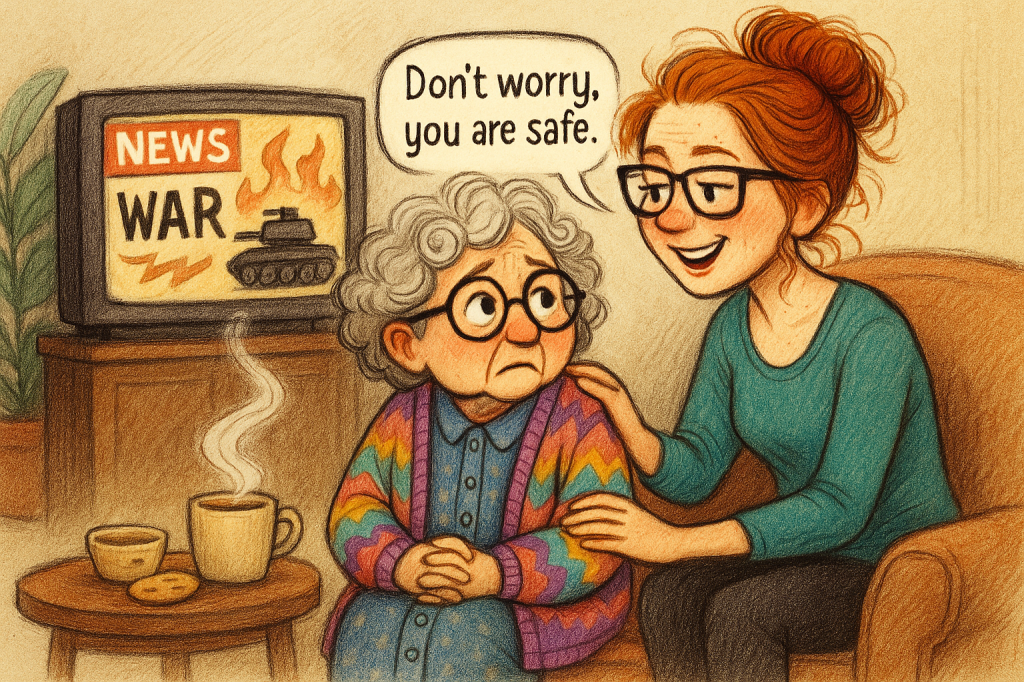
Last week was heavy. Watching my mom’s face as she caught the news with me, I could tell the events — the shootings, the violence in Dallas and , the sadness — were affecting her. So, this morning I asked her: “How are you feeling about all the things happening right now?”
She responded right away. She spoke of Charlie Kirk, the school shooting in Evergreen, CO., Iryna Zarutskathe – the young woman attacked on the subway and beheading of the Chandra Mouli Nagamallaiah. She cares, and I realized just how much she is aware. And how much she feels. Our loved ones cannot be expected to bottle up their fears and questions and let them stew. It’s not healthy or safe for them.
She also feels unprepared to handle things if something went awry. A person with dementia or any type of cognitive decline processes events differently. Their sense of time and space is skewed, especially if they time shift. You’d be surprised at how much our loved ones absorb just from the ebb and flow and energy what plays on the television. If your loved one is still cognizant of current events, those moments can shake them deeply and we need to be sure to help them deal with it. Their security comes from us – their caregivers and loved ones – the people that they trust the most.
What Happens with Traumatic Events and Older Adults
Here’s what the research shows:
Older adults who follow distressing news closely tend to have higher levels of psychological distress — including anxiety and depressive symptoms. PMC, MDPI
For people with dementia or cognitive decline, bad news can trigger confusion, especially when they mix current events with memories or past traumas. Alzheimer’s Society
Traumatic or alarming media exposure can reignite old trauma. Older adults are at greater risk of developing PTSD symptoms or adjustment disorders after disasters, mass violence, or similar events. PTSD VA+2PMC
Frequent exposure to stressful current affairs can decrease sleep quality, increase worry, and make it harder for the body to unwind. Discovery Village
How We Can Help Loved Ones Feel Safer, More Secure
When you sense they’re feeling scared or disturbed, there are gentle hands-on ways to respond.
Ask Them — like I did this morning. Open with something like, “What have you heard about what’s happening? How are you feeling about it?” Let them share on their terms.
Limit Exposure — news is everywhere, but you don’t have to feed the fire. Turn off 24‑hour news channels, mute notifications, or choose specific times to check updates rather than letting them spill into every moment. Alzheimer’s Society
Stick to the Facts, Then Close the Book — when talking, keep things simple and factual, avoid speculation. Once you’ve discussed, transition to something comforting (a story from the past, music, a joke) to reset the emotional atmosphere.
Use Reminiscence Therapy or Shared Memory — bring up old photo albums, music from her past, things she knows well. It can ground them in what they know and love, not in what unsettles them. Verywell Mind
Offer Calm Reassurance — “You’re safe here. We’re watching out. I’m with you.” Physical comfort like holding a hand, hugging, or just being nearby can help more than words.
Create a Safe Space Ritual — maybe at a particular time each day you turn off the news, sit together with tea, do something soothing. Having a routine of calm gives them something stable to count on.
Final Thought
It’s okay to talk about what’s happening in the world. It’s honest. It matters. But we also have to guard their hearts. Their processing and logic doesn’t work the same, and we need to be aware and proactive when traumatic and overwhelming things happen. When it all becomes too much, we are the safe place. We can help them feel held — not terrified.
These conversations and our protection are part of this caregiving journey. And love — even softly spoken, even quietly done — can bring light when the world feels dark.
Caregiver Hack of the Week
“News‑Check and Rewind”
Set a “news check” time (say once or twice a day). During that time, catch up together. After the check, do a “rewind ritual”: share three pleasant memories, listen to a favorite song, or look at a photo from happier times. It helps shift the emotional weight of what’s come in.
My mother has been in the hospital twice in thirty days. And yesterday, everything in me just… unraveled. I couldn’t sit still. Couldn’t think straight. Couldn’t even sleep last night.
After six and a half years of caregiving, you’d think I’d have some sort of rhythm or “resilience.” But that’s the myth, isn’t it? That this gets easier. That we eventually master the balancing act.
The truth? Sometimes there’s no balance, no breathing room, no space for me in my own life.
And yesterday, I prayed. I cried. I picked myself up more than once. And I kept going.
Because that’s what caregivers do, and some days just look like utter chaos.
This Is Not a Job. Like it or Not, It’s a Life.
Caregiving isn’t something you clock in and out of. It’s a 24/7 storm made of hospital runs, med schedules, brain fog, worry, finances, and a body that’s often breaking under the weight of holding it all up. There are days when it feels like no one sees it. Like you’re spinning inside a hurricane while everyone else is walking calmly through sunshine.
But I see you. And I am you.
This Is a Marathon — Mentally, Physically, and Spiritually
People talk about caregiving like it’s some noble task. And it is noble. But it’s also back-breaking, soul-splitting, and lonely as hell some days. This disease — whatever form it takes — isn’t a sprint. It’s a grueling marathon, and most days, you’re running it on no sleep, no plan, and no backup team. Every once in a while it breaks me.
What Can People Do to Help? (Hint: Don’t Over-complicate It)
If you love a caregiver, please hear this: We are not looking for more things to schedule. We’re already drowning in appointments and calendars and decisions.
What we need is simple.
Drop off a meal. (thank you, to my angel who did this for us yesterday)
Mow the lawn or help do a simple clean out to help for winter.
Text “I’m going to the store. Need anything?”
Bring a coffee and don’t expect small talk – we get enough of that with our loved ones.
Send a funny video just to make us laugh.
Don’t wait for us to ask. We won’t. We don’t have the bandwidth to think about how you can help — we’re too busy keeping someone else alive. Literally – and it is intense.
Caregiver Hack of the Week
Time-Box Your Tasks When chaos strikes (and it always does), don’t write a to-do list. Instead, break your day into two-hour blocks. I can’t as I run a business also, and it has to be that way. If you can, give each block ONE focus only — like:
9–11am: Deal with insurance and meds
11–1pm: Rest or shower (yes, put this in!)
1–3pm: Work, errands, or nap
3–5pm: Time with your loved one.
This helps you stay grounded when everything feels like it’s on fire.
You Are Not Alone – Even When It Feels Like It.
If you’re reading this with tears welling up or exhaustion making your hands shake — I see you. I am you. And you are not alone. You are in the fight, and you are doing great. You really are. Look at all you do. I know your tired, love, but keep going.
Caregiving is not something we were designed to do solo. We need honesty, vulnerability, and community to make it through.
There’s no shame in feeling broken. There’s no guilt in needing help. We all need it. And there is no one way to do this right.
Do the best you can, and let that be enough – because it has to be and if you lead with love – it will be.
Settle in. This one is a little long because I’m feeling a little preachy!
Disclaimer for those that think every post is about my mom. I am not putting Joycie Ellen in a home. That said, I am standing up and advocating for those that have to make an impossible choice. This week Bruce Willis’s wife and family are on my heart, and I’ve read the comments, the divisive vitriol and the opinions.
Let me start here: If you have never been a caregiver – sit down. You’re opinion literally doesn’t count – because you do NOT know the struggle, and don’t really understand the different types of dementia and the behaviors they can cause. If you do and you’ve not been a caregiver, you’re a unicorn.
There’s a train I never want to ride, and it’s called the Guilt Express. Sometimes it’s unavoidable in the caregiving world with the decisions that have to be made. It comes with a one-way ticket to “I should have done more” and “What if I’d just tried harder?”If you’re a caregiver or spouse or child facing the gut-wrenching decision to place a loved one in a nursing home or memory care facility, you’ve probably felt like the conductor of that train.
Let me share this:
My dad was 92 when we had to make that call. He kept falling. He wasn’t safe, and my mom—who was 87 at the time—couldn’t physically get him up anymore. She loved him with every fiber of her being, and that decision broke her heart – and it still does.
But his doctor said what we knew deep down: It was time. Time to prioritize his safety, his comfort, and her well-being, too. And even though it was the right call, it still haunts her. Because the myth persists that “putting someone in a home” means you’re abandoning them. Let’s be clear: sometimes it’s the greatest act of love you can give.
The Truth No One Says Out Loud
No one talks about how exhausting caregiving can be. No one tells you how dangerous it becomes when you’re sleep-deprived, physically depleted, and emotionally worn out. No one tells you that keeping someone at home at all costs can sometimes cost both of you more than it should. No one talks about how dangerous it can become if a loved one becomes violent because of a disease.
There comes a point where love doesn’t look like “doing it all yourself.” It looks like making sure your loved one is safe, supported, and surrounded by people who can meet their needs—even if that’s not under your own roof.
It’s okay to grieve that. It’s okay to cry. And it’s more than okay to feel relief once they’re in a place where they’re being cared for around the clock. Relief doesn’t equal regret. It means you’re human. Yes, that makes me cry, too.
Making a New Home Feel Like Home
Just because they’re in a facility doesn’t mean you stop showing up. You are still their person. You are still their anchor. You are still the one who knows how to turn a plain room into a familiar, sacred space.
1. Bring pieces of their past with them.
Framed photos, a favorite pillow, their go-to coffee mug, or a small quilt can do wonders. These tangible items help preserve a sense of identity.
2. Create a “comfort kit.”
Include things like a familiar lotion, soft socks, their favorite snacks, a prayer book, crossword puzzles, or music from their younger days. Make it personal.
3. Visit with intention.
Even short visits matter. Bring stories. Play a game. Sing a song. Simply sit and hold their hand. Presence, not length, is what counts.
4. Get involved in care planning.
Be their advocate. Ask questions. Share insights that staff might not know. Your involvement helps bridge the gap between clinical care and heartfelt care.
5. Celebrate milestones, even small ones.
Bring cupcakes for their birthday. Decorate their door for holidays. Hang a card that says “You are loved.” Let them feel special and seen—always.
Final Thought
Placing someone you love in a nursing home is not a betrayal. It’s not weakness. It’s not failure. Sometimes, it’s the kindest, strongest, most selfless decision you can make.
And before you judge someone for making the heart-wrenching decision to place their loved one in a facility—don’t. You don’t know what goes on behind closed doors. Sometimes it’s not just about burnout or exhaustion (though those are real, too). Sometimes the person we love most in the world becomes aggressive, confused, or even violent—and the home is no longer safe for them or anyone else. That doesn’t mean we love them any less. It means we love them enough to get them the care they need. These decisions don’t come easy. They come with sleepless nights, tears in the shower, and more guilt than anyone should ever have to carry. But sometimes, keeping someone at home is no longer compassionate—it’s dangerous.
If you’re facing this choice, please know you are not a failure. You are human. And doing what’s best doesn’t always look like what you hoped for. Give yourself the grace you would extend to anyone else walking this impossibly hard road. Give your loved one the care they deserve, even when it breaks your heart a little to do it. There is a whole world of us out here loving and supporting you – starting with me.
This weekend, my daughter got married — it was a day filled with joy, celebration, and moments we’ll cherish forever. But it was also a day marked by a quiet heartbreak: my mom couldn’t be there.
She was sick with COVID. And while it was the right call to keep her home — to protect her and others — the ache of her absence was real. She’s not just my mom. She’s the family matriarch, a woman who has been the emotional anchor for generations. And missing her granddaughter’s wedding felt… wrong.
Still, life – and love – requires us to adjust. To make space for grief without letting it consume the moment. So I tried my best to include her in the celebration, even if she couldn’t be there in person.
Here’s What I Did:
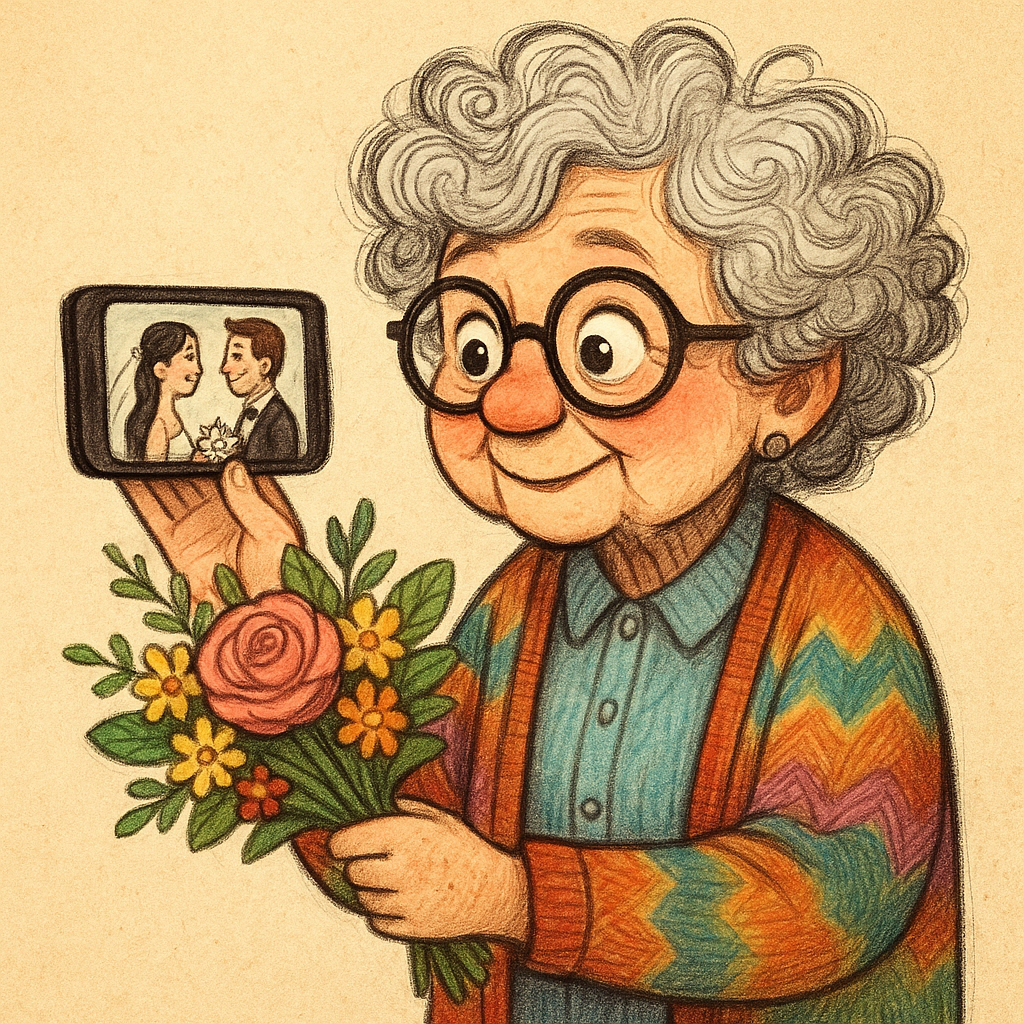
Her corsage still had a place. I had her wedding corsage made into a dainty floral arrangement — a physical reminder that she still had a presence at the event, even from afar.
A new outfit, just for her. She may have been home, but I bought her something new to wear. Something to mark the occasion and help her feel like she was still part of the celebration.
I filmed the ceremony. Not just a shaky phone video — I made sure she had a full view of the moment. The walk down the aisle, the vows, the joy. She watched it later with tears in her eyes and a big smile on her face .
She got the wedding dinner too. I brought her a plate full of curated wedding food – even though she didn’t have an appetite – at least she knew we cared.
Other Ways to Include Loved Ones from Afar:
If you find yourself in a similar position — whether due to illness, distance, or mobility challenges — here are a few additional ideas to help make your loved one a part of the day:
Set up a video call in real time. Have someone at the ceremony hold up a phone or tablet so your loved one can be there virtually and see the key moments unfold live. We were out on a ranch, so the signal didn’t support this, but we tried.
Send them a printed program or invite. It may seem small, but having a tactile connection to the day helps them feel included.
Record personalized messages from guests. Ask friends and family to share quick messages or memories that can be compiled into a short video for your loved ones. Proof positive they were thought of.
Create a keepsake box. Include items like a favor, dried flowers, a printed photo, the menu, or a note from the bride and groom and give it to them.
Host a mini-celebration just for them. Later that week, replay the video, share stories, and have dessert together. Let them experience the love that filled the day.
Was it the same as her being there? No. But it helped. It made her feel seen, remembered, loved — which is, in the end, what we all need most.
No matter how small the gesture may feel, it’s always worth doing. Inclusion doesn’t have to be perfect — it just has to be intentional. And that little bit of thought? It makes all the difference.
Caregiver Hack of the Week: Memory-Making for the Moments They Miss
When your loved one can’t be there in person — whether it’s a wedding, graduation, birthday, or holiday — bring the moment to them.
Here’s how:
Create a “Mini Celebration Kit” with a printed photo, a piece of cake, their favorite drink, and something small but special like a flower, corsage, or party favor.
Add a personal touch: A handwritten note, a replay of the event video, or even a voice message from the person they missed seeing.
Schedule a moment to relive it with them — not just a drop-off, but a sit-down, a retelling, a chance to share the joy.
✨ Why it matters: Inclusion isn’t always about presence — it’s about presence of mind. Your effort and creativity tells them, you mattered in this moment. And that reminder is priceless.
About seven years ago, I was home visiting my parents, and my dad fell. I rushed to him, gathered him into my arms, got us both up off the floor and just held him. He cried, saying he was sorry (he was so deflated). I cried, telling him not to worry, that I was right there – that I had him. It was heart crushing. I will never forget that day – and as I write this, my tears are falling.
There’s no real warning when the world on its axis. One day, you’re the daughter. The son. The child. The next, you’re making medical decisions, managing prescriptions, reexplaining what day it is—and quietly grieving the role you used to have. They are too.
This is the glitch in the matrix. This is the emotional vertigo that hits when your identity as “child of” crumbles under the weight of caregiving.
And no one tells you how hard that will be.
It’s Emotional Fragmentation.
What you’re experiencing is a psychological rupture. An emotional rewiring. A silent mourning.
The one who taught you how to tie your shoes is now asking how to use the TV remote. The one who walked you through life is now unsteady on their feet. And you are left holding the wheel of the relationship—navigating a route you never wanted to take. It is disorienting.
Why This Hurts So Deeply
Psychologists call this role reversal or parentification, and it creates more than just logistical stress. It fractures the internal sense of identity—who you’ve always been in relation to this person.
“The child becomes the parent to their own parent, a shift that triggers grief, confusion, and even resentment—all wrapped in love.” — Dr. Krystine Batcho, Psychology Today
This reversal often results in:
Emotional disorientation (for me, dizziness)
Loss of perceived safety and security (your foundation is rocked)
Heightened anxiety and loneliness
Complicated mourning—grieving someone who is still alive
Research confirms that adult children caring for aging parents are more likely to experience complicated grief, emotional strain, and identity confusion—even when they’re glad to help.(Psychology Today – Parent-Child Role Reversal)
You’re Not Alone in Upheaval
Let’s be honest: this is heartbreaking. This is soul-twisting. And this is not something you can “positive attitude” your way through.
You’re navigating something no one is ever prepared for. And there is no manual for watching your foundation slowly shift from stone to sand. You don’t need to pretend. You don’t need to smile through the unraveling. You need honesty. You need truth. You need community.
Soul Salve for the Role Reversal
You won’t rebuild the foundation overnight—but you can patch the cracks:
Name it out loud: “This is hard because I miss being their child.” This past February on one of 4 trips to the ER that month, I told the physician, I just need to be her daughter right now. I cannot be her caregiver in this moment. I was exhausted, upside down and beside myself. He understood, and the medical community stepped in to help me get through it (and they were amazing).
Create small moments of familiarity: Shared jokes, favorite music, family photos. Echoes of the original bond. Put them up, look at them, laugh with your loved one,. Talk about older memories – sometimes they are more intact.
Honor the emotions: Grief, anger, guilt, tenderness—all are valid, and none cancel each other out. Have your cry – in the cornfield, the pantry, hiding in the bathroom – wherever you can, but move the emotions through – don’t let them build up.
Tell someone. Caregiving is isolating enough without carrying all of this silently. I could not survive this journey without everyone of you who has ever listened, helped, or just hugged me over the past six years.
Caregiver Hack of the Week
Create an “Emotional Checkpoint List.” Once a week, ask yourself:
What emotion surprised me this week?
What do I miss?
What helped me feel grounded? (reach for more of that)
What am I not admitting?
You don’t need to fix anything—you just need to acknowledge it.
If You’re Feeling Adrift
It’s not just you. Every caregiver of a parent has felt this disorientation. It’s not a glitch in your system—it’s a glitch in the roles. And you’re adapting. Slowly. Bravely (some heroes do not wear capes).
No one gets through caring for a parent without a few emotional bruises.
I’ve talked with so many of you that are caring for a loved one – and especially for parents – and every one of us feels guilt.
The guilt is everywhere.
You feel it when you lose your temper. You feel it when you want a break. You feel it when you want to make plans for a weekend away – and can’t. You feel it when you leave the house for two hours and come home to 47 missed calls from your own brain asking: Did I leave the stove on? Did I lock the door? Did she fall?What if she does?
You feel it when people comment: “You’re so lucky to spend so much time with your mom – she’s so lucky to have you.” And you bite your tongue to keep from saying, “Actually, it’s lonely and exhausting, I feel resentful sometimes – and I’m drowning.” Honestly, my mom is lovely, and it’s still too much.
Where Does the Guilt Come From?
For many caregivers, especially those caring for a parent, the guilt often stems from:
A role reversal that feels unnatural. You’re suddenly the decision-maker for the person who used to make all the decisions. That’s not easy.
Feeling responsible for their happiness and well-being. Even when it’s out of your hands. Even when it’s not fixable. Even when they seem unaccountable for their own actions.
The belief that you’re supposed to do this perfectly. Spoiler alert: You can’t. And, you won’t.
Comparison to siblings or outsiders who think they know better. They often show up late or not at all—but still manage to deliver advice wrapped in judgment. Until they live it, they don’t get it. Period. Don’t let them fool you. Most couldn’t survive two weeks being a full time caregiver.
The Double Life of Guilt
You’re constantly trying to make the right decisions for their care—but also carry the guilt for every nap you take, every door you shut for five minutes of silence, or every appointment you cancel for your own health.
You may even feel guilt when you don’t feel guilt. That’s the loop. That’s the trap.
But here’s the truth: guilt comes with caregiving, not because you’re doing something wrong, but because you’re doing so much right that it’s humanly impossible to do it all. And, to be brutally honest, we are dealing with people that are incapable of making good decisions for themselves. They are vulnerable, and they need us. But we can only do what we can do.
Why Do We Feel It?
We feel guilty because we care. We feel guilty because we can’t fix it. We feel guilty because we’ve been conditioned to think self-sacrifice means perfection.
And when you’re a child taking care of your parent, that guilt takes on a whole new dimension. The role reversal is just so flipping tough. You’re still their kid—while being their medical advocate, their nurse, their cook, their everything. You’re constantly flipping back and forth and none of them feel right.
You might feel like you’re failing at all of them. But you’re not. Don’t ignore it though, actively combat it.
The Dangerous Weight of Guilt
This isn’t just emotional fluff. According to the Family Caregiver Alliance, 40–70% of caregivers show clinically significant symptoms of depression, with 25–50% of those meeting the diagnostic criteria for major depression. It’s for real, and it’s not good.
You’re not just “being dramatic.” This isn’t “just stress.” It’s a crisis. And it’s time we said it out loud.
How Do We Deal With It?
Say it out loud. Guilt thrives in silence. Speak it. Write it. Name it.
Accept that caregiving is imperfect. You will mess up. That doesn’t make you a bad person. It makes you human.
Make peace with the “good enough.” You’re doing the best you can with the resources you have. And sometimes “okay” is more than enough.
Reclaim boundaries. Guilt can’t live where truth and boundaries are welcome. Let yourself rest. Let yourself be angry. Let yourself be.
Find someone who gets it. No one will ever shame you for this kind of honesty if they’ve been in your shoes. Other caregivers are your safest place.
You Are Not Alone in This Fight
You might feel alone. But you aren’t. Every caregiver I’ve ever met wrestles with guilt—every single one.
We must start talking honestly and vulnerably. This is not a time for bumper-sticker encouragement. If someone throws “God doesn’t give you more than you can handle” at you, smile politely and walk away. (Or hand them a bedpan and tell them to prove it.)
Because here’s the deal: God didn’t design you to carry this alone. He gave you community. And in this space, among those who get it, we tell the truth. We are tired. We are overwhelmed. We are broken open and filled up again every single day.
But we are also faithful. And funny. And fierce. And we are still standing.
So today, write something down. Call a friend. Let someone in. Because this guilt? It’s not your truth. It’s just noise trying to distract you from how deeply you love.
Caregiver Hack of the Week: The “Guilt Journal” (With a Twist)
When guilt creeps in — and it will — write it down. Start a “Guilt Journal,” but not the kind that shames you. Instead, try this:
What triggered the guilt?
What would I tell a friend if they felt this?(this is GOLD – use it)
One truth I know about myself as a caregiver today:
This isn’t about venting. It’s about reframing. It will move you from self-blame to self-compassion — because you deserve it.
Don’t like journaling? Open your phone and hit record. Talk it out. Listen back to your own wisdom. You’ll be amazed how much grace you already carry. Tech or traditional – get it out. (And, as you’ve read in some of my prior blogs – a great therapist is a gold mine!) Think of it as a day at the spa for your brain.
A Final Thought
You’re not doing this wrong because you feel guilt. You’re doing this right because you care enough to even feel it. Read that again!
You love deeply. You carry more than most. You have a right to feel everything you’re feeling without shame.
So today, let the guilt go—even if only for an hour. Give yourself the grace you so freely give to the one you’re caring for.
You’re doing enough. You’re loving enough. You are enough.
(actually I may or may not be writing this from the pantry…)
It’s been over six years since a huge life change – one that I don’t regret and would do all over again in spite of how taxing it is. Taking care of a parent, and the role reversal that goes with it is hard – in fact, it is the hardest thing I’ve gone through and I’ve waded through some seriously deep stuff. Today, I’m a little at a loss for a topic, so I decided to just focus on the happy and grateful and call myself Pollyanna for the next 24 hours. Sometimes role playing works to keep things on track.
As a caregiver, the tough stuff takes up a lot of space. It’s the truth. The to-do list. The worry. The guilt, the guilt about the guilt, and the guilt about not having guilt. The constant decisions. The constant conundrum is a thing.
And yet… tucked in between those things are little bursts of joy, gratitude, and sometimes downright ridiculousness that make it all feel a little lighter.
So today, I’m making a list — a happy list — of the moments that make me smile, laugh, or just feel grateful.
Here’s mine (so far):
1. That first-morning coffee together. Even if we don’t say a word, it’s still time shared. And sometimes, the coffee is actually hot.
2. A perfectly timed one-liner. Like when I ask, “Can you cut me some slack?” and Mom replies, “Absolutely. I have a whole bunch of slack cut just for you.”
3. The familiar songs. When the hymn starts and she hums along — even if it’s off-key — it’s beautiful. She had a light stroke years ago and cannot sing any longer so this is especially sweet. She used to have a beautiful singing voice.
4. Finding the thing that makes her light up. It might be a cookie, a memory, or a funny story. Watching her face change is worth everything.
5. The moments she’s still “Mom.” When she reminds me to take a sweater, tells me I’m working too hard, or pats my hand like she did when I was little.
6. Laughing at the absurd. Like putting the TV remote in the fridge or hearing, “I didn’t do it” before I even ask the question.
7. The rare nap where I also nap. Those are pure gold.
8. Inside jokes. We’ve built a whole language that no one else understands. And that’s ours to keep.
9. Good hair days. Hers, mine, or both. They’re rare enough to celebrate.
10. Knowing that this time — as hard as it is — won’t last forever. And that makes each sweet, silly, and tender moment even more precious.
Some days the list is long. Some days it’s just one thing. But there’s always something.
If you’re a caregiver too, I challenge you to make your own happy list. Write it down. Keep it somewhere special for the moments when the weight feels heavy (and it does a LOT). Because sometimes, the smallest things really are the biggest things that keep you in the right head space to keep going.
Caregiver Hack of the Week
Start a “Happy Jar” Every time you catch a funny moment, a sweet exchange, or a win (no matter how small), jot it on a scrap of paper and drop it in the jar. On the tough days, pull one out and remember: there’s still joy here.
Let me tell you something I wish someone had said to me a long time ago: You are not a machine (though you may feel a little robotic somedays.) You are not a Pinterest board (in all it’s perfection). You are not failing just because your hair hasn’t seen a brush today and your kitchen looks like a tornado had a tea party.
Somewhere along the line, we bought into this idea that to be a “good” caregiver—and a good human—we have to do it all. Cook a full meal, keep the laundry folded, the bathrooms clean, our loved one bathed and happy, work handled, bills paid, and oh yes—look fabulous doing it. Every day.
Spoiler alert: That’s not real. It’s not sustainable. And it’s not required.
Adjusting Our Expectations (of Ourselves)
When I first started this journey, I tried so hard to keep everything just like it used to be. The model house. Hair and make up perfect. Healthy meals. The organized office. On top of the world. All the time. It didn’t last long.
The problem? That version of life doesn’t fit this one. So now? Perfect has become “good enough.” (It took a minute – ask my therapist). And “good enough” is a gift that you MUST give yourself!
Some days I knock it out of the park—I make a great meal, cross off six tasks, and get Mom to laugh a little. Other days, I keep her safe, we eat cereal and chocolate bars, and I call that a win. Both days count.
The truth is: no two days are the same. Some are smooth, and some are storms. And if you keep judging yourself by a standard that requires superhero strength and Martha Stewart energy, you’ll drown.
Instead?
Break life into bite-sized chunks. Let some things go. Give yourself permission to rest WITH OUT GUILT! And for heaven’s sake, stop apologizing for not being everything to everyone. It’s exhausting.
Grace Over Guilt
Younger, stronger, and more rested you might’ve been able to do it all (but psst – but that’s a lie too). It’s not about the length or the time, it’s about the mental and emotional strength it takes also. This version of you right now is holding it together with duct tape and prayer—and it’s still holding. You’re still showing up. And that is enough. TRULY!
You are allowed to rest. You are allowed to say no. You are allowed to wear the same leggings two days in a row and still call yourself incredible. But will you? Probably not, but if you want to survive, you have to try.
Caregiver Hack of the Week:
Build in “nothing” time. I know. You’re busy – we all are. But ten minutes of quiet with a cup of coffee, your feet up, and no expectations is worth more than an hour of multitasking. Put it on your schedule. Call it “scheduled nothing.” Make it sacred.
Final Thought:
You are not failing. You’re not lazy—you’re maxed out. Let’s stop measuring success by perfection, and start measuring it by presence, effort, and love. It’s different metrics than we are used to.
Lower the bar on yourself. You’re still standing, and that’s something to be proud of. It may not seem like much, but it’s a lot in caregiving journey!
That day was supposed to be simple. I needed to run a few errands — nothing major, just a quick trip to a neighboring town and back.
While I was gone, I got the call no caregiver (or daughter) ever wants. It was MY daughter letting me know that my mother had fallen. I could barely make out her words and reassurances over the instant screaming in my own head: “You should have been there.” “You should have prevented this.” “You failed her.”
The reality? My mom fell. She’s 93. It was heartbreaking. And whether I was home or not, the truth is — it still would have happened – because things happen. Period.
As caregivers, we walk around carrying the illusion that if we just do everything right, we can protect them from every fall, every scare, every bad thing. It could be likened to the second motherhood.
But the truth? We cannot control freewill. We cannot wrap them in bubble wrap and Charmin. We can’t control most things let alone everything. And trying to will only bury us in guilt, fear, and exhaustion.
How to Handle It When Things Happen
First, breathe. (straight from my daughter’s mouth) Then breathe again. (guess who knows her mom really well?)
And remember this: You are human. You are doing the best you can. You can be prepared — but you cannot prevent things from happening.
Here are some steps you can take to be prepared, not perfect:
Safety Tools That Help
Life Alert or Medical Alert Devices: These systems allow your loved one to push a button and immediately call for help. Many now offer automatic fall detection without needing to press anything.
In-Home Cameras: Indoor security cameras (even just basic ones like Blink or Ring) let you peek in and check on them — without hovering or making them feel watched.
Easy-to-Reach Phones: Big button phones, wearable phones, or even simple Alexa or Google Home devices with “Call” functions can allow your loved one to ask for help easily.
Lift Services in Your Community: Many areas have non-emergency lift assist services. If your loved one falls and isn’t injured but can’t get up, these trained teams (sometimes through the fire department or private services) can safely help — no ambulance, no ER unless needed. In my town just call the sheriff office or non emergency number and they will come help.
Also be sure that there is a way to access the home. I had the house locked up tight. My daughter had the keys. Push button combo locks are a great way to ensure that help can get in without breaking down the door.
You’re going to need help. Period. Trying to lift someone yourself (even a “tiny” person) at dead weight can seriously injure both of you.
Tips for When Guilt Creeps In
Acknowledge the fear and sadness. It’s okay to feel all of it.
Speak to yourself the way you’d speak to a friend. Would you blame a friend for needing groceries? No. You would tell them they did their best. Tell yourself the same.
Reframe the goal: It’s not about preventing everything. It’s about responding with love and calm when something happens.
Debrief gently: After the event, walk yourself through what you can do for next time — without blaming yourself for this time.
Caregiver Hack of the Week
Set up a “Help Me” Station in every major room.
In each room your loved one uses often, have a small, reachable “Help Me” setup:
A Life Alert button nearby
A phone or voice assistant device (like Alexa Echo Dot) ready to call family
A simple list of “what to do if I fall” instructions posted somewhere visible (even just a note that says “Call for help. You are not alone.”)
This way, even if you’re gone, they are never truly without a lifeline. And you can breathe a little easier knowing help is always close at hand.
Remember….
You are not failing. You are showing up. You are loving fiercely.
Bad things will sometimes happen. But love — the kind you pour out every single day — will always be bigger than any fall.