This morning, something beautiful happened. My mom went to Bible study with a friend. It’s a part of her routine that I’d somehow forgotten about in the recent rush of doctors and hospital stays.
And suddenly, I was alone.
I found myself at the breakfast table, coffee in hand, listening. Not to noise, not to a list of to-do’s running through my brain, but to birdsong. Just birdsong.
The hum of the fridge. The clink of my spoon against the mug. The quiet creak of the house stretching into the morning.
And then… my soul went silent.
I felt everything settle. My shoulders dropped. My jaw unclenched. And in that stillness, I simply was.
Not planning, not helping, not preparing. Just sitting. Breathing. Thinking. Running through my day.
And most importantly, I found myself praying and praising.
In that small window of quiet, I let myself be held. I whispered thanks. I asked for strength. I smiled at the sunlight. I told my weary body, “It’s okay to rest for a moment.”
It wasn’t long. But it was enough. And I embraced it fully.
Lean Into the Peace
These quiet pockets of time are sacred. They’re not empty—they’re full of peace, of breath, of the gentle nudging of God’s presence.
Psalm 91:4 says,
“He will cover you with his pinions, and under his wings you will find refuge; his faithfulness will be your shield and rampart.”
That’s what these moments feel like: being covered, shielded, and gently wrapped in grace.
As caregivers, we’re not often granted hours of solitude. But God doesn’t need hours to show up. Sometimes, all He needs is five quiet minutes to press peace into your heart.
So when the moment comes—don’t rush to fill the silence. Sit in it. Breathe in it. Let your soul exhale.
Because in those quiet moments, we find our refuge. And we remember that we’re not doing this alone. Lean into Him.
Caregiver Hack of the Week
Let quiet be your reset button. You don’t need an hour-long spa day to reset—sometimes, five peaceful minutes at the breakfast table can do wonders. When the house goes still, resist the urge to rush into the next task. Instead, breathe deeply. Close your eyes. Pray. Let God meet you in the stillness, and soak in the calm before the next wave rolls in. You’re welcome.
You know that friend or family member who’s been deep in the trenches of caregiving? The one who always says, “I’m fine,” even when they look like they’ve been hit by a truck made of exhaustion and despair? Yeah, that one. Or maybe the just stare at you and then burst into tears. It’s usually one or the other.
So, if by some miracle a caregiver musters up the courage to actually ask for help, you better believe it’s serious. Because caregivers don’t ask lightly. We’d rather juggle flaming chainsaws while sleep-deprived than admit we can’t do it all. (When we are freely admitting we can’t do it, we are past burnout).
But here’s the kicker: when we finally do ask, the response we get can make or break us.
What NOT to Say When a Caregiver Asks for Help
Let’s start with the things that will earn you an exasperated sigh, an eye twitch, or possibly a mental list of people we’re cutting from the Christmas card rotation:
“Just let me know if you need anything.”
We just did. We’re asking. Right now. Do not pass go, do not collect $200, just offer something specific.
“I’d love to help, but I’m just so busy.”
Oh wow. Busy, you say? What a coincidence! We also have zero free time! Except we’re choosing between sleep and making sure our loved one doesn’t leave for places unknown.
“I don’t know how you do it. You’re amazing.”
This might sound nice, but it’s not helpful. We don’t want to be put on a pedestal—we want a nap – not a bumper sticker affirmation.
“Have you tried self-care?”
Oh, totally! Right after my loved one tucks me into bed, cooks me a homemade meal, and reminds me to take my meds. Oh wait… that’s not how this works.
(Silence.)
Look, we get it. Sometimes people don’t know what to say, so they say nothing. But nothing is worse than saying something dumb. (Okay, maybe not worse, but it’s close.)
What You CAN Do (Without Being a Jerk About It)
Alright, so now that we’ve covered the no-no’s, let’s talk about what actually helps. Spoiler alert: it’s not rocket science.
1. Don’t Ask—Just Do.
Instead of, “Do you need anything?” try, “I’m bringing over dinner. Any dietary restrictions?” See the difference? One puts the burden on us to figure it out; the other makes our lives easier.
2. Surprise Meals (AKA The Holy Grail of Help)
Caregivers barely have time to microwave a meal, let alone cook one. Show up with food, and you will be forever loved. Just no weird casseroles—we’re already struggling, we don’t need mystery ingredients.
3. Small Acts of Kindness Matter
Take out the trash.
Mow the lawn.
Drop off coffee.
Send a funny meme or an “I see you” text.
Send a card for the caregiver?
Ask how THEY are doing…a lot of times, we feel invisible.
Seriously, ANYTHING that lightens the load is appreciated.
4. Give the Gift of Time
Offer to sit with their loved one for a couple of hours so they can go breathe fresh air, get a haircut, or just exist outside of caregiving. Two hours of freedom is worth more than gold – especially when we don’t have to feel guilty about it.
5. Flowers are nice. (Because Who Doesn’t Love Flowers?)
They won’t solve our problems, but they sure make the kitchen table look less like a war zone. Not bouquets of roses…but just cheerful happy little things that let people know you see them.
6. Keep Showing Up
Caregiving isn’t a one-time crisis—it’s a marathon. Check in every once in while, not just when things hit the fan.
Caregiver Hack of the Week
Let someone help you interpret the silence. You don’t have to be the only one trying to decode every gesture, glance, or half-spoken word. Bring in a fresh set of eyes—a family member, friend, or even a visiting nurse. Sometimes they’ll notice patterns you’ve missed, especially when you’re running on fumes. Asking for help isn’t weakness—it’s wisdom, and it creates space for better care… for both of you.
Final Thought: It’s Not About Grand Gestures
Caregivers don’t need superhero rescues; we need small, consistent acts of kindness. So if you’re wondering what to do, just do something—because even the tiniest effort means the world. I promise you it’s noticed and never forgotten.
Now, if you’ll excuse me, I have to go reassure someone (again) that the TV remote is not, in fact, plotting against them. It’s just another day on the tracks of the Silver Haired Choo Choo.
For many of us, driving isn’t just about transportation—it’s about freedom. It’s about being able to hop in the car, run errands, visit friends, or just take a drive to clear your mind.
So when it’s time for our loved ones to hang up the keys for good, it’s not just a loss of mobility—it can feel like a loss of independence, identity, and dignity. As my father said, “It hits a feller below the belt.”
And let’s be honest, this conversation isn’t exactly a fun one. No one wakes up excited to tell Mom or Grandpa, “Hey, we need to talk about your driving.” It’s emotional, it’s personal, and if handled poorly, it can lead to resentment, anger, and a whole lot of stubbornness.
But there are ways to make this transition easier—for them and for you. Let’s talk about why this is so difficult, and how to soften the blow when the time comes.
Why Giving Up Driving is So Hard
It’s More Than Just a Car – To your loved one, their car represents control over their own life. Losing it means relying on others, asking for help, and feeling like a burden.
The Loss of Spontaneity – When they can no longer just “go for a drive,” it can make them feel trapped. They don’t want to have to schedule a ride every time they need milk or a haircut.
Fear of Isolation – Many seniors already feel like their world is shrinking. Taking away their ability to drive can make them fear being stuck at home, losing friendships, or becoming dependent.
“I’ve Been Driving for 60 Years!” – Experience doesn’t always equal safety. Declining vision, slower reaction times, and memory issues can make even the best driver a danger to themselves and others—but they may not see it that way.
It Feels Like an Attack on Their Competence – No one wants to feel like they’re being treated like a child. The idea that they are “no longer capable” can bruise their pride and trigger defensiveness.
How to Approach the Conversation Without a Blow-Up
First, let’s set expectations: this will not be a fun conversation. It might take multiple talks, some resistance, and a whole lot of patience. But the way you approach it can make all the difference.
1. Start the Conversation Early (Before It’s an Emergency)
Don’t wait until after a fender bender or a near-miss to bring it up. It’s much easier to talk about this before a crisis happens.
Mention it casually: “Mom (or Dad), I read an article about safe driving for seniors—what do you think about that?”
2. Acknowledge Their Feelings
Instead of just talking about safety, recognize what this means for them.
Say something like, “I know this is really hard, and I hate that this feels like a loss. I want you to still feel independent.”
3. Use Gentle, Non-Confrontational Language
Instead of “You’re not safe to drive anymore,” try “I’ve noticed you seem more stressed when driving lately—have you felt that way?”
Instead of “You HAVE to stop driving,” try “Let’s talk about some options so you don’t feel stranded.”
4. Let a Professional Be the ‘Bad Guy’
If your loved one refuses to listen, bring in a doctor, occupational therapist, or DMV evaluator to assess their driving. (This is what we did with my father – so we could comfort him and support him.)
Sometimes, hearing it from an expert instead of family makes it easier to accept – even if it does hit below the belt.
5. Have an Alternative Plan in Place
If giving up driving means losing independence, then what’s the backup plan?
Instead of just taking away the car, offer solutions: ✔ Rides from family or friends (without making them feel like a burden) ✔ Rideshare services (Uber or Lyft (if available) ✔ Local senior transportation programs ✔ Grocery & medication delivery services
Making the Transition Easier
Even with the best approach, losing the ability to drive will sting. Here are ways to make it just a little easier:
1. “Retire” the Car Instead of “Taking It Away”
If your loved one is resistant, frame it as a choice: “I think it’s time to retire the car before it gives you trouble. Let’s sell it while it still has good value.”
This gives them a sense of control over the decision instead of feeling like they’re being forced.
2. Create a Weekly Ride Schedule
If they’re worried about being stuck at home, set up a routine: ✔ Mondays: Ride to the store ✔ Wednesdays: Coffee with a friend ✔ Fridays: Library, post office, errands, or a fun drive around the countryside
Knowing they’ll still have opportunities to get out can ease the transition.
3. Introduce Rideshare Apps Together
If they’ve never used a private car, or a rideshare service, show them how!
Do a test ride together so they feel comfortable.
Many senior programs offer discounted or free transportation—check local options!
4. Put the Money Saved Toward Something Fun
No more gas, car insurance, maintenance costs? That’s extra cash!
Suggest using some of that money for a fun experience, hobby, or social activity.
5. Remind Them That Their Safety is Your Priority
Instead of making this feel like a punishment, remind them: “I love you too much to risk something happening to you on the road.”
Reinforce that you want them to be active, engaged, and independent—just in a safer way.
Caregiver Hack of the Week:
“The Honorary Chauffeur Program” – If your loved one is really struggling with giving up the keys, try giving them a new “role” instead of taking one away.
Let them be the “co-pilot” on trips—reading the map, picking the route, or choosing where to stop for lunch. If they like routines, put them in charge of planning weekly outings to make them feel involved. Keep the focus on togetherness rather than the loss of driving.
Final Thoughts: Letting Go, Holding On
Losing the ability to drive doesn’t mean losing independence—it just means finding new ways to stay connected and active.
Yes, this transition will be tough. Yes, emotions will run high. But with patience, understanding, and a solid plan, you can help your loved one move forward without feeling left behind.
And who knows? Maybe one day, you’ll be the one giving up the keys—and you’ll want someone to handle it with love, too.
Have you had to navigate this conversation with a loved one? What worked (or didn’t)? Drop us a comment.
Caregiving teaches you a new language—one that doesn’t always happen with words. It’s in the way you tuck a blanket around their legs. It’s also in the way their hand finds yours without looking. Or it’s in the unspoken gratitude in a quiet moment. But sometimes, just when you think words are lost, they find a way back in the most unexpected way.
My mother doesn’t always say things the way she wants or means to. (Do any of us, really?) Thoughts get jumbled, emotions tangle, and words slip away before they ever make it to her lips. The other day, she handed me a note that she had clipped from an article she was reading. As she gave it to me, she said, “This is from God, but it’s also how I feel about you. Even if I don’t always say it right.”
I couldn’t read it in front of her because I knew I’d cry. Sometimes emotions are so hard to show when you’re in the thick of it. I’ve been pretty emotional lately, and I didn’t want her to think that she made me sad.
Later …I read the words slowly, letting them settle deep:
My Beloved Child…
I love you more than you can imagine. Wherever you are, and whatever you are going through, always know that I am there with you. When you talk to Me, I will listen. And when you feel fear, I will protect you.
Before I even created the world, I knew you—who you are and who you will become—and I have an amazing plan for your future. I sent My Son, Jesus, to die for you. More than anything, I want you to know Me, and I want to be a part of your life. Every single moment.
Even when you stumble, I still love you. Even when you fall, I still care. No matter what you have done or how broken you feel, I can heal your pain. You are not unfixable or irredeemable, because I am the Redeemer, and I make all things new.
I am on your side… and I will never leave you or forsake you—NEVER! You are My child, the one I adore.
– God
(Rom. 5:8, 8:38-39; Jer. 1:5, 9:24, 29:11; John 3:16; 1 John 1:9, 4:9-11; Isa. 43:19; Deut. 31:6-8)
I swallowed the lump in my throat. In that moment, I knew—this was her way of telling me what her heart has been feeling all along. Even when she struggles to express it, the love is there. It always has been. It’s incredibly hard to reverse roles with your parent. It’s humbling and soul crushing and you feel all alone.
Sometimes, we expect love to sound a certain way. We want it spoken in clear, coherent sentences. It should be wrapped up in a perfect “thank you” or “I love you.” But love isn’t always verbal. Sometimes, it’s in a squeeze of the hand, a familiar look, or today, a note cut from a book.
If you’re a caregiver, you know the silence or repetition that lingers in long days. You know the frustration of trying to understand what they need when words or thoughts fail them. But don’t miss the messages that come in other ways. They’re still there. In the smallest gestures, the familiar smiles, and even the notes, pictures or flowers they press into your palm.
Even when words fail, love finds a way to speak. And when it does, listen. Because those moments—though fleeting—are everything.
Caregiver Hack of the Week
When words fail, write it down. If your loved one struggles to communicate, encourage them to write (or type) their thoughts. If that’s not possible, try using pictures, simple hand gestures, or even playing familiar music to help spark connection. Sometimes, the heart speaks in ways that the voice cannot – and it is precious.
Being a full time caregiver often feels like Ground Hog Day—cooking, medications, routines, repeat. But sometimes, we need to hit pause on the responsibilities and just have fun. It’s important for your loved one – AND FOR YOU!
One of my favorite memories with my mom was the day I planned an adventure filled with her favorite things. We drove from place to place, stopping for her favorite meals, snacks, and little treats along the way. By the end of the day, she was exhausted—but happy, full, and so incredibly loved.
Because here’s the thing: our loved ones aren’t just patients, responsibilities, or “burdens.” They’re still people we love dearly who deserve joy, adventure, and to feel truly special.
Planning the Ultimate “Favorite Things” Day
Many times, the best days are as simple as a good drive, good food, and good company. Here’s how to make it happen:
Step 1: Pick the Route – Choose places that mean something to them. Maybe a childhood neighborhood, an old favorite diner, or a park they love.
Step 2: The Food Tour – Stop for all their favorite things! Breakfast, coffee, snacks, dessert—this is the day to indulge. Apple pie is her favorite food, and watching her eyes light up as she ate it, was the best.
Step 3: Set the Mood – Make a playlist of songs they love and turn the car into a rolling time machine of happy memories.
Step 4: Capture the Moments – Take photos, record little videos, and soak it all in—those moments still matter – and you can show them the videos when they don’t remember.
Step 5: End with Comfort – After a full day, help them wind down with a cozy evening—maybe a warm blanket, and their favorite tea.
Why It Matters
It’s a break from the routine. They spend so much time being cared for—this is a day for them to just enjoy. Relying so completely on someone is hard on them, too. Just getting out to enjoy the sunshine makes them feel a part of something and not just the “patient.”
It brings moments of clarity. Something about music, favorite foods, and special places can bring the past back for a little while. It’s amazing – and I do a full stop when it happens and enjoy the moment.
It reminds them they are loved. No one should ever feel like a burden. This is your chance to show them, “You matter. You are special. Today is for you. I care for you because I love you – even if I’m worn out by the weight of the load.”
Caregiver Hack of the Week:
“The Memory Playlist” Put together a playlist of songs that mean something to your loved one. Play it in the car, during quiet moments, or just to brighten the day. Music is a powerful way to bring back emotions, stories, and connection.
Yes, caregiving is tough. But it’s also deeply meaningful, strangely funny, and full of love.
So today, instead of focusing on what’s hard, let’s celebrate what’s good. Look for the little wins, laugh at the absurd moments, and hold tight to the love that makes it all worth it.
The Laugh-Out-Loud Moments
Caregiving has more than its fair share of stress, but it also comes with some of the funniest moments you’ll ever experience.
Like when your loved one gives a completely inappropriate response to a doctor’s question.
Or when they make a brutally honest comment about a stranger—loud enough for that stranger to hear.
Or when they think technology is magic.
Some days, the only thing you can do is laugh. And those moments? They remind you that humor is a survival tool.
The Sweet, Unexpected “I Love You”
Not every day comes with a “thank you.” Some days, it feels like all you do is give, give, give. But then, out of nowhere…
A hug you didn’t expect.
A soft, simple “I appreciate you.”
A moment of clarity where they tell you just how much you mean to them. (I’m not crying – YOU ARE!).
And suddenly, all the exhaustion, frustration, and stress fade away—because love is at the center of it all.
The Little Wins That Feel Like Big Ones
Caregiving isn’t about huge victories. It’s about tiny, everyday wins that keep you going. ✔A day of clarity and making memories. ✔ Finding their missing phone before they panic. ✔ Convincing them to eat something green (even if it’s just one bite). Who knew sweets were a food group?
Each little success is a reminder: You’re doing something that matters and you’re doing it out of love.
Caregiver Hack of the Week:
“The Smile File” – Start a running list on your phone or in a notebook. Include the funniest, sweetest, or most heartwarming moments from your time with your loved one. On the hard days, read it. It’s proof that even in the chaos, there’s joy. And later, when your loved one is gone, you’ll have the memories to comfort you.
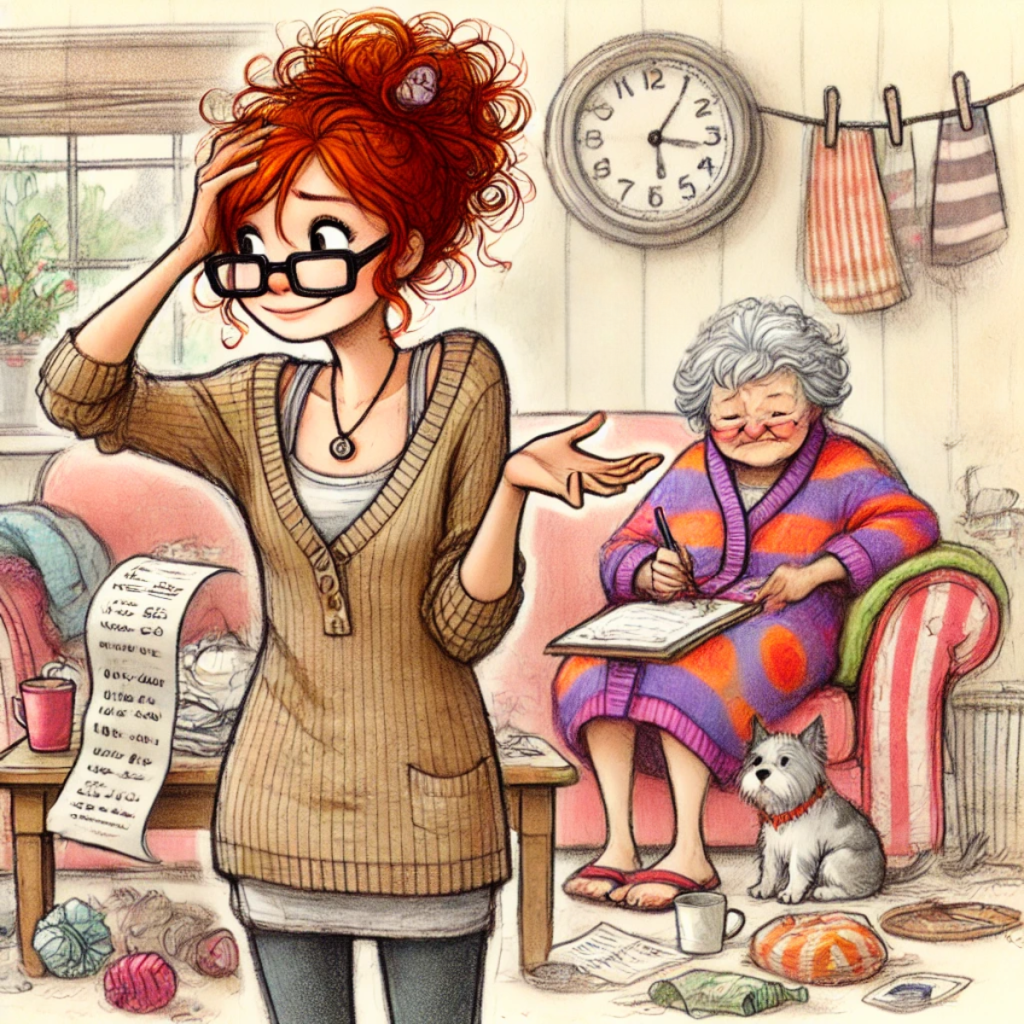
Welcome aboard the Silver Haired ChooChoo, where the coffee is cold, the laundry is endless, and the dress code is “whatever still fits and doesn’t smell weird.”
Let’s be honest—when you’re knee-deep in caregiving, personal style takes a hard nosedive. Gone are the days of coordinated outfits and perfectly styled hair. Now, we’re just hoping our leggings don’t have a hole in an embarrassing location and that our “inside shirt” isn’t the same one we slept in and spilled soup on.
But here’s the thing—we’re still out here doing the impossible, taking care of our loved ones, managing a thousand things at once, and somehow still showing up every single day. So, let’s celebrate the caregiver aesthetic in all its glory!
~The Official Caregiver Hair-Dos~
The 30-Second Bun:Whip it up, pray it stays, and if it starts falling apart mid-day? It’s called “volume.”
The Frantic Ponytail Poof:Started out sleek but somehow turned into a rat’s nest halfway through the day. That’s just natural texture, babe.
The Hat of Shame:Because washing hair is an unrealistic goal, and baseball caps were made for people like us.
“Did I Shower?” Look:A wild mix of dry shampoo, wishful thinking, and yesterday’s hopes and dreams.
The Hair Claw Catastrophe:One clip, two twists, and if it holds, we’re calling it “Pinterest-worthy.”
~The Caregiver Fashion Guide~
The Classic All-Black Ensemble:Doubles as a fashion statement and a stain-hiding superpower and somedays it matches my heart..
The Leggings Life:Because buttons and zippers are for people with time.
The ‘I Forgot to Change’ Chic:Is it pajamas? Is it daywear? No one knows. Not even you.
The Speedy Slip-On Shoes:Because if you have to actually tie laces, you’re staying home.
The Grocery Store Runway Look:Yoga pants, an oversized hoodie, and a look that says, “Yes, I am sleep-deprived. No, I do not need your judgment.”
Signs You’ve Given Up on Self-Care (But Make It Fashion)
You consider dry shampoo an essential food group.
Your last long, relaxing shower was… let’s just say, “pre-pandemic.”
Your nails are either chipped polish from three months ago, chewed off, or completely non-existent because who has time for that?
You daydream about being one of those people who wear actual pajamas to bed instead of collapsing in whatever you’re already wearing.
Makeup? What is this sorcery you speak of? When was the last time you bought that new shade of blush or lipstick?
5-Minute Self-Care for the Busy Caregiver
Alright, let’s get serious for a minute. We joke, but not taking care of ourselves is a real problem. Caregiver burnout is not cute. So, if time is tight, try one of these quick, easy self-care wins:
1. The 5-Minute Face Fix
Splash some cold water on your face.
Slap on some moisturizer or a face mist.
Boom. You’re now radiant and refreshed (ok- at least less zombie-like).
2. The Dental Upgrade
Brush your teeth when your feet hit the floor, and before you hit the morning chaos. Always the best choice, anyway!Some things just can’t be compromised.
Bonus points for a 10-second floss and mouthwash.
Look at you, being all fresh and fancy.
3. The Hot Beverage Ritual
Make a hot cup of coffee or tea and actually drink it hot.
Sit down for five whole minutes (no multitasking allowed).
Call it mindfulness.
4. The Hair Redemption Plan
Give it one quick brush.
Apply dry shampoo if needed (aka, if it’s been days).
Maybe even change up the messy bun—left side bun today? Wow, bold.
5. The Mini-Mani Move
Clip those nails if they look like talons from the underworld.
Swipe on a clear polish or cuticle oil—it takes 30 seconds and makes you feel like a person again.
The Takeaway: You Deserve More Than ‘Survival Mode’
Caregiving is all-consuming, and yes, sometimes “real” self-care is just finally putting on a bra and calling it a victory. But here’s the truth you caregiver rockstar:
You matter.
Your well-being matters
You deserve more than “bare minimum survival mode.”
So, whether it’s a fresh ponytail, a hot coffee with foam, or just taking a deep breath and reclaiming five minutes for yourself, find the little joys where you can.
And if all else fails? There’s always the ‘Hat of Shame.’
Caregiver Hack of the Week:
“The Fancy Scrunchie Trick” – Feeling like a tired, disheveled mess? Swap out your usual hair tie for a fancy scrunchie (velvet, leopard print, satin—you get the idea). Instantly, you go from “I’ve given up” to “I’m effortlessly stylish.” Minimal effort, maximum impact. Add some lip gloss and sunglasses for the “celebrity fashion” look! A little Miracle Balm never hurts either.
Ah, the twice-a-year chaos of Daylight Saving Time. For most of us, it’s an annoying inconvenience—losing an hour of sleep in the spring, gaining one in the fall, and spending weeks trying to reset our internal clocks. But for seniors, especially those with dementia, it’s more than just an inconvenience.
It can be a full-blown crisis. (Somebody get me coffee, NOW, please).
Time changes disrupt sleep, confuse routines, and send an already fragile sense of reality into a tailspin. If you thought your loved one’s schedule was unpredictable before, just wait until their body thinks it’s one time, the clock says another, and their brain is somewhere else entirely.
Let’s talk about why this happens—and, more importantly, how to make it easier for them (and you).
Why Does Time Change Hit So Hard?
For those of us with functioning circadian rhythms (aka, the body’s internal clock), adjusting to a time change takes a few days of grogginess and extra caffeine. But for the elderly—especially those with dementia or Alzheimer’s—this shift can completely derail their sense of time, mood, and behavior.
Here’s why:
Disrupts Sleep Cycles The body relies on light cues to know when to sleep and wake. Mess with that, and suddenly, nighttime confusion, restlessness, and sundowning (late-day agitation) get worse. Less sleep = more cognitive decline. Dementia already affects sleep; this just throws gasoline on the fire.
Confuses Routines Dementia thrives on predictability. Mealtimes, medication schedules, bathroom trips—all of it is thrown off when the clock shifts, even if only by an hour. Your loved one may get up in the middle of the night, insist it’s time to go somewhere, or completely refuse to eat at the “wrong” mealtime.
Increases Agitation & Sundowning Many dementia patients struggle with sundowning, where they become more confused, anxious, or aggressive in the late afternoon. The time change alters how sunlight cues the brain, making this problem worse. Even those without dementia may feel disoriented, extra sleepy, or irritable—and if they don’t understand why, it can trigger frustration or even paranoia.
Throws Off Medication TimingMany medications work best on a strict schedule. Even a small shift in dosing can cause changes in blood sugar, blood pressure, or mood stabilization. If your loved one is already sensitive to meds, this can lead to dizziness, confusion, or feeling “off” without knowing why.
How to Make Time Change Easier on Your Loved One
You can’t stop the clocks from changing, but you can minimize the fallout. Here are some simple ways to ease the transition and keep your loved one as comfortable as possible.
1. Start the Shift Early (and Slowly)
Don’t wait until the night before to adjust everything. Instead: ✔ Adjust bedtimes, wake-up times, and meals by 10-15 minutes per day starting a week before the time change. ✔ Dim lights earlier or later, depending on the direction of the shift, so their body starts adapting naturally. ✔ Keep the morning routine the same as much as possible. A steady start helps anchor the day.
2. Keep the Environment Consistent
Your loved one may trust their routine more than the clock. So, help them stick to what feels normal. ✔ Keep mealtimes and medications as close to the usual time as possible, even if the clock says otherwise. ✔ Use blackout curtains or bright lamps to mimic natural daylight at the right times. ✔ Keep clocks, calendars, and schedules visible so they have a reference point when they feel confused.
3. Help Regulate Sleep Naturally
Since sleep gets thrown out of whack, try these tricks: ✔ Expose them to natural light first thing in the morning to help reset their internal clock. ✔ Limit naps, especially late in the day. Short naps are okay, but too much daytime sleep makes nighttime worse. ✔ Encourage movement during the day (even a short walk) to help burn energy and regulate sleep hormones. ✔ Use white noise or soft music at night to encourage relaxation and sleep.
4. Prepare for Extra Confusion & Be Patient
Even with the best preparation, your loved one may struggle. Expect more questions, restlessness, and frustration. ✔ If they insist it’s a different time or day, don’t argue. Gently redirect: “Yes, it feels different today, but let’s have some breakfast together.” ✔ If they’re extra anxious, lean into comfort activities—a familiar TV show, a favorite snack, a warm blanket, or a hand massage. ✔ Keep your own stress levels in check. If you’re anxious about the time change, they’ll pick up on it.
5. Adjust Medications Gradually
For meds that need to be taken at specific times: ✔ Shift dosing by 15-30 minutes each day leading up to the change. ✔ Check with their doctor or pharmacist if certain medications should be adjusted differently.
Surviving the Great Time Change Chaos
Let’s be honest—Daylight Saving Time is one giant societal prank that we’ve all agreed to participate in for reasons none of us truly understand. But while the rest of the world groans about losing sleep, caregivers are dodging meltdowns, adjusting medications, and explaining the time difference 87 times a day.
And the worst part? We have to do it all over again in six months.
But here’s the good news: it won’t last forever. Within a week or two, the storm will pass, routines will settle, and your loved one will find their rhythm again. In the meantime, be patient, keep the coffee flowing, and remember—you are not alone.
And if things get truly out of control? Just set all the clocks back to their old time and call it a day. Who’s going to know, except you?
Caregiver Hack of the Week:
“The Fake Sunset Trick” – If sundowning gets worse after a time change, try this: dim the lights gradually in the evening to mimic a natural sunset. This helps their brain recognize bedtime and can reduce nighttime restlessness.
Bonus: It also helps you unwind after a long day! It will get better!!!
Caregiving is often a storm—chaotic, exhausting, and unpredictable. There are days when confusion reigns, when my loved one is lost in a world I can’t quite reach. But then, there are these days—the golden ones. The moments when the clouds part, the confusion fades, and for a little while, I have my mom back.
And when that happens? I drop everything.
Meetings can wait. Tasks can be pushed. The world keeps spinning, but for me, time stands still. Because I don’t know when, or if, I’ll get another moment like this. So, I clear the schedule and plan our own little getaway. A lunch date. A shopping trip. A long, slow conversation filled with all the questions I can think to ask.
It’s not just another day. It’s a vacation for the soul.
When her eyes are clear and her voice is steady, I don’t waste a second. I ask all the things.
20 Questions and Laughter
How did you meet dad?
Tell me about your wedding day. (It’s such a good story. They got married on Christmas – talk about Hallmark)
What’s the funniest thing I did as a kid?
What do you want me to remember most about you?
And that last question? That’s the one that stopped me in my tracks.
“That I have always loved you so much.”
Cue the waterworks. Because at the end of everything—after all the struggle, the hard days, the heartache—that’s what matters. Love.
Basking in the Magic of the Moment
There’s something sacred about these days. It’s like stepping into a time capsule, a fleeting glimpse into the past when everything was normal. When she’s fully her, we laugh harder, we share memories, and I hold on as tightly as I can.
She tells me stories I’ve never heard before. We giggle like old friends over coffee. We browse through stores, picking out things we don’t need but will cherish anyway. We just exist together, without worry or stress.
And in those hours, I don’t think about the future. I don’t brace for the storm to return. I just bask in the sunshine, soaking in every precious second.
A List of Questions to Ask While You Can
If you’re lucky enough to have these moments with your loved one, be ready. Don’t let them slip away. Here are some of my favorite questions to ask:
Family & Childhood:
What was your childhood home like?
Who was your best friend growing up?
What did you love most about your parents?
What’s the funniest family memory you have?
Love & Life:
How did you meet your spouse?
What advice would you give about love and marriage?
If you could relive one day, which would it be?
What’s something you’re most proud of?
Hopes & Dreams:
What did you want to be when you grew up?
If you could travel anywhere, where would you go?
Is there anything you wish you had done differently?
What’s one thing you want me to always remember?
Just for Fun:
What was your first job, and what did you love/hate about it?
What’s the best meal you’ve ever had?
What song always makes you smile?
What’s one thing people don’t know about you?
The Afterglow
When these moments end, and the memory closet locks, I hold them close. I write things down. I tuck memories into my heart like love notes for the future. And I remind myself—this is why I do what I do.
Caregiving is hard. But these days? These golden moments? They make it all worth it.
So, the next time clarity comes, don’t let it slip by. Drop the to-do list. Cancel the call. Take the day off. Because these are the moments that will stay with you forever.
And when you ask, What do you want me to remember most?—the answer might just change everything.
Caregiver Hack of the Week:
“The Memory Journal” – Keep a small notebook to jot down stories, quotes, and special moments your loved one shares. Even if they fade from their mind, they’ll live on forever in yours.
What’s the best memory you’ve captured in a moment of clarity? Drop it in the comments—I’d love to hear your stories.
Caregiving for aging parents and loved ones is often romanticized as a noble, fulfilling act—a way to give back to those who once cared for us. The image of a devoted son or daughter selflessly tending to a parent in their golden years is ingrained in our cultural narratives. We picture peaceful moments: preparing home-cooked meals, reminiscing over old memories, and ensuring their comfort in familiar surroundings. It’s framed as a labor of love, a sacred duty, something we do without question.
But behind the heartwarming portrayals lies a much harsher reality, particularly for those living in rural areas with limited support systems. The emotional, physical, and financial toll of caregiving can be immense. Unlike urban settings, where home health aides, transportation services, and medical facilities are more accessible, rural caregivers often face the daunting challenge of managing everything on their own. Medical specialists may be hours away, in-home help may be scarce or unaffordable, and respite care—essential for avoiding burnout—is nearly nonexistent.
I know this struggle firsthand. I’ve been doing this day in and day out for almost six years. It’s grueling, exhausting, and the hardest thing I’ve ever done. I don’t like it, but at the same time, I wouldn’t want anyone else taking care of my mom because no one will do it with as much love as I will. That’s the paradox of caregiving—it drains you, but you also can’t imagine entrusting your loved one’s care to anyone else. Some people are naturally cut out for being a caregiver, but this girl is not. Don’t misunderstand, I’m still honored to do it, but the personal sacrifices are immense and in many different ways.
Finding Support in Rural Areas
While caregiving in a rural setting presents unique challenges, there are some ways to help make it more manageable:
Join a Caregiving Support Group – Whether in-person or online, connecting with others who understand the struggles of caregiving can be life-changing. Even if there are no local groups, virtual communities on Facebook or through organizations like the Caregiver Action Network can provide encouragement and advice. I run a local caregiver’s group, and I love my Caregiver Sisters, we laugh and cry together – shared advice, and know that we are there for each other. It’s sacred and safe place for us.
Seek Help from Your Church or Community – Churches and faith-based organizations often have volunteers willing to help with errands, meals, or simply sitting with your loved one for an hour or two so you can take a break. Don’t hesitate to ask your pastor or local congregation for support.
Sign Your Loved One Up for Meals – It’s one less meal you don’t have to cook in a day – and you can even get one for yourself. Call you local senior center and ask how to sign up. Even cooking one less meal a day helps the load.
Look Into Local Assisted Living Homes for Respite Programs – Some assisted living facilities offer short-term stays, allowing caregivers a few days or weeks of much-needed rest. While it may feel difficult to let go, taking advantage of these programs can help prevent burnout.
Remind Yourself That This is Temporary – When you’re in the thick of caregiving, it feels endless. But one day, this role will come to an end. Keeping that in mind can help you push through the hardest moments. There will come a time when you’ll look back and know that, despite the struggles, you did everything in your power for your loved one.
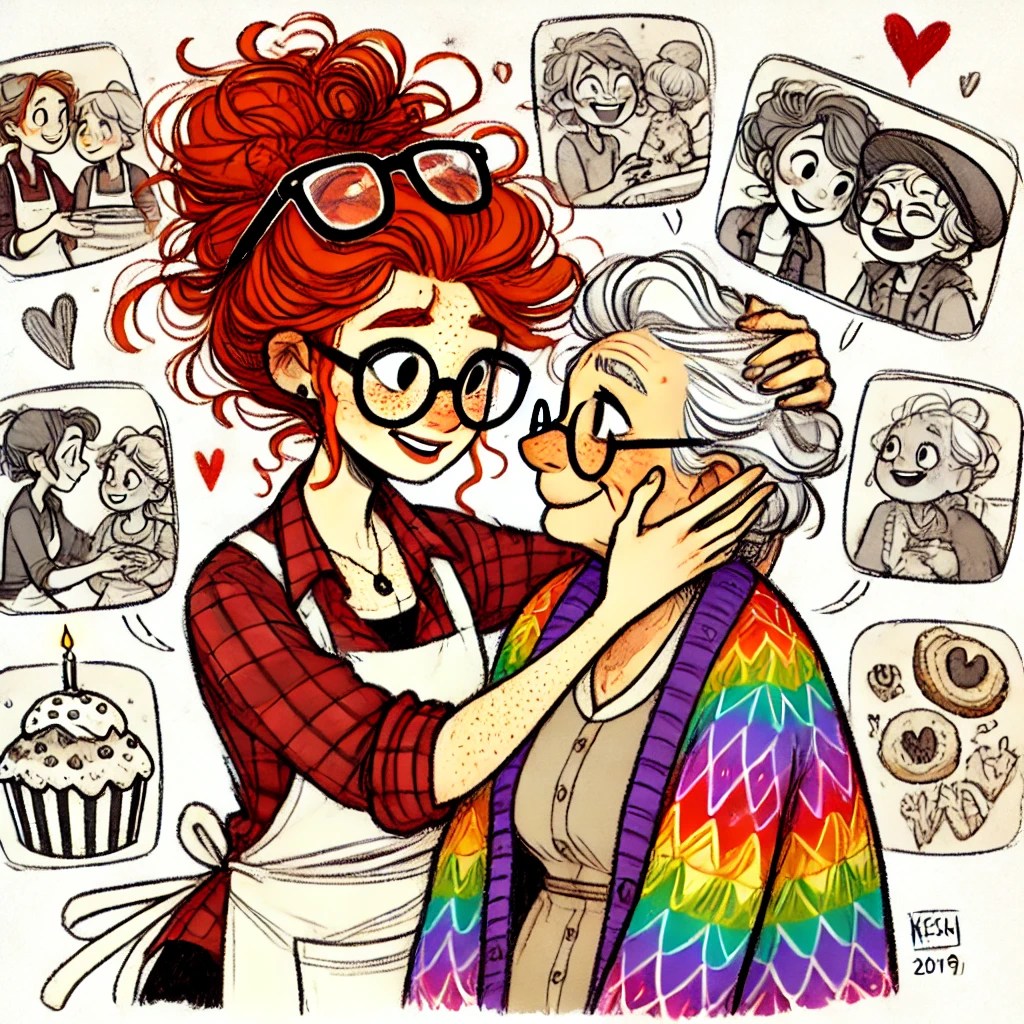
The pendulum between Love and Overwhelm swings short, but just know that by being in the moment -this moment – right now – it will help even the swing. Praying for you, loving you, and right there in the trenches with you friends. Until next time….








 The Silver Haired ChooChoo