• Wait a Minute – Where Did I Go? Where’s Me?

    March 3, 2025
    Uncategorized

    No one warns you that caregiving isn’t just about helping someone else live—it’s about figuring out how to keep living your own life at the same time. And let’s be honest, most of us suck at that part.

    At first, you tell yourself you can juggle it all. You’ll still meet friends for coffee, keep up with your hobbies, maintain some shred of independence. And then, before you know it, every single part of your day revolves around someone else’s needs.

    You stop going out. You stop making plans. You stop thinking about yourself at all, because there is literally no time. And one day, you look in the mirror and think, Who am I anymore? I’ve lost my identity.

    The Disappearing Act of a Caregiver

    Caregiving doesn’t steal your identity all at once—it chips away at it, little by little.

    • First, you cancel a few plans. No big deal.
    • Then, you realize you can’t remember the last time you did something just for you.
    • Then, you forget what you even like to do outside of caregiving.
    • Finally, your entire personality becomes being a caregiver.

    And here’s the worst part: You don’t even notice it happening until you’re completely lost.

    The Emotional Toll of Always Being ‘On’

    Caregiving is 24/7, but even when you get a break, your brain doesn’t.

    • You feel guilty for stepping away, even for an hour.
    • You constantly think about what needs to be done next.
    • You forget how to relax, because the second you do, something inevitably goes wrong.
    • You start to feel like your only worth is tied to how well you take care of someone else.

    That last one? That’s the most dangerous.

    How to Find Yourself Again.

    Listen, I get it – and I feel like I’m in a fight for my life. Finding time for yourself feels impossible when you barely have time to shower. But reclaiming your identity doesn’t have to be all or nothing. It starts small.

    Start by remembering what used to make you happy. What did you love to do before caregiving? Reading? Painting? Running? You don’t have to dive back in all at once—just remind yourself who you used to be.

    Schedule a tiny break—even if it’s five minutes. Yes, I know this sounds like a joke. But start with just five minutes a day where you do something that is only for you.

    Talk to people who know you outside of caregiving. Call a friend. Text someone. Remind yourself that you exist outside of this role.

    Set one boundary. Just one. Maybe it’s saying “no” to an extra task, maybe it’s reclaiming ten minutes of quiet time every morning. But start somewhere.

    You are not just a caregiver. You are a whole person who deserves a life, too.

    Caregiver Hack of the Week: The ‘Two-Question Check-In’

    At the end of every day, ask yourself two things:

    1. Did I do one thing for myself today? (And if not, what tiny thing can I do right now?)
    2. What is one thing about me that has nothing to do with caregiving? (A favorite book, a weird fact, a song I love—anything!)

    Because the truth is? You don’t have to lose yourself to care for someone else.
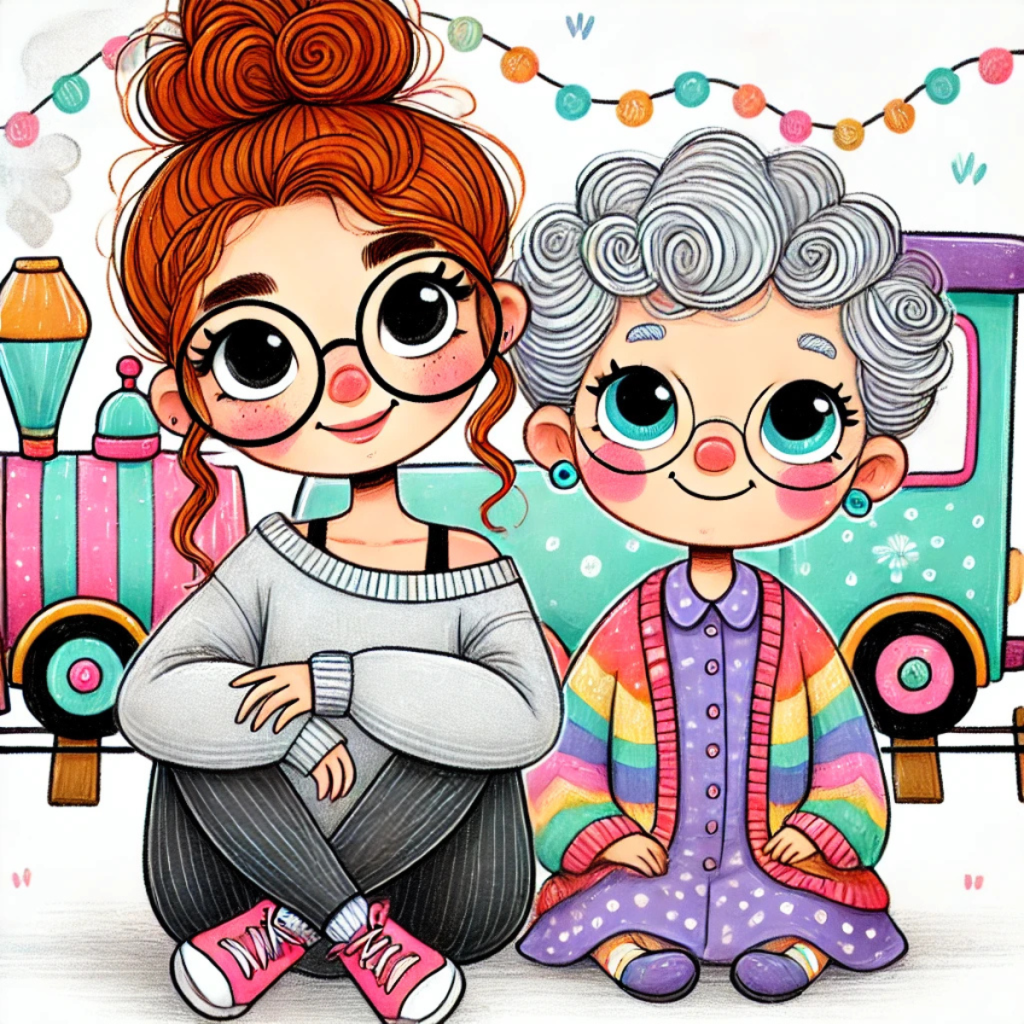
  • The Things No One Told Me About Caregiving

    February 27, 2025
    Uncategorized

    Caregiving is one of those things you never truly understand until you’re in the thick of it. Before I became a caregiver, I had a very Hallmark movie version of what it would look like—sweet moments of bonding, gentle hand-holding, meaningful conversations about life. Spoiler alert: that’s not quite how it goes. I remember sitting with my niece who is a therapist and she asked me, are you SURE this is what you want to do? All in, I responded – absolutely!

    Settle in because this is not a light post.

    No one told me caregiving would mean spending hours on hold with insurance companies, becoming an unpaid nurse, therapist, housekeeper, and personal assistant, or that some days I’d be so tired that microwaving dinner would feel like an Olympic sport.

    So, in the spirit of full transparency, here’s what I wish someone had told me before I stepped onto this rollercoaster.

    1. The Paperwork Will Try to Break You

    I don’t know who designed the healthcare and insurance system, but I can only assume it was someone with a personal vendetta against caregivers. The sheer amount of forms, approvals, denials, referrals, appeals, and phone calls will make you question reality.

    Pro tip: Keep a dedicated “caregiver binder” with all medical records, medication lists, and contacts. You’ll need it every other day.

    2. Your Social Life Will Become a Myth

    Remember going out with friends? Remember hobbies? Yeah, me neither. In the beginning the invites roll in, but when you either have to take your loved one or turn down the offer, they stop.

    Caregiving has a way of consuming your time and energy until you realize the last “conversation” you had was with the grocery store self-checkout machine. [“Yes, I did bag my items. Now mind your business.”]

    Your world shrinks, and people who don’t understand caregiving tend to disappear. But the ones who stick around? They’re the real ones. Hold onto them. Tightly.

    3. You Will Become a Human Lie Detector

    Caregiving gives you superpowers—one of which is the ability to detect a lie from across the room.

    • “I already took my medication.” (No, you didn’t.)
    • “I’m not in pain.” (Then why are you wincing every time you move?)
    • “I just ate.” (Lies. The last thing you ate was pudding four hours ago.)

    They’re not lying to be difficult. They’re lying because they want to feel independent. And honestly? I get it. But that doesn’t mean I won’t side-eye them until they take their pills.

    4. Doctors Will Only Listen to You Half the Time

    There’s nothing more frustrating than being the person who knows your loved one best and still having to fight to be heard.

    • “That’s not normal for them.”
    • “I know their symptoms better than the chart does.”
    • “No, they don’t ‘seem fine’—you’ve seen them for 30 seconds.”
    • “She’s fine, there’s no sign of cognitive decline.” – She memorized the cognitive test. [true story].

    Advocating for your loved one is exhausting, but it’s necessary. Don’t be afraid to push back. Be polite, be firm, and if necessary, be the squeaky wheel that refuses to shut up.

    5. People Will Say Stupid Things to You

    “I could never do what you do.” (Well, lucky you, you don’t have to!)

    “You should really take care of yourself.” (Oh wow, I hadn’t thought of that!)

    “There’s a special place in heaven and blessings for you.” (That is neither comforting or reassuring – even well intentioned).

    People mean well, but most of them have no idea what they’re talking about. Save your energy. Smile, nod, and then go vent to someone who gets it.

    Caregiver Hack of the Week: The ‘One Thing’ Rule

    On days when you feel completely overwhelmed, follow this rule: Just do one thing.

    • One phone call.
    • One chore.
    • One moment of self-care (even if it’s just sitting down with a snack for five minutes).

    If all you can do today is one thing, that’s enough. Truly, it is!

  • The Judgement Train Has Left the Station

    February 20, 2025
    Uncategorized

    The Reality of Caregiving: Between Love and Overwhelm

    There are two types of people in the world: those who have been caregivers and those who think they know everything about caregiving.

    The latter group? Oh, they’re the worst. They come armed with opinions, unsolicited advice, and an uncanny ability to make you feel like garbage—all while doing absolutely NOTHING to help.

    “You just have to learn to…[insert the finish here]…”
    Oh really, Susan? Then why don’t you come over and be with her 24 hours a day, seven days a week, answer the same question 30 times and have the same conversation every day. It’s not helpful, but to be honest, most are just offering their kind advice because they are concerned for you. I’ve snapped at friends when things are especially rough, and doing so just made me feel worse.

    “You should really take better care of yourself.”
    Gosh, thanks, Karen. I’ll be sure to schedule my spa day right between being with mom 24/7 and my mental breakdown. They don’t understand that you don’t have the same luxury of having moments to yourself. The minute you are available, your loved one needs something. Every time.

    The problem with judgmental people is that they see caregiving as a sweet, noble duty [and I did to]—but they have NO IDEA what it actually entails. They picture us sitting by our loved one’s bedside, holding hands, and reminiscing about the good old days. They don’t picture the confusion, the doctor fights, the exhaustion, or the emotional whiplash of role reversal. They just don’t know. It’s a grace that you try to find and extend daily. The ones who understand truly come with offers of assistance that make a difference.

    When Family Becomes the Worst Offenders

    Sometimes the worst judgment doesn’t come from strangers—it comes from your own family.

    • The sibling who never visits but has lots of opinions on how you should be doing things.
    • The cousin who swoops in for a five-minute visit and suddenly becomes an expert on everything you’re “doing wrong.”
    • The family member who whispers about your “lack of patience” while doing absolutely nothing to help.

    It’s always the ones who aren’t in the trenches who have the most to say. Meanwhile, you—the one keeping everything from falling apart—are just trying to survive another day without snapping [and sometimes that is a superhuman effort – and honestly sometimes a complete fail]. Again, they don’t understand, because clearly if they had a clue, the conversation would be different. #facts

    How to Respond Without Going to Jail

    Since coming out of the corner with a “float like a butterfly and sting like a bee mentality,” here are some better responses that will save your relationships when the judgment train rolls in:

    🔹 “I’d love for you to show me how it’s done! What day can you come help?”
    🔹 “You’re absolutely right, this is hard. I’d appreciate any real support you can offer.”
    🔹 “Thank you for your opinion. I’ll be sure to file it in my ‘Things I Didn’t Ask For’ folder.”
    🔹 “Oh wow, you must have SO much experience caring for a person 24/7! What? You don’t?”

    Use sparingly, because they are potent, and you have to decide whether dealing with their upset or letting them have their opinion is easier.

    Caregiver Hack of the Week: The ‘Delegate & Ignore’ Technique

    Tired of dealing with those who criticize but don’t contribute or manage from a distance?

    Assign them a task.

    • “Oh, you think she needs better meals? Great! What days are you cooking?”
    • “You think she needs more outings? Perfect! You can take her out this Saturday.”
    • “You think I need a break? Fantastic! Here’s a list of ways you can help – and I’ll be back in 6-8 weeks.”

    Nine times out of ten, they’ll make excuses or be unavailable. Time to ignore them and move on. Complaining without contributing just doesn’t count.

    The next time someone wants to judge you, remind yoursel

    They don’t know. They don’t get it. And their opinion doesn’t pay the bills. You’ve shown up, you’re doing the best you can, and that’s what matters. Extending a little grace is free – besides if you lose it – they just think you’re crazy – or that you need therapy – and we probably do, but not for THAT reason.

    Let them judge. If they are ever a caregiver, they will understand. Period. It’s an exclusive club. – and not everyone qualifies for membership. Now, you’ve got more important things to do—like keeping yourself and your loved one alive and thriving. Stay tuned for more tales from The Silver Haired Choo Choo.

  • The Caregiver Guilt Train

    February 20, 2025
    Uncategorized

    Caregiver guilt is like an all-you-can-eat buffet of self-doubt, and no matter how much you try to avoid it, it can feel like someone is always trying to pile more on your plate.

    • You’re not doing enough.
    • You’re doing too much.
    • You should take a break. (But if you do, you’re selfish!)
    • You should put them in a home. (How could you even THINK that?)

    Why Caregivers Feel Guilty About Everything

    No matter what choice you make, someone will have an opinion. And worst of all? You are probably your own worst critic.

    • If you spend time with them, you feel guilty for wanting time away.
    • If you take a break, you feel guilty for not being there.
    • If you lose your temper, you feel guilty for not being more patient.
    • If you feel relieved after a hard day, you feel guilty for even thinking it.

    Breaking the Cycle of Guilt

    Guilt means you care. It doesn’t mean you’re doing something wrong. You are human. Not a machine. Not a saint. A person who needs balance. Perfection is a myth. No caregiver is doing this “perfectly” because perfection in caregiving does not exist [at least when you’re really in the trenches].

    Caregiver Hack of the Week: The ‘Reverse What If’ Method

    Instead of spiraling into “What if I’m failing?”, try this:

    🔹 What if I’m actually doing a damn good job?

    🔹 What if my loved one appreciates me more than they can say?

    🔹 What if I stopped measuring myself by impossible standards?

    The next time guilt creeps in, remind yourself: You are doing the best you can with what you have.

    And that? That is enough. Read that again. That is enough! Truly it is!

  • If I’m Not Alone; Why is it So Lonely?

    February 20, 2025
    Uncategorized

    Caregiving is one of the most selfless and demanding roles anyone can take on. The reality is that it often goes unnoticed, leaving caregivers feeling exhausted and isolated. But even in the most difficult moments, remember that your love and dedication matter. You are doing something extraordinary, even if it feels unbearably hard.

    If you’re struggling, don’t suffer in silence. Reach out, ask for help, and lean on whatever resources are available. No one can do this alone, and no one should have to.

    There are several types of therapy that can help caregivers. Do not be ashamed or afraid to go to therapy. It’s a LIFESAVER. With telehealth available – therapy is an option even in rural areas. Having a plan to get through this season is always a plus.Based on information I gathered from multiple online sources, therapy options such as CBT, DBT, and ACT can help caregivers manage stress and mental health challenges. (1) A mental health professional can help guide you.

    • Cognitive behavioral therapy (CBT): A goal-oriented therapy that helps caregivers identify and change negative thought patterns 
    • Dialectical behavior therapy (DBT): A therapy that can help caregivers manage negative emotions 
    • Acceptance and commitment therapy (ACT): A therapy that can help caregivers 
    • Psychodynamic therapy: A therapy that can help caregivers 
    • Skills training: Training in communication, time-management, and stress-reduction 

    The burden grows even heavier when caregivers must balance full-time jobs, their own families, and personal well-being. The stress of coordinating appointments, managing medications, and handling the decline of a loved one’s health can be isolating and exhausting. Many suffer in silence, feeling obligated to do it all without complaint, while their own needs take a backseat.

    An AARP survey on mental health and caregivers emphasizes how much all that extra work weighs on family caregivers: Half of caregivers (50%) said caregiving increased their level of emotional stress, while more than one-third (37%) said it impacted their physical feelings of stress. Female caregivers experience more stress and anxiety than their male counterparts; and younger caregivers (under 35) have more emotional challenges than older caregivers, with higher levels of anxiety. A whopping 4 in 10 caregivers (39%) report they rarely or never feel relaxed.(2) 

    Caregiving isn’t supposed to be a one-person circus act—but let’s be real, it often is. Most people prefer to keep a safe distance, as if getting too close might land them a starring role. As long as the loved one is doing okay, it’s easy for others to mentally clock out.

    And here’s the kicker—the people who do the least are often the first to proudly declare, “Oh yes, I’m a caregiver!” Newsflash: Swinging by once a month with a casserole or showing up only when summoned? That’s not caregiving—that’s guest starring.

    Harsh? Maybe. True? Absolutely. So if this sounds a little too familiar… time to step it up!

    What We Need to Do for the Future:

    Rural communities need better resources—affordable respite care, visiting nurse programs, and support groups—to lighten the load. While caregiving is an act of love, love alone isn’t enough. A society that truly values its elders must also care for its caregivers, ensuring they have the support they need to continue this essential work without sacrificing their own well-being.

    Next Stop:

    1 Information gathered from an internet search on therapy options for caregivers, February 2025.

    2 AARP. (2023). New Report Highlights Mental Health Struggles of Family Caregivers. Retrieved from https://www.aarp.org/caregiving/health/info-2023/report-caregiver-mental-health.html

Previous Page
1 … 4 5 6

Blog at WordPress.com.

The Silver Haired ChooChoo

A Caregiver’s Ride Through Chaos, Love, and WTF Moments

    • About Our Train
    • Posts (The Stops On The Journey)
 

Loading Comments...
 

    • Subscribe Subscribed
      • The Silver Haired ChooChoo
      • Already have a WordPress.com account? Log in now.
      • The Silver Haired ChooChoo
      • Subscribe Subscribed
      • Sign up
      • Log in
      • Report this content
      • View site in Reader
      • Manage subscriptions
      • Collapse this bar